
The Complete Guide to Pool Pumps
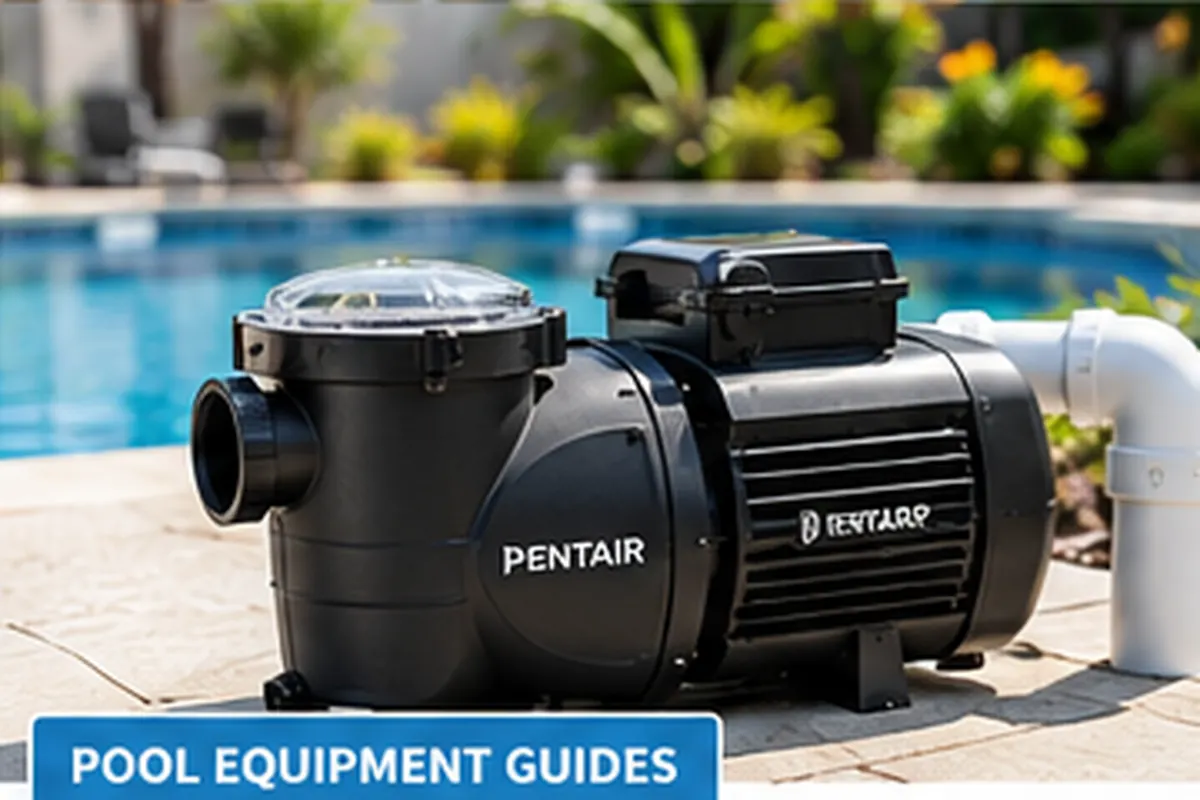
The pool pump drives the circulation system. It moves water through the filter, heater, sanitizer, and other equipment before returning it to the pool.
Choosing and operating a pump correctly requires understanding flow rate, plumbing resistance, motor speed, runtime, equipment limits, and the actual circulation needs of the pool.
Last reviewed: September 2026
Quick Answer: How Do You Choose the Right Pool Pump?
The right pool pump must deliver enough water flow for filtration and connected equipment while operating within the limits of the pool's plumbing, filter, heater and other components. Pump horsepower alone does not tell you whether a model is suitable. Compare the flow you need with the manufacturer's pump performance curve at your system's estimated total dynamic head (TDH).
Variable-speed pumps offer flexibility because they can operate at different speeds for routine circulation, heating, cleaning and other tasks. Lower-speed operation can reduce electricity consumption when the required flow can still be maintained.
Pool Pump Basics at a Glance
| Term | What It Means | Why It Matters |
|---|---|---|
| GPM | Gallons of water moved per minute | Helps determine whether circulation and equipment flow requirements are met |
| RPM | Motor revolutions per minute | Controls operating speed on a variable-speed pump |
| TDH | Total dynamic head, usually expressed in feet | Represents the resistance a pump must overcome |
| Pump curve | Manufacturer's chart of flow versus head | Shows expected pump performance under different conditions |
| Watts | Electrical power consumption | Used with runtime and electricity rates to estimate operating cost |
What Does a Pool Pump Do?
A pool pump draws water from the pool through suction plumbing and pushes it through the equipment system. Water typically passes through the pump's strainer basket, then through the filter and any connected treatment or heating equipment before returning to the pool.
This circulation allows filtration, heating, sanitation and other water-treatment equipment to function. However, moving water is only one part of maintaining a pool. Proper sanitation, water chemistry, cleaning and equipment maintenance remain essential.
The Main Parts of a Pool Pump
A typical residential pool pump includes:
- Motor: Drives the pump's impeller.
- Impeller: Transfers energy to the water, creating flow through the system.
- Pump housing: Directs water through the pump.
- Strainer basket: Captures larger debris before it reaches the impeller.
- Lid and seals: Help maintain an airtight suction-side assembly.
- Suction and discharge connections: Connect the pump to the pool's plumbing.
The motor turns the impeller, creating the pressure difference that moves water through the circulation system.
Single-Speed vs. Variable-Speed Pool Pumps
The primary difference is how much control you have over motor speed and flow.
| Feature | Single-Speed Pump | Variable-Speed Pump |
|---|---|---|
| Motor speed | One operating speed | Multiple adjustable speeds |
| Flow adjustment | Limited through motor controls | Can be adjusted by changing RPM |
| Routine circulation | Operates at its fixed speed | Can often use a lower speed |
| High-flow tasks | Uses the same operating speed | Can use a higher programmed speed when needed |
| Energy use | Depends on motor power and runtime | Can be reduced by operating at appropriate lower speeds |
| Controls | Typically simpler | Often includes schedules and programmable speeds |
Single-Speed Pumps
A single-speed pump operates at one motor speed whenever it is turned on. Its fixed-speed design provides limited flexibility for matching pump output to different circulation tasks.
Variable-Speed Pumps
A variable-speed pump allows different motor speeds to be programmed for different tasks. Routine filtration may require relatively low flow, while a spa, heater, cleaner or water feature may require more.
For a detailed comparison, see Variable-Speed Pool Pump vs. Single-Speed Pump: What's the Difference?
Understanding GPM
GPM means gallons per minute. It describes the amount of water flowing through the system.
Flow—not simply motor horsepower—is one of the most important measurements when evaluating pump performance. A pump's actual flow depends on its operating speed and the resistance of the connected plumbing and equipment.
Our guide to how many GPM a variable-speed pool pump should run explains how flow requirements vary by pool and equipment system.
Understanding RPM
RPM describes motor revolutions per minute. On a variable-speed pump, changing RPM changes pump performance and therefore system flow.
Two pools using the same pump at the same RPM may have different flow rates because their plumbing, filters, valves and other equipment create different levels of resistance.
There is no universal RPM that is correct for every pool. See What RPM Should I Run My Variable-Speed Pool Pump? for a closer look at choosing operating speeds.
What Is Total Dynamic Head?
A pump must overcome resistance as it moves water through pipes, fittings, valves, filters, heaters and other equipment. Total dynamic head, commonly abbreviated TDH, expresses the total head against which the pump operates.
Manufacturer performance curves show how much flow a pump can produce at different head levels and operating speeds.
Why TDH Changes Pump Selection
Imagine two pools with the same water volume and the same circulation target. One has short, generously sized plumbing. The other has longer plumbing runs, additional fittings and more equipment.
Even if both pools require the same GPM, the second system may create more resistance. A pump must be evaluated against that resistance rather than selected using pool volume alone.
TDH should be estimated from the actual system. Guessing a universal head value can produce misleading pump-sizing results.
How to Size a Pool Pump
Pool pump sizing starts by estimating the flow required for circulation, then checking the requirements and limitations of the entire equipment system.
Important factors include:
- Pool volume.
- Desired circulation target.
- Plumbing diameter and pipe length.
- Fittings, valves and other sources of resistance.
- Filter operating limits.
- Heater minimum and maximum flow requirements.
- Salt-system minimum flow requirements.
- Water features, cleaners and spa operation.
- Manufacturer pump performance curves.
Worked Example: A 20,000-Gallon Pool
Consider a hypothetical 20,000-gallon pool. If you choose an eight-hour turnover target for an initial circulation estimate, the calculation is:
Required GPM = Pool volume ÷ (Hours × 60)
20,000 ÷ (8 × 60) = 41.7 GPM
The result is approximately 42 GPM.
| Example Input | Value |
|---|---|
| Pool volume | 20,000 gallons |
| Illustrative turnover target | 8 hours |
| Calculated average flow | 41.7 GPM |
Important: This is a mathematical circulation estimate, not a final pump recommendation. An eight-hour turnover is an example rather than a universal requirement. Actual operation should account for water quality, equipment needs, local requirements and the pool's operating conditions.
Next Step: Check the Pump Curve
Once you have an estimated flow target, review the manufacturer's performance curve for the pump you're considering.
- Estimate your system's TDH using the actual plumbing and equipment configuration.
- Find the estimated head value on the manufacturer's pump curve.
- Check whether the pump can deliver your required GPM at that head.
- For a variable-speed model, review the relevant RPM curves rather than relying only on its maximum-speed performance.
- Confirm that the expected flow remains within the limits of your filter, heater, plumbing and other connected equipment.
For a detailed walkthrough, see How to Size a Variable-Speed Pool Pump. You can also use our Pool Pump Sizing Calculator to estimate your starting flow requirement.
Why Bigger Isn't Automatically Better
An oversized pump can create unnecessary flow, noise, pressure and energy consumption when operated at unsuitable speeds. Excessive flow can also exceed equipment or plumbing limits.
The goal is not maximum possible flow. It is adequate flow for the task while keeping every component within its intended operating range.
A variable-speed pump with a relatively high maximum capacity may still operate efficiently at lower speeds, so maximum horsepower alone should not be used to judge whether a particular model is oversized for an application.
How Long Should a Pool Pump Run?
There is no universal daily runtime. The appropriate schedule depends on:
- Water quality and filtration needs.
- Sanitation system requirements.
- Pool use and bather load.
- Seasonal conditions.
- Pump speed and actual flow.
- Debris load.
- Connected equipment requirements.
A variable-speed pump can often run for longer periods at lower flow instead of performing all circulation at a high speed. The appropriate schedule must still provide enough flow for the equipment operating during each programmed period.
See How Long Should You Run a Variable-Speed Pool Pump Each Day? for a more detailed explanation.
Does a Pool Need One Turnover Per Day?
Turnover calculations can be useful for estimating circulation flow, but turnover should not be treated as the only factor determining pump operation.
Water quality depends on circulation, filtration, sanitation, chemistry, debris load and other factors. A turnover calculation does not demonstrate that water is being effectively filtered or adequately sanitized.
Why Lower Pump Speeds Can Save Energy
Centrifugal pumps follow relationships known as the pump affinity laws. Under comparable conditions, reducing pump speed reduces flow, while power demand can fall much more rapidly.
These relationships help explain why variable-speed pumps can reduce electricity use when circulation tasks can be performed at lower speeds. Actual savings depend on the pump, plumbing system, selected speeds and runtime.
Finding the Lowest Useful Speed
The lowest possible RPM is not necessarily the correct RPM. The pump must still produce enough flow for any equipment operating at that time.
Examples of equipment that may impose flow requirements include:
- Heaters and their flow switches.
- Salt chlorine generators.
- Water features.
- Pressure-side cleaning systems.
- Spa jets.
A practical variable-speed schedule may use a lower speed for routine circulation and separate higher-speed periods for equipment that requires more flow. Confirm the necessary settings using equipment specifications and actual system performance.
Pool Pump Operating Cost
Electrical operating cost can be estimated using:
Power in kW × Runtime in hours × Electricity rate = Operating cost
Worked Example: Comparing Two Operating Schedules
Suppose a pump draws 500 watts during one operating schedule and 250 watts during another. At an illustrative electricity rate of $0.16 per kWh:
| Measurement | Schedule A | Schedule B |
|---|---|---|
| Power draw | 500 W | 250 W |
| Daily runtime | 10 hours | 12 hours |
| Daily energy use | 5 kWh | 3 kWh |
| Daily electricity cost | $0.80 | $0.48 |
| Annual electricity cost | $292.00 | $175.20 |
In this hypothetical example, Schedule B costs $116.80 less per year. However, the lower-cost schedule is appropriate only if it also satisfies the pool's circulation and connected equipment requirements.
These are illustrative power readings, not measurements from a particular pump. Actual wattage should come from the pump's controls, reliable measurements or appropriate manufacturer data.
For more detail, see How Much Does a Variable-Speed Pool Pump Cost to Run? or enter your own numbers into the Pool Pump Operating Cost Calculator.
Common Pool Pump Problems
| Symptom | Possible Causes to Investigate |
|---|---|
| Pump will not prime | Low pool water level, suction-side air leak, blocked basket or closed valve |
| Air bubbles in pump basket | Possible suction-side air entry or low water level |
| Low water flow | Dirty filter, blockage, incorrect valve position or insufficient pump speed |
| Unusual noise | Possible cavitation, debris or mechanical wear |
| Water leaks | Damaged seals, loose connections or other plumbing problems |
| Motor overheating | Ventilation, electrical or mechanical issues |
| Unexpectedly high filter pressure | Dirty filter or a restriction downstream of the filter, depending on system design |
These are possible causes, not diagnoses. Troubleshooting should consider the entire circulation system rather than assuming every flow problem originates with the pump.
Safety: Turn off power before inspecting equipment, follow the manufacturer's service instructions and use a qualified professional for electrical work or repairs involving unfamiliar equipment.
How to Choose a Pool Pump
Compare pumps using the following specifications and ownership considerations:
- Required flow range: Can the pump meet the pool's circulation and equipment needs?
- Performance curve: What flow does it deliver at the estimated system TDH?
- Variable-speed capability: Can speeds and schedules be programmed for different tasks?
- Energy efficiency: What power consumption should you expect at useful operating points?
- Automation compatibility: Will it work with your existing control system?
- Plumbing connections: Are the port sizes and installation requirements suitable?
- Noise: What operating noise information is available?
- Warranty: What coverage and installation conditions apply?
- Service availability: Are replacement parts and qualified service providers accessible?
For help comparing specifications, see Best Variable-Speed Pool Pumps: How to Choose the Right One.
Frequently Asked Questions
Is a variable-speed pool pump always cheaper to operate?
Not automatically. A variable-speed pump can reduce energy use when it runs at appropriately lower speeds, but the savings depend on actual wattage, runtime, flow requirements and electricity rates.
Can I size a pool pump using horsepower alone?
No. Horsepower does not show how much water a pump will deliver through your particular system. Review its performance curve at the estimated TDH and confirm equipment flow limits.
What GPM does a 20,000-gallon pool need?
For an illustrative eight-hour turnover target, the calculated average flow is about 41.7 GPM. That is only a starting estimate; actual requirements depend on the pool and equipment system.
Should I run my variable-speed pump at the lowest RPM?
Use a speed that provides sufficient flow for the task. Some heaters, salt systems, cleaners and water features require more flow than a pump's lowest setting can provide.
Does a larger pump heat or filter the pool faster?
Higher flow is not always beneficial. Filters, heaters and other equipment have operating ranges, and increasing flow beyond what is needed may increase energy consumption or exceed component limits.
How can I estimate my pool pump's electricity cost?
Multiply its power consumption in kilowatts by operating hours and your electricity rate per kilowatt-hour. Use actual or appropriately documented wattage for the operating speed being evaluated.
Bottom Line
A properly selected pool pump delivers enough flow for circulation and connected equipment without creating unnecessary energy consumption or excessive system pressure.
Begin with an estimated flow requirement, check the pump's performance curve against your system's TDH, confirm equipment operating limits and compare energy consumption at realistic operating speeds.
For variable-speed systems, the ability to match pump output to different tasks offers flexibility that a fixed-speed pump cannot provide.
How We Research
Pool Equipment Lab evaluates pool equipment using manufacturer specifications, documentation, compatibility requirements, operating costs, warranty information, and owner feedback when relevant. We do not claim hands-on testing unless we actually performed it.