
The Complete Guide to Pool Filters
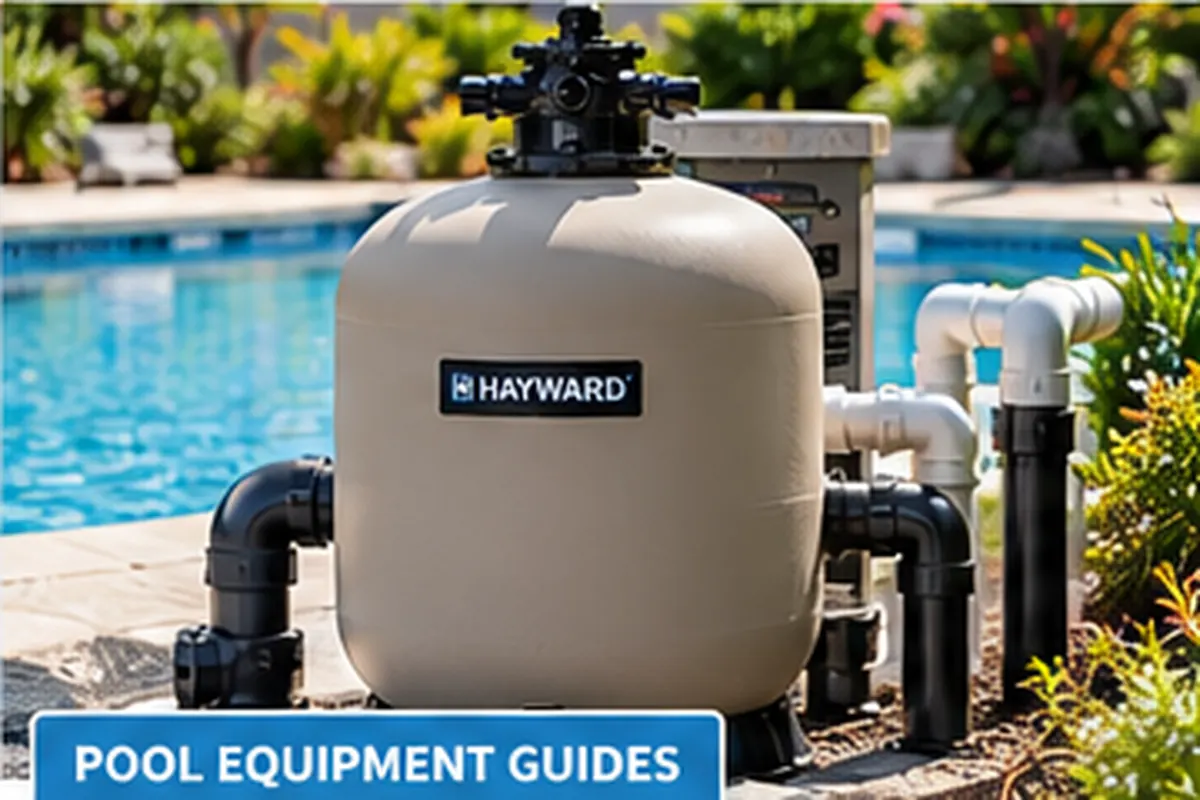
The pool filter removes suspended dirt and debris from circulating water. Choosing the right filter requires understanding more than filtration quality—you also need to consider flow capacity, filter area, maintenance, water use, and compatibility with the pump.
Residential pools primarily use cartridge, sand, or diatomaceous earth filtration, and each approach has distinct advantages.
Quick Answer: Which Type of Pool Filter Do You Need?
Most residential swimming pools use one of three filter types: cartridge, sand or diatomaceous earth (DE). All three remove suspended particles from circulating pool water, but they differ in how they capture debris, how they are cleaned and how much maintenance they require.
Cartridge filters use removable pleated elements and do not normally require backwashing. Sand filters use a bed of filtration media that is typically cleaned by backwashing. DE filters use grids coated with filtration media and can capture very fine particles, but they require additional media-handling procedures.
The appropriate filter must also handle the pool's actual flow rate. Filter type alone does not determine whether a model is suitable for your circulation system.
Pool Filter Types Compared
| Feature | Cartridge | Sand | DE |
|---|---|---|---|
| Filtration media | Pleated cartridges | Sand or approved alternative media | DE-coated grids or approved media |
| Routine cleaning | Remove and rinse cartridges | Backwash | Backwash or clean grids and replenish media as required |
| Backwashing required | Normally no | Normally yes | Depends on design and cleaning procedure |
| Water used during cleaning | Water used to rinse cartridges | Water discharged during backwashing | Depends on cleaning method |
| Media replacement | Replace worn cartridges | Replace media when necessary | Replenish DE as directed and replace worn grids |
| Maintenance considerations | Manual cartridge cleaning | Backwash valve operation and wastewater disposal | Additional media handling and cleaning procedures |
For a detailed side-by-side comparison, see Cartridge vs. Sand vs. DE Pool Filters: Which Is Best?
What Does a Pool Filter Do?
The pool pump moves water through the filter, where suspended particles are captured before the water continues through the circulation system and returns to the pool.
A filter helps remove debris that would otherwise remain suspended in the water. It does not replace sanitation. Proper disinfectant levels, water chemistry and routine cleaning remain essential.
Because pump flow directly affects filter operation, our Complete Guide to Pool Pumps explains how the circulation pump interacts with the rest of the equipment system.
Cartridge Pool Filters
Cartridge filters use replaceable pleated elements to capture suspended debris. The pleats provide a large filtration surface within the filter housing.
As dirt accumulates, resistance through the filter generally increases. Depending on the pump and system, filter pressure may rise and water flow may decline.
The cartridges are periodically removed from the housing and cleaned according to the manufacturer's instructions.
Advantages of Cartridge Filters
- No routine backwashing.
- Large filtration areas are available.
- Removable elements can be inspected during cleaning.
- Cleaning generally avoids the large wastewater discharge associated with backwashing.
Cartridge Filter Considerations
Cartridges are wear items and eventually require replacement. Cleaning intervals depend on filter size, debris load, pump operation and environmental conditions.
Cartridge cleaning also requires access to the filter housing and sufficient space to remove the elements.
If cartridge filtration fits your pool and maintenance preferences, you can compare current cartridge pool filters below.
Compare Cartridge Pool Filters on Amazon
Sand Pool Filters
Sand filters pass water through a bed of filtration media that captures suspended debris. As dirt accumulates, the filter develops additional resistance.
Accumulated dirt is normally removed through backwashing, which reverses water flow through the filter and sends wastewater out of the system.
Advantages of Sand Filters
- Relatively simple operating concept.
- Filtration media can provide years of service when properly maintained.
- Backwashing allows routine cleaning without removing internal filter elements.
Sand Filter Considerations
Backwashing uses pool water and requires an appropriate wastewater discharge arrangement. Local discharge requirements may affect where backwash water can be released.
Sand filters also require sufficient space for their tanks, valves and plumbing connections.
If the simplicity of a backwash-based system appeals to you, you can compare current sand pool filters below.
Compare Sand Pool Filters on Amazon
DE Pool Filters
Diatomaceous earth filters use internal grids coated with DE or other manufacturer-approved filtration media.
The media forms a filtration layer that captures fine suspended particles as water passes through the filter.
Advantages of DE Filters
- Very fine filtration capability.
- Potential to produce high water clarity when properly sized and maintained.
DE Filter Considerations
DE systems require proper media handling and specific backwashing and cleaning procedures. The correct procedure depends on the filter's design and manufacturer instructions.
Used filtration media and cleaning wastewater must be handled in accordance with applicable requirements.
If very fine filtration is your priority, you can compare current DE pool filters below.
Compare DE Pool Filters on Amazon
How Big Should a Pool Filter Be?
Filter sizing involves both water flow and filtration area. The filter must safely handle the flow produced by the pump during all intended operating modes.
Filtration area also affects how much debris can accumulate before cleaning becomes necessary. Larger filtration area can reduce the rate of pressure rise under comparable conditions.
However, filtration area is measured differently across filter types. Cartridge, sand and DE filter area ratings should not be treated as interchangeable sizing numbers.
Worked Example: A 20,000-Gallon Pool
Consider a hypothetical 20,000-gallon pool. If you use an eight-hour turnover target for an initial circulation calculation:
Required GPM = Pool volume ÷ (Hours × 60)
20,000 ÷ (8 × 60) = 41.7 GPM
The calculated average flow is approximately 42 GPM.
| Example Input | Value |
|---|---|
| Pool volume | 20,000 gallons |
| Illustrative turnover target | 8 hours |
| Calculated average flow | 41.7 GPM |
This calculation provides a starting flow estimate, not a final filter size. An eight-hour turnover is an example rather than a universal operating requirement.
Before selecting a filter, determine the actual flow the pump can produce at the system's total dynamic head. Include higher-flow operating modes used for heaters, spas, cleaners or water features where applicable.
Then compare the expected flow with the manufacturer's specifications for the exact filter model.
For a more detailed sizing explanation, see How Big Should My Pool Filter Be? You can also use our Pool Filter Sizing Calculator for a preliminary estimate.
Why Oversizing a Filter Can Help
Within appropriate manufacturer and system requirements, additional filtration area can reduce cleaning frequency and pressure rise because debris is distributed over more filtration surface.
For example, two appropriately rated cartridge filters may both handle the required flow, but the model with more filtration area may allow longer intervals between cleaning under similar operating conditions.
This does not mean installing an arbitrarily large filter. Plumbing, equipment space, flow requirements, cost and manufacturer specifications still matter.
Understanding Filter Pressure
A filter's pressure gauge provides useful information about resistance within the circulation system.
The most useful reference is usually your own clean-filter pressure at a known pump speed, rather than a universal PSI value.
Example: Establishing a Clean Pressure Baseline
Suppose your filter gauge reads 12 PSI immediately after cleaning while the variable-speed pump is running at its normal filtration speed.
Record both the pressure and pump speed. When checking the filter later, use the same pump speed so the readings are comparable.
If the gauge later reads 20 PSI at that same speed, the pressure has increased by 8 PSI. Consult the manufacturer's cleaning guidance to determine whether service is due.
These pressure values are illustrative. Your own clean pressure and cleaning threshold may differ.
When Should You Clean a Pool Filter?
Follow the manufacturer's pressure-rise guidance and maintenance instructions rather than relying solely on a calendar.
Some manufacturers specify cleaning when filter pressure rises a certain amount above the clean starting pressure. Others provide additional operating or maintenance criteria.
Always compare pressure at the same pump speed on variable-speed systems. Also consider visible water-flow changes, debris load and the condition of the filtration media.
For more detail, see How Often Should You Clean a Pool Filter?
Pool Filter Pressure Troubleshooting
| Symptom | Possible Causes | What to Check |
|---|---|---|
| Pressure higher than normal | Dirty media, return-side restriction, incorrect valve position or excessive pump flow | Compare readings at the same pump speed and follow the equipment's troubleshooting instructions |
| Pressure lower than normal | Low pump speed, insufficient suction flow, clogged pump basket or pump problem | Check operating speed, water level, visible air and accessible baskets |
| Pressure rises quickly after cleaning | Heavy debris load, inadequate cleaning or a filtration issue | Review cleaning procedure and inspect media as instructed |
| Gauge does not respond | Faulty or blocked pressure gauge | Have the gauge inspected or replaced as appropriate |
Why Filter Pressure Can Be High
Possible causes include:
- Dirty filtration media.
- Restricted return plumbing.
- Incorrect valve position.
- Small or obstructed return fittings.
- Excessive pump flow.
- Internal filter problems.
If you're troubleshooting an unusual pressure increase, see Why Is My Pool Filter Pressure High? Causes and Fixes.
Why Filter Pressure Can Be Low
Low pressure can indicate insufficient water reaching the filter, although a lower reading may be normal when a variable-speed pump is running at a lower RPM.
Possible causes include:
- Clogged pump basket.
- Low pool-water level.
- Suction-side blockage.
- Air entering the system.
- Low pump speed.
- Pump or impeller problems.
Compare the reading with your normal clean-filter pressure at the same operating speed before drawing conclusions.
How Long Do Filter Cartridges Last?
Cartridge life depends on operating hours, debris load, cleaning methods, water chemistry, filter sizing and physical condition.
Replacement may be appropriate when pleats are damaged, bands fail, cartridges no longer clean effectively or performance deteriorates despite proper maintenance.
For more about replacement timing and signs of wear, see How Long Do Pool Filter Cartridges Last?
Which Pool Filter Should You Choose?
Consider Cartridge Filtration When:
- You want to avoid routine backwashing.
- Reducing wastewater discharge matters.
- You prefer removable filtration elements.
- You have sufficient access for cartridge removal and cleaning.
Consider Sand Filtration When:
- You prefer cleaning by backwashing.
- You want filtration media that can provide years of service.
- You have an appropriate wastewater discharge arrangement.
Consider DE Filtration When:
- Very fine filtration is a priority.
- You are comfortable with additional media-handling procedures.
- You can follow the manufacturer's cleaning and disposal requirements.
Whichever type you choose, verify its rated flow and installation requirements against the complete circulation system.
Pool Filter Maintenance and Safety
Pool filters operate under pressure. Always follow the manufacturer's shutdown, pressure-release and servicing instructions before opening a filter housing or performing maintenance.
Never loosen a clamp or open a pressurized filter. Keep the pressure gauge and air-relief components in proper working condition, and use qualified service personnel when required.
Frequently Asked Questions
What is the difference between a cartridge filter and a sand filter?
Cartridge filters capture debris in removable pleated elements that are periodically cleaned. Sand filters capture debris in a media bed that is normally cleaned through backwashing.
Do DE filters require more maintenance?
DE filters require specific cleaning and media-handling procedures, including replenishing filtration media as directed. Actual maintenance frequency depends on the filter, pool conditions and operating schedule.
Can a pool filter be too small?
Yes. A filter must be rated for the flow it will receive. An undersized filter may experience rapid pressure rise, require frequent cleaning or operate outside the manufacturer's limits.
Is a larger filter always better?
Additional filtration area can offer maintenance benefits, but the filter still needs to match the pump, plumbing, available space and manufacturer's installation requirements.
What PSI should my pool filter run at?
There is no single correct PSI for every pool. Record your clean-filter pressure at a consistent pump speed and follow the manufacturer's guidance for pressure changes and cleaning.
Why does my filter pressure change when I adjust pump speed?
Changing pump speed changes water flow and system pressure. Compare filter pressure readings at the same operating speed to identify meaningful changes.
Does a pool filter replace chlorine?
No. A filter removes suspended particles, while an effective sanitation system is needed to control microorganisms. Both filtration and proper water chemistry are important.
Bottom Line
There is no single filter type that suits every swimming pool. Cartridge, sand and DE systems can all provide effective filtration when properly sized, operated and maintained.
Choose based on required flow, filtration goals, maintenance preferences, water use and the design of the overall circulation system. Use manufacturer specifications to confirm that the exact model is suitable before purchasing.
How We Research
Pool Equipment Lab evaluates pool equipment using manufacturer specifications, documentation, compatibility requirements, operating costs, warranty information, and owner feedback when relevant. We do not claim hands-on testing unless we actually performed it.