
The Complete Guide to Saltwater Pool Systems
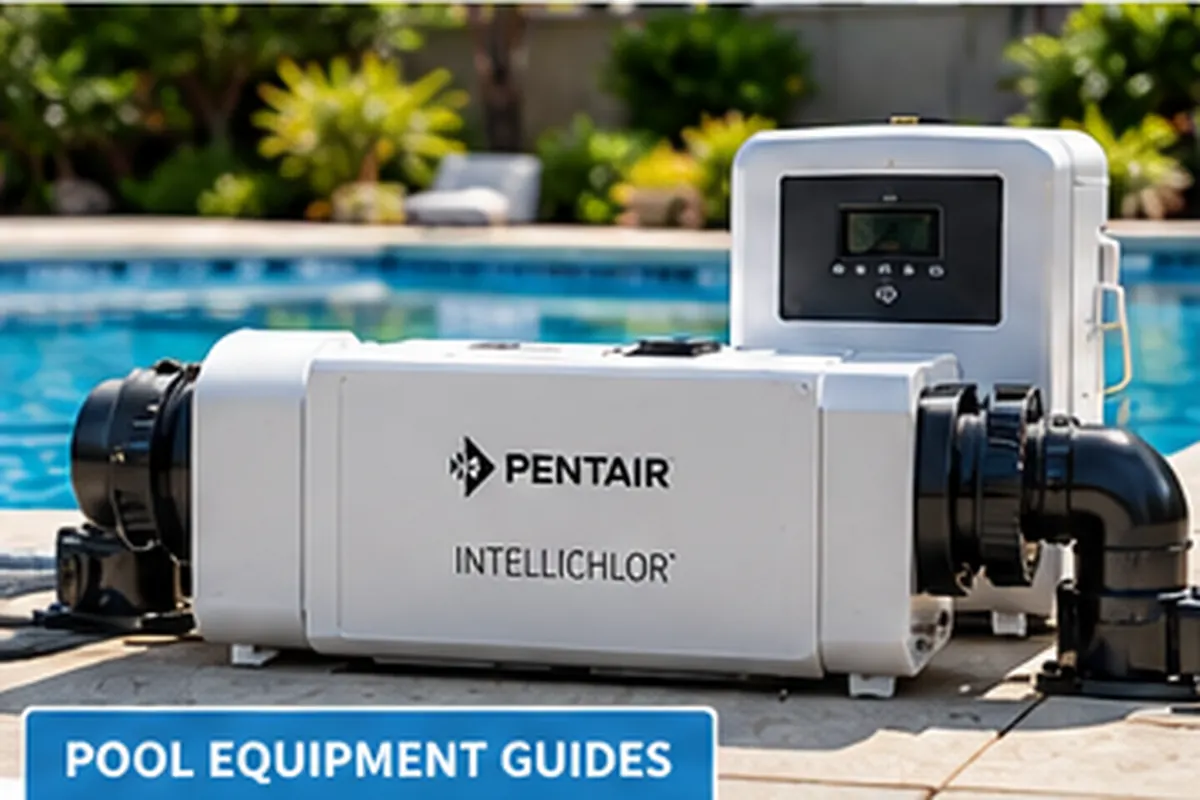
A saltwater pool uses chlorine just like a traditionally chlorinated swimming pool. The major difference is that a salt chlorine generator creates chlorine automatically from salt dissolved in the pool water.
Understanding cell sizing, salt concentration, chlorine output, water flow, chemistry, and cell maintenance is essential for operating a salt system correctly.
Quick Answer: How Does a Saltwater Pool Work?
A saltwater pool uses chlorine just like a traditionally chlorinated swimming pool. The difference is that a salt chlorine generator uses electricity to produce chlorine from salt dissolved in the water.
A salt system automates chlorine generation, but it does not eliminate water testing, chemistry adjustments or equipment maintenance. Proper operation depends on choosing an appropriately sized cell, maintaining the manufacturer's recommended salt concentration, providing sufficient water flow and matching chlorine production to the pool's actual demand.
Saltwater Pool Systems at a Glance
| Component or Measurement | What It Does | Why It Matters |
|---|---|---|
| Salt chlorine generator | Produces chlorine through electrolysis | Supplies sanitizer while operating |
| Salt cell | Contains the electrodes used for chlorine generation | Output capacity affects daily chlorine production |
| Controller | Supplies power and manages chlorine production | Controls output and reports system status |
| Salt concentration | Amount of dissolved salt in the water | Must remain within the generator's operating range |
| Water flow | Moves water through the electrolytic cell | Insufficient flow can prevent generation |
| Free chlorine | Available chlorine sanitizer in pool water | Must be maintained at an appropriate level |
What Is a Saltwater Pool?
A saltwater pool contains a relatively low concentration of dissolved sodium chloride and uses a salt chlorine generator to convert that salt into chlorine sanitizer.
It is not a chlorine-free pool. The generator simply provides another way to supply chlorine to the water.
For a closer comparison of the two approaches, see Saltwater Pool vs. Chlorine Pool.
How a Salt Chlorine Generator Works
Pool water containing dissolved salt passes through an electrolytic cell. Electrical current applied within the cell converts chloride into chlorine compounds that sanitize the pool.
After chlorine performs its sanitizing work, chloride remains in the water and can move through the process again. Salt is not consumed in the same way as a bag of chlorine product, although salt can be lost through water replacement, splash-out, leaks and other sources of water loss.
The Main Components of a Saltwater System
A saltwater system generally includes:
- Electrolytic salt cell: Produces chlorine from dissolved salt.
- Controller or power supply: Provides electrical power and manages chlorine production.
- Flow detection: Helps prevent operation when water flow is insufficient.
- Pool circulation pump: Moves water through the cell and the rest of the equipment system.
- Plumbing and electrical connections: Integrate the generator into the circulation system.
Some systems integrate controls with existing pool automation, while others operate through a dedicated controller.
How Much Salt Does a Pool Need?
The correct salt concentration depends on the particular generator. Always use the target range specified by the equipment manufacturer rather than assuming every system operates at the same salinity.
Test the existing salt concentration before adding more. Also confirm pool volume because an inaccurate volume estimate can result in adding too much or too little salt.
See How Much Salt Does My Pool Need? for the full calculation process, or use our Pool Salt Calculator to estimate an addition.
How to Calculate a Salt Addition
A useful theoretical formula is:
Salt Needed (lb) = Pool Gallons × Required PPM Increase × 0.00000834
The required PPM increase is the target salt concentration minus the current measured concentration.
Worked Example: Adding Salt to a 15,000-Gallon Pool
Suppose a hypothetical salt chlorine generator specifies a target of 3,200 ppm, and a water test shows the pool currently contains 1,000 ppm of salt.
| Input | Value |
|---|---|
| Pool volume | 15,000 gallons |
| Current salt level | 1,000 ppm |
| Target salt level | 3,200 ppm |
| Required increase | 2,200 ppm |
| Calculated salt addition | Approximately 275 lb |
15,000 × 2,200 × 0.00000834 = 275.22 lb
For 40-pound bags, that is approximately 6.9 bags.
This is a theoretical estimate, not an instruction to add the entire amount immediately. Confirm the generator's specified operating range and use its salt-addition table. Add salt according to manufacturer instructions, allow it to dissolve and circulate fully, then retest before making further adjustments.
How to Size a Salt Cell
Salt cells are commonly assigned a maximum pool-capacity rating. However, pool volume is not the only consideration.
Also consider:
- Manufacturer-rated chlorine output.
- Climate and seasonal conditions.
- Swimming and bather load.
- Sun exposure.
- Pump runtime.
- Actual daily chlorine demand.
- Compatibility with the circulation system.
Worked Example: Choosing a Capacity Rating
Consider a 15,000-gallon residential pool. If you use a 1.5-times capacity margin as a preliminary comparison:
15,000 gallons × 1.5 = 22,500 gallons
This gives you a preliminary pool-capacity rating of 22,500 gallons. You would then compare available generator models with that rating or greater.
However, a capacity multiplier alone cannot establish whether a cell will meet your pool's chlorine demand. Manufacturer-rated chlorine production, expressed in pounds per day, provides additional information.
See What Size Salt Cell Do I Need? for more about selecting capacity, or use our Salt Cell Sizing Calculator for a starting estimate.
Once you know the capacity your pool requires, compare available saltwater chlorinators by chlorine output, pool-size rating, flow requirements and compatibility.
Compare Saltwater Pool Chlorinators on Amazon
Why Chlorine Output Matters
Salt-cell manufacturers may specify chlorine production during 24 hours of continuous operation at maximum output.
If the circulation system runs for only part of the day or the generator is set below 100%, actual daily production will generally be lower.
Example: Understanding Daily Output
Suppose a hypothetical cell is rated to produce 1 pound of chlorine per day at maximum output during continuous operation.
If it operates for 12 hours at full output, its theoretical production would be approximately 0.5 pounds for that day.
If the same cell operates for 12 hours at a 50% output setting, theoretical daily production would be approximately 0.25 pounds.
Actual output depends on the generator's operating characteristics and conditions. These calculations illustrate why rated maximum production should not be confused with actual daily production.
Should You Oversize a Salt Cell?
Choosing a cell with additional production capacity can reduce the need to operate continuously at maximum output during ordinary conditions.
However, a larger cell may have a higher purchase or replacement cost. Compare chlorine output, controller compatibility, flow requirements and expected chlorine demand rather than relying on pool-size ratings alone.
Salt Cell Lifespan
Electrolytic cells are wear components. Some Pentair IntelliChlor models have published cell-life ratings of approximately 10,000 operating hours under normal operating conditions.
Actual lifespan depends on operating time, water chemistry, scale, maintenance and output demands. Do not assume that the published life of one manufacturer's model applies to every salt cell.
For more about expected service life and replacement indicators, see How Long Do Salt Cells Last?
If an existing cell has reached the end of its service life, verify the exact manufacturer, model and controller compatibility before ordering a replacement.
Compare Replacement Salt Cells on Amazon
Why Scale Forms on Salt Cells
Calcium scale can accumulate on cell blades under certain water-chemistry conditions.
Scale can interfere with chlorine production and may trigger service warnings. Some systems periodically reverse polarity to help reduce scale accumulation.
Maintaining appropriate water balance is important because frequent scale formation may indicate chemistry conditions that need attention.
Cleaning a Salt Cell
Inspect the cell according to the manufacturer's maintenance schedule.
Do not automatically acid-clean a cell simply because it has been in service for a certain period. Excessive chemical cleaning can damage the electrode coating and shorten service life.
Follow the exact manufacturer's inspection and cleaning procedure for your model. Use appropriate protective equipment when handling cleaning chemicals.
Why a Salt System May Stop Producing Chlorine
Low or absent chlorine production can have several causes. Check the generator's displayed status and the pool's water-test results before assuming the cell has failed.
| Possible Cause | What to Check |
|---|---|
| Salt outside the operating range | Test salinity and compare it with manufacturer specifications |
| Insufficient water flow | Check pump operation, filter condition and flow-related warnings |
| Low output setting | Review the programmed production percentage |
| Insufficient runtime | Check how long the generator operates each day |
| Cold water | Check the manufacturer's low-temperature operating limits |
| Scale accumulation | Inspect the cell according to manufacturer instructions |
| High chlorine demand | Review water chemistry, sunlight exposure and pool usage |
| Worn or faulty cell | Follow manufacturer diagnostic procedures |
For a more detailed troubleshooting process, see Why Is My Salt System Not Producing Chlorine?
Water Flow Matters
Salt generators require sufficient water flow to operate safely. If pump speed is too low or circulation is restricted, a flow switch may prevent chlorine generation.
This is particularly important when programming variable-speed pumps at low RPM. Confirm that the generator receives adequate flow during every scheduled production period.
Cold-Water Operation
Some salt chlorine generators reduce output or stop producing chlorine when pool water becomes cold.
Pentair's IntelliChlor documentation, for example, describes low-temperature protection that prevents chlorine production under specified cold-water conditions.
Check the temperature limits for your exact model. If the generator stops operating seasonally, maintain appropriate sanitizer levels using methods compatible with your pool and equipment.
Saltwater vs. Traditional Chlorination
Both systems ultimately sanitize the water with chlorine. Traditional chlorination requires chlorine to be introduced through chemical products or feeders. A salt system generates chlorine from dissolved salt while the system operates.
| Feature | Salt Chlorine Generator | Traditional Chlorination |
|---|---|---|
| Sanitizer | Chlorine | Chlorine |
| How chlorine is supplied | Generated from dissolved salt | Added through chemical products or feeders |
| Equipment requirements | Generator, cell and compatible circulation system | Depends on the selected chlorine-delivery method |
| Routine water testing | Required | Required |
| Ongoing costs | Electricity, maintenance and eventual cell replacement | Chlorine products and any feeder maintenance |
Advantages of Salt Systems
- Automated chlorine generation.
- Reduced need for routine manual chlorine additions during normal operation.
- Adjustable chlorine production.
- Integration with some pool automation systems.
Considerations Before Going Saltwater
- Initial equipment cost.
- Future cell replacement.
- Compatibility with pool surfaces and equipment materials.
- Water chemistry and salt concentration.
- Electrical installation requirements.
- Automation compatibility.
Salt can contribute to corrosion or deterioration of susceptible metals and surfaces, so material selection and proper maintenance remain important.
If you decide a saltwater system fits your pool, compare system capacity and compatibility rather than choosing on purchase price alone.
Compare Saltwater Pool Chlorinators on Amazon
Saltwater Pool Maintenance
A salt system does not eliminate water testing. Owners still need to monitor:
- Free chlorine.
- pH.
- Salt concentration.
- Total alkalinity.
- Calcium hardness.
- Stabilizer where applicable.
- Overall water balance.
Also inspect the cell and other equipment at the intervals specified by the manufacturer. Adjust generator output and operating schedules based on actual water-test results and pool conditions.
Frequently Asked Questions
Is a saltwater pool chlorine-free?
No. A salt chlorine generator produces chlorine from dissolved salt. The pool still relies on chlorine for sanitation.
How much salt should I add to my pool?
Test the current salt level and compare it with your generator's specified target range. Use the actual pool volume and the manufacturer's salt-addition guidance before adding more.
Can a salt cell be too small for a pool?
Yes. A cell with insufficient production capacity may be unable to keep up with chlorine demand during high-use periods or challenging environmental conditions.
Does a larger salt cell always produce more chlorine?
A larger-capacity model may have greater maximum output, but production depends on its actual manufacturer-rated output, operating time, output setting and conditions.
Do I need to run my pump while the salt generator is operating?
Yes. Salt chlorine generators require adequate water flow and must be installed and operated according to the manufacturer's instructions.
Should I acid-clean my salt cell regularly?
Not automatically. Inspect the cell as directed and clean it only when appropriate under the manufacturer's instructions. Unnecessary chemical cleaning can damage the electrode coating.
Why does my salt system stop working in winter?
Some generators reduce or stop chlorine production when water temperature falls below their operating threshold. Check the specifications for your particular model.
Does a saltwater pool still need water-chemistry adjustments?
Yes. Salt systems automate chlorine production, not every aspect of pool chemistry. Regular testing and appropriate adjustments remain necessary.
Bottom Line
A salt chlorine generator automates chlorine production, but it does not automate every aspect of pool care.
Correct cell sizing, salt concentration, water flow, runtime, water chemistry and maintenance determine whether a saltwater system operates effectively.
Use manufacturer specifications and actual water-test results to guide equipment selection and operation.
How We Research
Pool Equipment Lab evaluates pool equipment using manufacturer specifications, documentation, compatibility requirements, operating costs, warranty information, and owner feedback when relevant. We do not claim hands-on testing unless we actually performed it.