
Why Is My Salt Chlorinator Not Producing Chlorine?
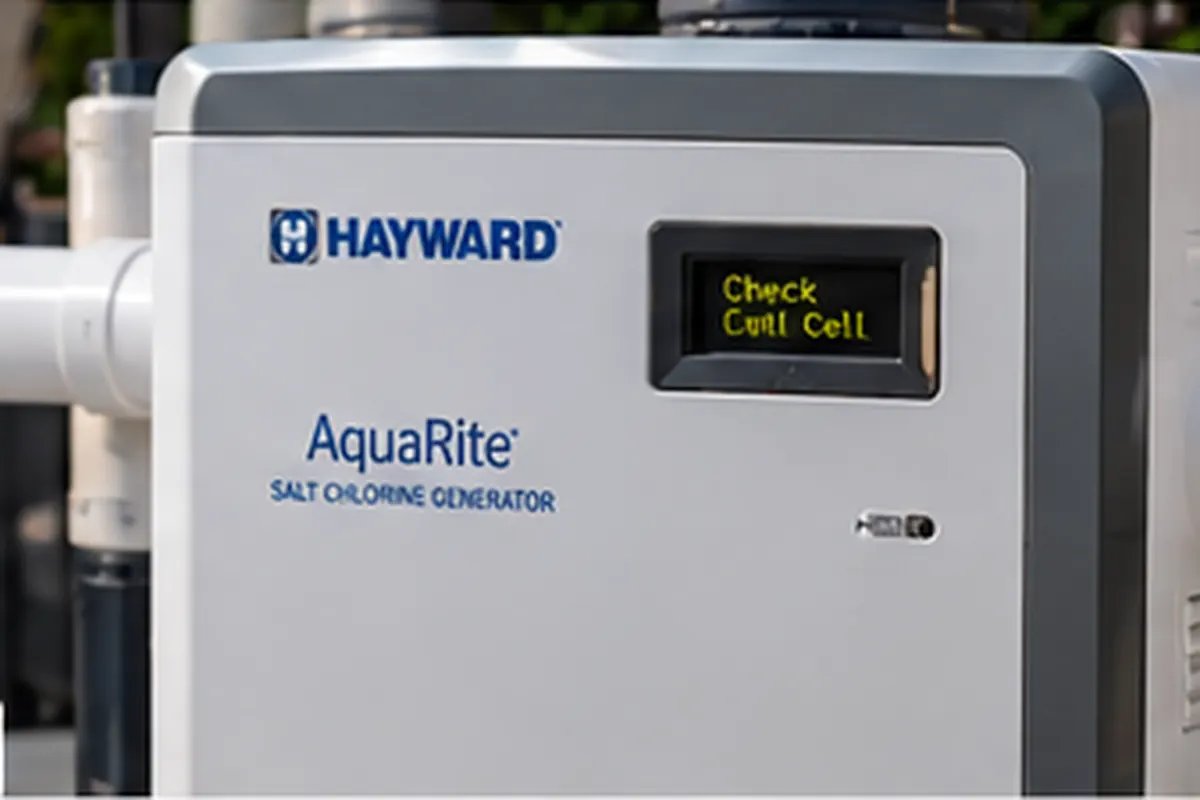
A low chlorine reading does not automatically mean your salt cell has failed. Salt chlorine generators depend on correct salinity, adequate water flow, sufficient operating time, clean cell blades, proper settings, and balanced pool chemistry.
A systematic check can often identify the problem before you spend money replacing the cell.
Quick Answer: Why Is My Salt Chlorinator Not Producing Chlorine?
A salt chlorinator may stop producing chlorine because of low salt concentration, insufficient water flow, incorrect output settings, inadequate pump runtime, calcium scale, cold water or a worn salt cell. However, low free chlorine does not automatically mean the generator has stopped working. The pool may be consuming chlorine as quickly as the cell produces it.
Start by independently testing free chlorine and salinity. Then check the generator's warning messages, water flow, output setting and operating schedule before considering cell replacement.
Salt Chlorinator Troubleshooting at a Glance
| Symptom | Possible Cause | First Check |
|---|---|---|
| Low free chlorine with no generator warning | Insufficient production or high chlorine demand | Output setting, runtime and complete water chemistry |
| Low-salt warning | Low salinity, inaccurate reading or sensor issue | Independent salt test |
| Low-flow warning | Insufficient circulation or flow-sensor problem | Pump, filter, baskets and valve positions |
| Check-cell warning | Scale, cell wear or another model-specific fault | Manufacturer's diagnostic procedure |
| Chlorine production drops in cold weather | Temperature-related output reduction or shutdown | Model-specific temperature limits |
| Generator runs but chlorine remains low | Insufficient daily production, water-chemistry issue or high demand | Independent testing and production-versus-demand assessment |
| Generator will not power on | Power, control or electrical problem | Approved user-level checks and displayed status |
Start by Testing the Pool Water
Before changing settings or replacing parts, measure the pool's actual free chlorine and salt concentration using appropriate independent testing methods.
Do not rely solely on the generator's displayed salt reading. Some systems estimate salinity from electrical measurements, and their readings may differ from an independent water test.
Also evaluate the rest of the pool chemistry because a working generator cannot overcome every water-balance or chlorine-demand problem.
For a broader explanation of salt chlorine generators, cell operation, sizing, salinity and maintenance, see our Complete Guide to Saltwater Pool Systems.
Record These Results Before Troubleshooting
- Free chlorine.
- Combined chlorine, where applicable.
- Salt concentration.
- pH.
- Cyanuric acid (CYA).
- Water temperature.
- Current generator output setting.
- Daily generator and pump runtime.
- Any displayed warning messages or diagnostic codes.
Compare the results with the water-chemistry and operating ranges specified by the generator manufacturer and applicable pool-care guidance.
1. Check the Salt Level
Salt chlorine generators require a salinity range specified by the manufacturer.
If salinity becomes too low, chlorine production can decrease or the generator may shut down.
However, a low-salt warning does not always prove that the pool needs more salt. A dirty or worn cell, temperature-related effects or a sensor problem may affect the system's displayed reading.
How to Check the Salt Level
- Test the pool's salinity independently.
- Compare the result with the generator's displayed reading.
- Check the manufacturer's specified operating range.
- Review any salt-related diagnostic messages.
- Add salt only if independent testing confirms that the pool is below the appropriate range.
If the salt level is below your generator's required range, see How Much Salt Does My Pool Need? before adding salt.
Example: A Low-Salt Warning With a Normal Independent Test
Suppose a generator displays a low-salt warning, but an independent test shows that salinity is within the manufacturer's recommended range.
Adding more salt immediately could push the pool above the intended range without correcting the underlying problem.
Instead, follow the manufacturer's diagnostic procedure for the cell, temperature reading and salinity measurement system.
Do not use the operating limits of one manufacturer's generator to troubleshoot another manufacturer's system.
2. Check Water Flow Through the Salt Cell
A salt chlorinator needs sufficient water flow through its cell to operate safely.
Many systems use a flow switch or sensor to prevent chlorine production when circulation is inadequate.
Possible causes of a low-flow condition include:
- Pump speed is too low.
- The pool filter is restricting flow.
- A valve is incorrectly positioned.
- The pump basket is clogged.
- Air is entering the circulation system.
- The pump cannot maintain prime.
- The flow sensor or switch has a problem.
Check the Circulation System in Order
- Verify that the circulation pump is operating.
- Check whether the pump is properly primed.
- Confirm that the current pump setting provides the flow required by the generator.
- Inspect accessible baskets for restrictions.
- Check the filter's condition and normal pressure reading.
- Verify that the appropriate valves are positioned correctly.
- Follow the manufacturer's diagnostic procedure if the low-flow warning remains.
If filter restriction appears to be reducing circulation, our Complete Guide to Pool Filters covers filter pressure, cleaning, sizing and common flow-related issues.
Never bypass a flow switch or other safety interlock to force chlorine production.
Example: Low Flow After Changing a Variable-Speed Pump Schedule
Suppose a salt system previously operated normally, but a low-flow warning appears after the variable-speed pump is programmed to run at a lower speed.
The new setting may not provide enough flow through the cell.
Check the generator's minimum-flow requirements and use the pump and generator manufacturers' instructions to establish a compatible operating schedule.
There is no universal pump RPM that guarantees sufficient flow for every salt system. Plumbing resistance, filter condition and equipment configuration affect the result.
3. Check the Generator's Output Setting
A generator set to a low output percentage may not produce enough chlorine for the pool's current demand.
On many systems, output percentage controls the proportion of available operating time during which the cell generates chlorine.
It does not necessarily represent the concentration of chlorine being produced at a particular instant.
Example: Understanding Output Percentage
Consider a hypothetical salt cell that produces 1.2 pounds of chlorine equivalent per 24 hours at its full rated output under the manufacturer's specified conditions.
If the cell operates for eight hours at a 50% output setting, its theoretical production would be:
1.2 × (8 ÷ 24) × 0.50 = 0.2 pounds
At a 100% setting over the same eight-hour period, theoretical production would be:
1.2 × (8 ÷ 24) = 0.4 pounds
These figures are illustrative. Actual production depends on the generator's design, operating conditions and whether it remains enabled throughout the scheduled period.
Adjust output based on actual free-chlorine testing and the manufacturer's instructions rather than automatically setting the generator to its maximum.
4. Check Pump and Generator Runtime
Even a correctly sized salt cell cannot produce its full daily rated output if it operates for only a few hours.
If chlorine demand increases during summer while pump runtime and generator output remain unchanged, daily production may fall behind consumption.
Verify that the generator is actually enabled during the intended circulation period. A pump running does not necessarily mean the cell is producing chlorine continuously.
Example: A Cell That Is Large Enough but Runs Too Briefly
Consider a hypothetical cell rated to produce 1.2 pounds of chlorine equivalent per 24 hours.
| Daily Operating Time | Output Setting | Theoretical Daily Production |
|---|---|---|
| 4 hours | 100% | 0.2 lb |
| 8 hours | 100% | 0.4 lb |
| 12 hours | 100% | 0.6 lb |
| 8 hours | 50% | 0.2 lb |
This example assumes uninterrupted operation under conditions that permit full rated production. It illustrates why cell capacity, output percentage and operating time must be considered together.
Cell capacity can also be part of the problem. See What Size Salt Cell Do I Need? or use our Salt Cell Sizing Calculator to evaluate whether the generator is appropriately sized for the pool.
5. Inspect the Salt Cell for Calcium Scale
Calcium deposits on the cell's plates can interfere with operation.
Depending on the generator, scale may contribute to reduced production, inaccurate readings or diagnostic warnings.
Inspect the cell according to the manufacturer's instructions.
What to Look For
- Visible mineral deposits on the cell plates.
- Debris obstructing the cell housing.
- Damaged or visibly deteriorated components.
- Model-specific cell inspection or service warnings.
Follow the manufacturer's shutdown, removal and inspection procedure.
Do not automatically acid-clean a cell whenever chlorine is low. Some cells may require only rinsing, and unnecessary acid cleaning can shorten the life of the protective coating.
If the manufacturer permits acid cleaning, use only its specified procedure and safety precautions. Never mix acid with chlorine products or other pool chemicals.
6. Consider Water Temperature
Some salt chlorine generators reduce production or shut down when pool water becomes cold.
This may be a normal protective feature rather than an equipment failure.
Check the operating-temperature specifications for your exact model.
Example: Low Chlorine Production During Winter
Suppose a salt generator operates normally during summer but displays a temperature-related warning when pool water becomes much colder.
If the water temperature is below the model's permitted production range, the cell may intentionally reduce or stop chlorine generation.
Do not attempt to override the manufacturer's temperature protection.
Continue testing and maintaining the pool's required sanitizer level using an appropriate method when the salt system cannot meet demand.
7. Check Cyanuric Acid, pH and Sunlight Exposure
Outdoor pools lose unstabilized chlorine rapidly to sunlight.
Cyanuric acid helps protect chlorine from ultraviolet degradation, but excessive CYA can also complicate sanitation management.
Check the generator manufacturer's recommended water-chemistry ranges and maintain an appropriate free-chlorine level for the pool's CYA concentration.
Also check pH and other relevant water-balance measurements.
A salt generator may be operating correctly even when the pool's overall chemistry requires adjustment.
Example: Chlorine Tests Low Every Afternoon
Suppose a pool's free chlorine measures higher in the morning but repeatedly falls below the intended level by late afternoon.
Possible explanations include insufficient daily chlorine production, sunlight-related loss, increased swimmer demand or a combination of factors.
Check CYA, free chlorine, generator runtime and output before concluding that the cell has failed.
8. Consider Unusually High Chlorine Demand
The salt system may be producing chlorine normally while the pool consumes it just as quickly.
Demand can increase because of:
- Heavy swimming loads.
- Rain and storms.
- Organic debris.
- Algae growth.
- Strong sunlight.
- Water-chemistry problems.
Low free chlorine is a measurement of what remains in the water, not a direct measurement of how much chlorine the cell has produced.
Production vs. Demand: Why the Difference Matters
Consider two hypothetical pools with identical salt generators.
Pool A has relatively low daily chlorine demand. Its generator produces enough chlorine to maintain the intended free-chlorine level.
Pool B has substantial organic debris, frequent swimming activity and greater sunlight exposure. Even with the same generator output, its free chlorine may decline because consumption exceeds production.
Increasing output or runtime may help when the system has sufficient capacity, but persistent high demand requires identifying and correcting the underlying water-quality problem.
If the pool shows signs of algae or cannot maintain an appropriate sanitizer residual, follow applicable pool-treatment guidance rather than relying on the salt generator alone to resolve the condition.
9. Check Whether the Salt Cell Is Appropriately Sized
A generator that is too small for the pool's actual chlorine demand may struggle to maintain free chlorine even when it operates correctly.
Manufacturer pool-volume ratings are useful starting points, but they do not account for every combination of climate, sunlight, swimmer activity and operating schedule.
When evaluating capacity, consider:
- Actual pool volume.
- Manufacturer-rated chlorine production.
- Expected daily operating time.
- Typical output setting.
- Seasonal chlorine demand.
- Whether the circulation schedule allows sufficient production time.
A larger-capacity compatible cell may provide additional production flexibility, but it must be supported by the generator's controller and installation requirements.
10. Determine Whether the Cell Is Worn Out
Salt-cell plates eventually wear out.
If salinity, flow, chemistry, settings, runtime and cleanliness are all correct but chlorine production remains inadequate, cell wear becomes a stronger possibility.
Some generators provide remaining-life diagnostics, cell-status indicators or check-cell warnings.
However, a warning alone does not necessarily establish that the cell needs replacement.
Signs That Warrant Further Cell Diagnosis
- Persistent model-specific cell warnings after routine operating conditions have been verified.
- Repeated production problems despite correct salinity and flow.
- Diagnostic readings outside the manufacturer's specified range.
- Visible damage identified during an approved inspection.
- A cell that has accumulated substantial operating hours and fails the manufacturer's diagnostic procedure.
See How Long Do Salt Cells Last? for more about operating hours, cell wear, maintenance and replacement indicators.
If troubleshooting confirms that the cell has reached the end of its service life, verify the exact manufacturer, model and controller compatibility before purchasing a replacement.
Compare Replacement Salt Cells on Amazon
How to Tell Whether the Problem Is Production or Chlorine Demand
Low free chlorine can result from inadequate production, unusually high demand or both.
| Observation | What It May Suggest | Next Check |
|---|---|---|
| Low-salt or low-flow warning | Generator may be unable to operate normally | Independent salinity test or circulation checks |
| No warnings, but short daily runtime | Insufficient total daily production | Output percentage, runtime and rated capacity |
| Normal generator operation with heavy debris or algae | Elevated chlorine demand | Water chemistry and underlying contamination |
| Repeated low chlorine during strong sunlight | Sunlight loss, insufficient production or both | CYA, free chlorine and daily production schedule |
| Correct operating conditions but persistent cell diagnostics | Possible cell or sensor problem | Manufacturer's diagnostic procedure |
A pool can have more than one problem at the same time. For example, a dirty cell and elevated chlorine demand may both contribute to low free chlorine.
A Practical Salt Chlorinator Troubleshooting Order
- Test free chlorine independently.
- Test salinity independently.
- Check generator warning lights and diagnostic messages.
- Verify adequate pump flow.
- Check the generator's output percentage.
- Confirm daily pump and generator runtime.
- Inspect the cell according to the manufacturer's instructions.
- Check water temperature.
- Review CYA, pH and other relevant pool chemistry.
- Consider unusually high chlorine demand.
- Compare the cell's production capacity with the pool's needs.
- Evaluate cell age and model-specific diagnostic information.
When to Call a Professional
Professional service is appropriate when troubleshooting involves:
- Electrical components or damaged wiring.
- A failed power supply.
- Persistent flow-sensor faults.
- Unexplained cell or controller diagnostic errors.
- Internal repairs beyond routine owner maintenance.
- Persistent sanitation problems that cannot be resolved through normal testing and maintenance.
Always disconnect power and follow manufacturer safety procedures before performing permitted maintenance.
Never bypass flow switches, electrical protections or other safety systems to force chlorine production.
Frequently Asked Questions
Why is my salt chlorinator running but not producing enough chlorine?
Possible causes include insufficient output or runtime, low salt concentration, inadequate flow, calcium scale, cell wear or unusually high chlorine demand. Start with independent water testing and the generator's diagnostic information.
Does low chlorine mean my salt cell is bad?
No. Low free chlorine can occur even when the generator is working correctly. Check production settings, runtime, water chemistry and chlorine demand before considering replacement.
Can low salt stop chlorine production?
Yes. Salt generators require salinity within their specified operating range. Some systems reduce production or shut down when salinity becomes too low.
Should I add salt whenever the generator displays a low-salt warning?
No. Independently test salinity first. If the actual salt level is already within the manufacturer's range, follow the system's diagnostic procedure rather than automatically adding more salt.
Can low pump speed stop a salt chlorinator?
Yes. If water flow falls below the generator's required minimum, its flow protection may prevent chlorine production. Verify the actual operating requirements of the installed system.
Can a dirty pool filter affect chlorine generation?
Yes. A restricted filter can reduce circulation flow. If flow through the salt cell becomes inadequate, the generator may reduce or stop production.
Should I increase the salt generator to 100%?
Only when appropriate for the pool's measured chlorine level, demand and the manufacturer's operating instructions. Increasing output does not correct every cause of low chlorine.
Can cold water stop a salt chlorinator?
Yes. Some systems reduce or suspend production below specified water temperatures. Check the exact model's operating limits.
How do I know if my salt cell needs cleaning?
Follow the manufacturer's inspection schedule and check for visible mineral deposits or model-specific warnings. Clean the cell only when indicated and use the approved procedure.
When should I replace my salt cell?
Consider replacement after verifying salinity, flow, water chemistry, settings, runtime and cell cleanliness, then completing the manufacturer's diagnostic procedure. Confirm exact controller and replacement-cell compatibility before purchasing.
Bottom Line
Low chlorine does not prove that a salt cell has failed. Incorrect salinity, inadequate flow, insufficient runtime, low output settings, scale, cold water, chemistry problems and unusually high chlorine demand can produce similar symptoms.
Test the water independently, check the generator's operating conditions and follow its model-specific diagnostics before replacing the cell.
How We Research
Pool Equipment Lab evaluates pool equipment using manufacturer specifications, documentation, compatibility requirements, operating costs, warranty information, and owner feedback when relevant. We do not claim hands-on testing unless we actually performed it.