
How Do Robotic Pool Cleaners Work?
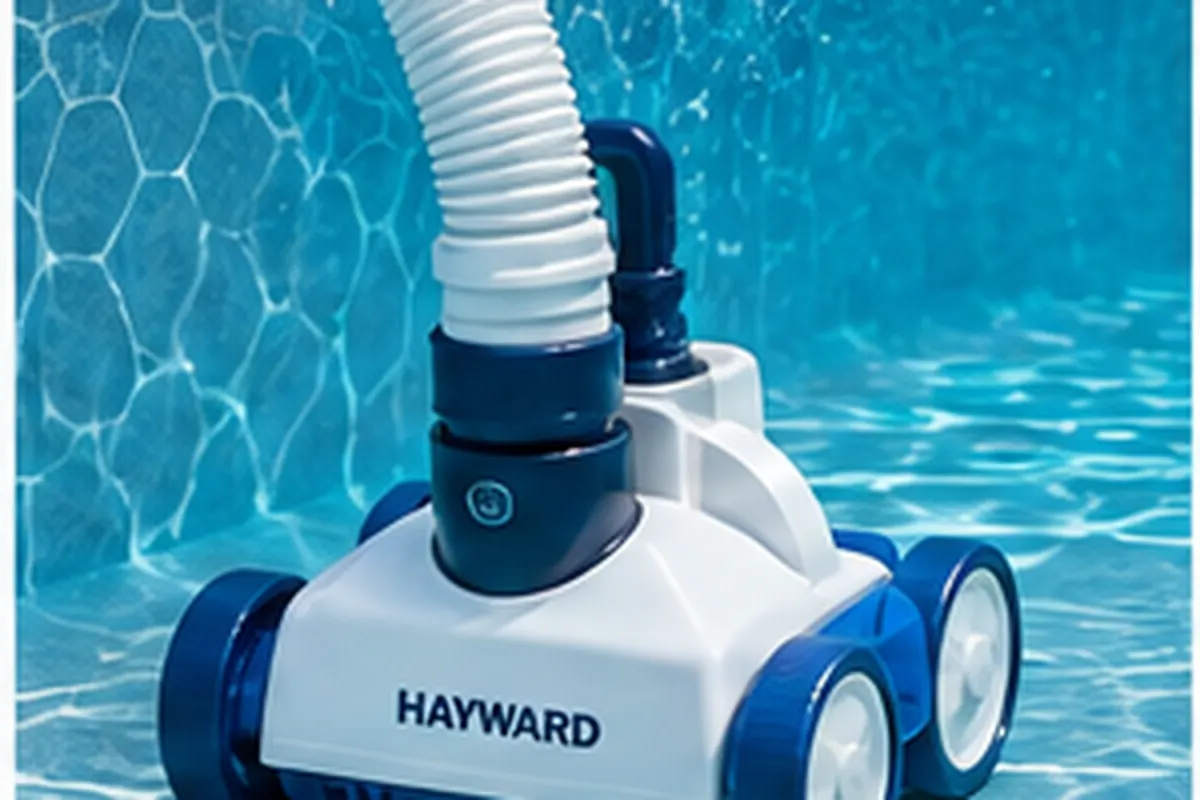
Robotic pool cleaners are self-contained cleaning machines that operate separately from the pool's main pump and filter system.
Instead of using the pool pump to create suction, a robotic cleaner uses onboard motors, brushes, and filtration to move through the pool and collect debris.
Quick Answer: How Does a Robotic Pool Cleaner Work?
A robotic pool cleaner uses onboard electric motors, brushes and a built-in filtration system to clean swimming pool surfaces. Its drive system moves the robot through the pool while an internal pump draws water and debris through a filter basket or cartridge. Filtered water then returns to the pool.
Unlike suction-side and pressure-side cleaners, a robotic cleaner does not rely on the pool's main circulation pump for propulsion or debris collection. Depending on the model, it may clean the floor, climb walls, scrub the waterline and follow programmed cleaning patterns.
Robotic Pool Cleaners at a Glance
| Feature | How It Works | What to Check |
|---|---|---|
| Power source | Approved external power supply or rechargeable battery | Corded or cordless design |
| Movement | Onboard electric drive motors | Wheels, tracks and navigation capabilities |
| Scrubbing | Rotating brushes or other cleaning components | Brush design and pool-surface compatibility |
| Debris collection | Internal pump and onboard filtration | Basket capacity and available filter media |
| Cleaning coverage | Depends on the model | Floor, wall and waterline capabilities |
| Navigation | Programmed movement patterns or more advanced navigation systems | Pool shape and coverage requirements |
| Maintenance | Filter cleaning and inspection of moving components | Replacement parts and manufacturer instructions |
What Is a Robotic Pool Cleaner?
A robotic pool cleaner is an electrically powered automatic cleaner designed to move through a swimming pool, scrub supported surfaces and collect debris.
Unlike suction-side and pressure-side cleaners, the robot does not depend on the pool's primary circulation system to provide its cleaning power.
It combines propulsion, scrubbing and filtration in a single machine.
For a broader explanation of automatic cleaner types, operation, maintenance and selection, see our Complete Guide to Pool Cleaners.
Step by Step: How a Robotic Pool Cleaner Works
- The cleaner receives power from its approved external power supply or internal rechargeable battery.
- Its onboard drive system moves the robot through the pool.
- Brushes or other cleaning components loosen dirt and debris from supported pool surfaces.
- An internal pump draws water and debris through the cleaner's intake.
- The onboard filter captures debris while filtered water returns to the pool.
- The robot continues operating according to its selected cleaning cycle and navigation system.
- When cleaning is complete, the owner removes the cleaner as directed and empties its collection basket or cartridges.
The exact sequence and available features depend on the cleaner model.
How Does a Robotic Cleaner Move?
Robotic cleaners use onboard motors to drive wheels, tracks or other propulsion mechanisms.
The exact design varies by model.
Some cleaners are designed primarily for pool floors, while others can climb walls and clean along the waterline.
Wheels vs. Tracks
| Drive Design | How It Works | Maintenance Considerations |
|---|---|---|
| Wheels | Motor-driven wheels propel the cleaner | Inspect tires, wheels and accessible drive components |
| Tracks | Motor-driven tracks provide propulsion and traction | Inspect tracks for wear, damage and trapped debris |
| Other model-specific mechanisms | Use the manufacturer's designed propulsion arrangement | Follow the model-specific maintenance procedure |
Neither wheels nor tracks guarantee that a cleaner will navigate every pool shape or climb every surface.
Traction, weight distribution, pool geometry and the cleaner's navigation system all affect movement.
How Does a Robotic Cleaner Pick Up Debris?
An internal pump draws water and debris into the cleaner.
The water passes through an onboard filter basket, cartridge or similar filtration element.
Debris remains inside the cleaner while filtered water returns to the pool.
Because the debris is collected inside the robot, it does not normally pass through the pool's primary filter.
Robotic cleaners vary considerably in filtration, debris capacity, pool coverage and cleaning features. Compare those specifications before choosing a model.
Compare Robotic Pool Cleaners on Amazon
How Does a Robotic Cleaner Scrub the Pool?
Many robotic cleaners use rotating brushes or scrubbers to loosen dirt from pool surfaces.
Depending on the model, brushes may clean:
- The pool floor.
- Pool walls.
- The transition between the floor and walls.
- The waterline.
Some models use actively driven brushes, while others have different brush arrangements.
Brush design and material should be compatible with the pool surface.
Example: Removing Dirt From the Pool Floor
Consider a pool with fine dirt that has settled across the floor.
As the robotic cleaner travels across the surface, its brushes help loosen the settled material.
The internal pump draws water and loosened debris through the intake, where the onboard filter captures particles that are within its filtration capability.
If the filter becomes overloaded, the owner may need to empty and rinse it before the cleaning cycle is complete.
How Do Robotic Cleaners Know Where to Go?
Navigation technology varies considerably.
Some cleaners follow programmed movement patterns. More advanced designs may use sensors, mapping logic or other navigation systems to improve coverage.
Not every robot provides the same coverage, so pool shape and cleaner specifications matter.
| Navigation Feature | What It May Provide | What to Verify |
|---|---|---|
| Programmed movement | Automatic movement according to a built-in cleaning pattern | Supported pool shapes and cleaning coverage |
| Sensor-assisted navigation | Uses supported sensor information during cleaning | Exact model capabilities |
| Advanced navigation or mapping | May improve route planning or coverage | Manufacturer's documented features |
| Selectable cleaning modes | Allows supported floor, wall or other cleaning programs | Available modes on the exact model |
Do not assume that a robot advertised as having advanced navigation will clean every step, shelf, corner or waterline section.
Do Robotic Cleaners Use the Pool Pump?
Robotic cleaners use their own cleaning motors and filtration system rather than relying on suction from the pool pump.
This allows the pool's circulation system and robotic cleaner to perform separate jobs.
This differs from suction-side pool cleaners, which rely on pump suction, and pressure-side pool cleaners, which use return-side water pressure.
Example: Cleaning While the Pool Pump Is on a Low-Speed Schedule
Suppose a pool's variable-speed circulation pump is programmed to operate at a low speed during routine filtration.
A robotic cleaner can perform its own cleaning cycle without needing that circulation pump to increase speed solely to power the cleaner.
The pool's normal circulation and sanitation requirements still need to be met independently of the robot's cleaning schedule.
Do Robotic Pool Cleaners Filter the Water?
Yes. Water passes through the cleaner's onboard filter during operation.
However, a robotic cleaner is not a replacement for the pool's primary circulation, filtration or sanitation system.
Its filtration is primarily intended to collect debris encountered during its cleaning cycle.
The pool's main filtration system remains responsible for normal circulation and filtration, while the sanitation system maintains the required water chemistry.
What Types of Debris Can Robotic Cleaners Pick Up?
Performance depends on the cleaner and its installed filter media.
Depending on the design, robotic cleaners may collect:
- Leaves.
- Dirt.
- Sand.
- Small twigs.
- Insects.
- Other settled debris.
Basket size, intake design and filter type are important when matching a cleaner to the debris commonly found in your pool.
Matching the Filter to the Debris
| Debris Type | What to Look For |
|---|---|
| Leaves | Adequate intake size and debris-basket capacity |
| Fine dirt and sand | Compatible fine-filtration media |
| Mixed debris | A filtration arrangement suitable for both larger and smaller material |
| Heavy seasonal debris | Accessible collection basket and sufficient capacity |
Some cleaners offer interchangeable filtration components. Others have a fixed filter design.
Verify which filters are included and whether alternative filter media are available for the exact model.
Can Robotic Pool Cleaners Climb Walls?
Some can and some cannot.
Wall-climbing ability depends on the cleaner design, pool surface, shape, traction and manufacturer specifications.
Do not assume every robotic cleaner provides floor, wall and waterline cleaning.
Floor, Wall and Waterline Cleaning
| Cleaning Area | What It Means | Important Consideration |
|---|---|---|
| Floor | Cleans supported pool-floor surfaces | Floor coverage and pool-shape compatibility |
| Walls | Climbs and cleans supported wall surfaces | Surface traction and wall-climbing capability |
| Waterline | Cleans along the supported waterline area | Whether the model has dedicated waterline-cleaning capability |
| Steps and shelves | Coverage varies significantly | Minimum depth and manufacturer-supported features |
Will a Robotic Cleaner Clean a Baja Shelf?
Not necessarily.
A Baja shelf may be shallower than the minimum operating depth of some robotic cleaners.
Steps, benches and abrupt depth transitions can also interfere with navigation.
Example: A Pool With a Baja Shelf
Consider a pool with a large shallow shelf at one end and a deeper swimming area.
A robot may clean the main pool floor and walls successfully but fail to reach or operate properly on the shallow shelf.
Before purchasing a cleaner for this type of pool, check:
- The manufacturer's minimum operating depth.
- Supported step and shelf coverage.
- Pool-surface compatibility.
- Navigation limitations around depth transitions.
Some shallow areas may still require manual brushing or vacuuming.
Corded vs. Cordless Robotic Pool Cleaners
Robotic cleaners are available in both corded and cordless designs.
Corded models receive power through an approved cable and external power supply. Cordless models use rechargeable batteries.
| Feature | Corded | Cordless |
|---|---|---|
| Power source | Approved external power supply | Rechargeable battery |
| Cable management | Requires proper cable handling | No operating power cable trailing through the pool |
| Runtime | Depends on available cleaning programs and manufacturer limits | Limited by battery capacity and selected cleaning mode |
| Charging | No onboard battery charging for normal corded operation | Requires charging according to manufacturer instructions |
| Long-term maintenance | Cable, power supply and cleaner components | Battery, charger and cleaner components |
Neither design guarantees better cleaning performance. Compare actual pool coverage, filtration, runtime and maintenance requirements.
How Long Is a Robotic Pool Cleaner Cycle?
Cleaning-cycle duration varies by model.
Some robots offer multiple cleaning modes or cycle lengths for different cleaning requirements.
For example, a supported model may offer a shorter floor-cleaning cycle and a longer cycle that includes walls or other surfaces.
Follow the manufacturer's recommendations rather than assuming longer operation always produces better results.
Example: Choosing a Cleaning Cycle
Suppose a pool has accumulated a light layer of dirt across the floor but its walls are relatively clean.
A robot with a supported floor-only mode may allow the owner to select a cleaning cycle focused on that area.
After a period of heavier debris accumulation, a different supported cleaning mode may be appropriate.
Available cleaning modes and cycle lengths depend on the model.
How Much Electricity Does a Robotic Pool Cleaner Use?
Electricity consumption depends on the cleaner's power requirements, selected cleaning cycle and operating duration.
For cordless cleaners, charging losses and battery performance also affect electricity consumption.
Example: Estimating Robotic Cleaner Electricity Cost
Consider a hypothetical corded robotic cleaner that consumes an average of 150 watts during a two-hour cleaning cycle.
Its electricity consumption would be:
0.15 kW × 2 hours = 0.3 kWh
At an illustrative electricity rate of $0.18 per kWh:
0.3 kWh × $0.18 = $0.054 per cleaning cycle
If the cleaner runs 20 times per month, the estimated electricity cost would be approximately $1.08.
These figures are hypothetical and do not represent a particular cleaner. Actual consumption depends on the model and operating conditions.
This calculation also excludes the pool's normal circulation and sanitation costs.
What Maintenance Does a Robotic Pool Cleaner Need?
Routine maintenance commonly includes:
- Emptying the debris basket.
- Rinsing filtration elements.
- Inspecting brushes.
- Checking tracks or wheels.
- Inspecting the cable, where applicable.
- Keeping intake openings clear.
After Each Cleaning Cycle
Follow the manufacturer's instructions for removing the cleaner from the pool.
Empty and rinse the collection basket or filter components as directed.
Inspect accessible intake openings and brushes for trapped debris.
Periodic Maintenance
Check serviceable wheels, tracks, brushes and other accessible moving components for visible wear or damage.
For corded cleaners, inspect the approved power cable and connections according to the manufacturer's instructions.
For cordless cleaners, follow the specified charging, battery-care and storage procedures.
Do not open sealed motor housings or attempt repairs beyond the manufacturer's approved owner-maintenance instructions.
Should You Leave a Robotic Cleaner in the Pool?
Follow the manufacturer's storage and operating instructions.
Do not assume a cleaner designed for temporary cleaning cycles should remain submerged continuously.
Proper removal, cleaning and storage can also make inspection easier.
For cordless models, follow the manufacturer's requirements for drying and charging the cleaner.
Why a Robotic Pool Cleaner May Stop Moving
A movement problem does not necessarily mean the cleaner has failed.
Power, filtration, debris, brushes, wheels, tracks and other components may affect operation.
| Symptom | Possible Cause | Initial Check |
|---|---|---|
| Cleaner will not start | Power, charging or control issue | Approved power source and displayed status |
| Cleaner starts but stops shortly afterward | Drive obstruction, power problem or internal fault | Diagnostic indicators and accessible moving components |
| Cleaner moves but collects little debris | Full filter, blocked intake or unsuitable filter media | Filter basket and intake openings |
| Cleaner will not climb walls | Unsupported capability, traction problem or maintenance issue | Model specifications, brushes and tracks |
| Cleaner repeatedly misses areas | Navigation limitations, pool geometry or incorrect cleaning mode | Selected program and manufacturer guidance |
| Cordless cleaner has reduced runtime | Battery condition, charging issue or operating conditions | Manufacturer's battery diagnostics and charging instructions |
See Why Is My Pool Cleaner Not Moving? for a troubleshooting sequence covering robotic, suction-side and pressure-side cleaners.
Advantages of Robotic Pool Cleaners
- Operate independently of the pool's main circulation pump.
- Collect debris in an onboard filtration system.
- Many models provide active scrubbing.
- Some models clean floors, walls and waterlines.
- Available with different navigation and cleaning-cycle features.
- Do not normally require dedicated suction or pressure-cleaner plumbing.
Potential Disadvantages
- Purchase costs vary considerably by model and features.
- Filter baskets and cartridges require regular cleaning.
- Brushes, wheels, tracks and other components may eventually need replacement.
- Corded models require appropriate cable management.
- Cordless models have battery-runtime and charging requirements.
- Some models cannot clean shallow shelves, steps or certain pool surfaces.
- Electrical or sealed-motor repairs may require professional service.
Robotic vs. Suction-Side vs. Pressure-Side Cleaners
| Feature | Robotic | Suction-Side | Pressure-Side |
|---|---|---|---|
| Operating power | Onboard electric motors | Pool-pump suction | Pressurized pool water |
| Debris collection | Onboard filter | Pool filtration system or inline canister | Usually an onboard bag |
| Pool-pump dependence | Generally independent | Requires adequate pump suction | Requires compatible circulation operation |
| Additional equipment | Approved power supply or charging equipment | Compatible suction plumbing | Compatible pressure plumbing and sometimes a booster pump |
| Typical maintenance | Filter, brushes and drive components | Hose, internal mechanism and associated filtration | Bag, feed hose and drive components |
For a side-by-side look at the major automatic cleaner designs, see Robotic vs. Suction vs. Pressure Pool Cleaners.
What Should You Look for When Buying a Robotic Pool Cleaner?
Consider the following features and requirements:
- Maximum supported pool size.
- Floor-only versus wall and waterline cleaning.
- Pool-surface compatibility.
- Minimum operating depth.
- Step and Baja shelf limitations.
- Debris-basket capacity.
- Available fine-filtration options.
- Cleaning-cycle choices.
- Navigation features.
- Corded or cordless design.
- Cleaner weight and handling requirements.
- Replacement-part availability.
- Warranty coverage and service requirements.
Example: Matching a Cleaner to Your Pool
Consider two hypothetical pools.
The first is a simple rectangular pool that primarily collects fine dirt. Its owner may focus on floor coverage, appropriate filtration and straightforward maintenance.
The second has irregular walls, a Baja shelf and substantial leaf debris. Its owner needs to examine navigation limitations, minimum operating depth, debris capacity and whether the robot can clean the required surfaces.
The same robotic cleaner may not provide equivalent coverage in both pools.
Once you know which features matter for your pool, compare robotic cleaners with the appropriate pool-size rating, filtration and surface-cleaning capabilities.
Compare Robotic Pool Cleaners on Amazon
Dolphin is one of the established robotic-cleaner product lines you may encounter when comparing available models. Check the exact model's supported pool size, cleaning coverage, filtration and power requirements rather than assuming every cleaner in the product line has the same features.
Compare Dolphin Robotic Pool Cleaners on Amazon
Frequently Asked Questions
How does a robotic pool cleaner move?
It uses onboard electric motors to drive wheels, tracks or other propulsion mechanisms. Its navigation system determines how it moves through the pool.
Does a robotic pool cleaner need the pool pump to run?
No. A robotic cleaner generally operates independently of the main circulation pump. The pool's normal circulation, filtration and sanitation requirements still need to be met.
Where does a robotic pool cleaner put the debris?
It collects debris in an onboard filter basket, cartridge or similar filtration component. Filtered water returns to the pool.
Can robotic cleaners pick up sand and fine dirt?
Many can, but performance depends on the cleaner's intake and installed filter media. Check whether the model includes or supports filtration suitable for fine debris.
Can all robotic pool cleaners climb walls?
No. Some models clean floors only, while others support wall climbing and waterline cleaning. Check the exact model's specifications.
Will a robotic cleaner clean a Baja shelf?
Not necessarily. Shallow shelves may fall below the cleaner's minimum operating depth, and some robots have difficulty navigating steps or abrupt depth transitions.
Are cordless robotic pool cleaners better than corded models?
Each design has different operating considerations. Cordless models eliminate the operating power cable but require battery charging. Corded models require cable management but do not depend on onboard battery runtime.
How long should a robotic pool cleaner run?
Follow the manufacturer's recommended cleaning cycles. Appropriate runtime depends on the model, selected cleaning mode, pool size and debris conditions.
Can I leave my robotic cleaner in the pool all the time?
Follow the manufacturer's instructions. Do not assume a cleaner intended for temporary cleaning cycles is designed for continuous submersion.
Does a robotic cleaner replace my pool filter?
No. A robotic cleaner collects debris during its cleaning cycle, but the pool's main circulation, filtration and sanitation systems remain necessary.
Bottom Line
A robotic pool cleaner combines propulsion, scrubbing, suction and filtration in a self-contained machine.
Its main functional distinction is independence from the pool's primary circulation system. This allows it to collect debris without routing that material through the main pool filter.
Before choosing a model, verify its pool-size rating, cleaning coverage, surface compatibility, filtration options, power requirements and limitations around steps or shallow shelves.
How We Research
Pool Equipment Lab evaluates pool equipment using manufacturer specifications, documentation, compatibility requirements, operating costs, warranty information, and owner feedback when relevant. We do not claim hands-on testing unless we actually performed it.