
How Do Pressure-Side Pool Cleaners Work?
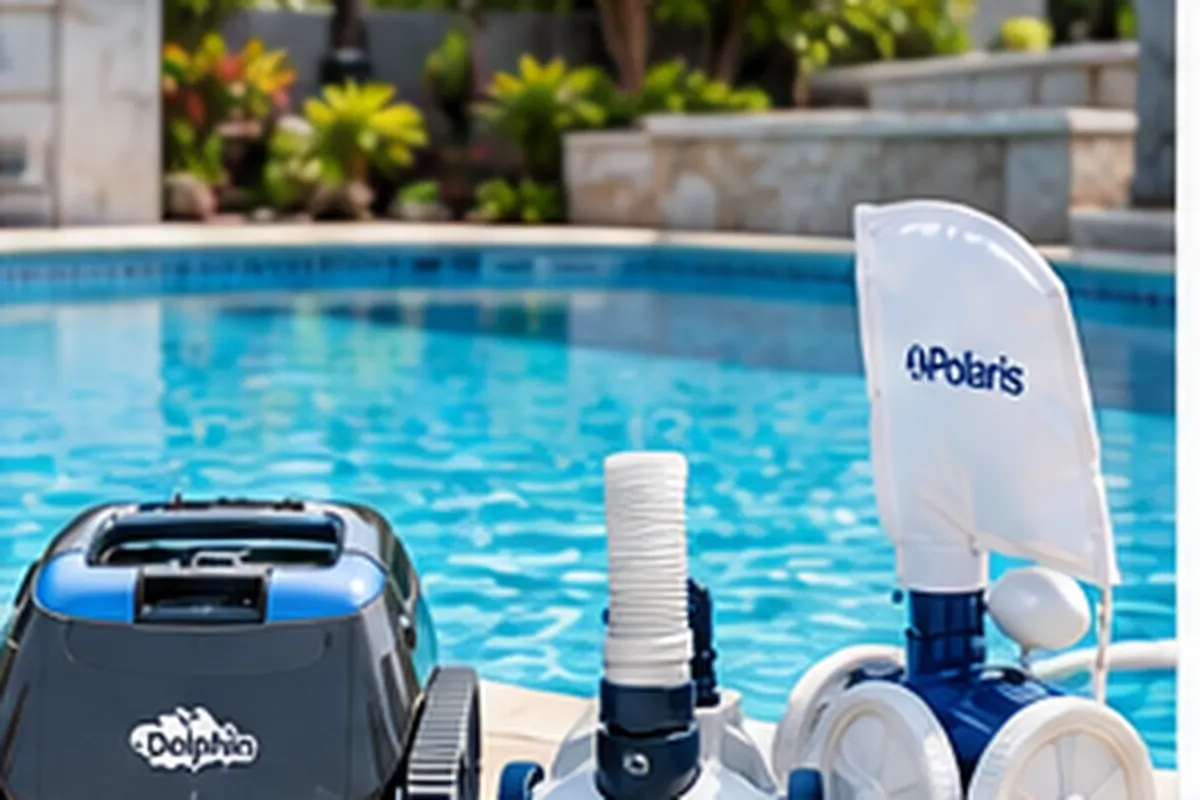
A pressure-side pool cleaner uses pressurized water from the return side of the pool circulation system to move around the pool and collect debris.
Unlike most suction-side cleaners, many pressure cleaners collect debris in their own bag, reducing the amount of cleaner debris sent into the pool filter.
Quick Answer: How Does a Pressure-Side Pool Cleaner Work?
A pressure-side pool cleaner uses pressurized water from the pool's circulation system to move around the pool and collect debris. Water enters the cleaner through a feed hose and powers its movement and cleaning mechanisms. Many models collect leaves, dirt and other debris in an onboard bag rather than sending everything through the pool's main filter.
Some pressure-side cleaners operate using the existing circulation system, while others require a separate booster pump. Before purchasing one, check its pressure and flow requirements, plumbing compatibility and whether your pool already has a dedicated cleaner connection.
Pressure-Side Pool Cleaners at a Glance
| Feature | How It Works | What to Check |
|---|---|---|
| Power source | Pressurized pool water | Required flow and pressure |
| Movement | Water-powered drive mechanisms | Wheel-speed and pressure requirements |
| Debris collection | Usually an onboard collection bag | Bag capacity and debris compatibility |
| Booster pump | Required by some models | Cleaner-specific installation requirements |
| Plumbing | Compatible pressure-side connection | Wall fitting, hose and return configuration |
| Maintenance | Bag cleaning and inspection of hoses and moving parts | Replacement-part availability |
What Is a Pressure-Side Pool Cleaner?
A pressure-side cleaner connects to the pressure side of a compatible pool circulation system.
Pressurized water reaches the cleaner through a dedicated connection or compatible return-side plumbing. The cleaner converts that water pressure into movement and cleaning action.
Unlike suction-side cleaners, many pressure-side models collect debris in their own bags instead of directing it through the pool's main filtration system.
For a broader explanation of automatic cleaner types, operation, maintenance and selection, see our Complete Guide to Pool Cleaners.
How Does Water Pressure Move the Cleaner?
Water entering the cleaner powers its internal drive and cleaning mechanisms.
Depending on the design, the water may operate a turbine or other mechanism that drives the wheels. Water jets may also help direct debris into the collection bag.
The exact arrangement varies by model, but adequate pressure and flow are essential for proper operation.
Step-by-Step: How a Pressure Cleaner Operates
- The pool's circulation system supplies water to the pressure-cleaner connection.
- If the cleaner requires a booster pump, that pump provides the additional pressure specified by the manufacturer.
- Pressurized water travels through the feed hose to the cleaner.
- Water-powered mechanisms drive the cleaner's movement and cleaning functions.
- Debris is directed into the cleaner's collection bag or other model-specific collection system.
- The cleaner continues operating according to its design while adequate water pressure and flow are available.
Pressure-side cleaners do not all use identical drive systems, cleaning jets or debris-collection arrangements. Consult the specific model's documentation for its operating details.
Does a Pressure-Side Cleaner Need a Booster Pump?
Not always.
Some pressure-side cleaners are designed to operate using the pool's existing return pressure. Others require a dedicated booster pump to provide the pressure needed for proper operation.
| Feature | Booster-Pump Cleaner | Non-Booster Cleaner |
|---|---|---|
| Water supply | Circulation system with a dedicated booster pump | Compatible circulation-system return pressure |
| Additional pump | Required | Not required |
| Electrical requirements | Includes the booster pump's requirements | No separate booster-pump electrical connection |
| Installation | Requires compatible plumbing and booster-pump installation | Requires sufficient pressure and compatible return plumbing |
| Operating cost | Includes additional booster-pump electricity | Depends on the main pump's operating requirements |
Determine the requirements of the exact cleaner before purchasing. Adding a booster pump changes installation cost, electrical requirements, plumbing and energy use.
What Does a Booster Pump Actually Do?
A booster pump is a separate pump that supplies additional water pressure to a compatible pressure-side cleaner.
For installations that use a booster pump, the main circulation pump generally must be operating when the booster pump runs.
The booster pump should be installed and controlled according to the cleaner and pump manufacturers' requirements.
Do not operate a booster pump without the required water supply or bypass its specified operating protections.
Example: How a Booster Pump Affects Electricity Costs
Consider a hypothetical booster pump that consumes 800 watts and operates for two hours per day.
Its daily electricity consumption would be:
0.8 kW × 2 hours = 1.6 kWh
At an illustrative electricity rate of $0.18 per kWh:
1.6 kWh × $0.18 = $0.288 per day
Over 30 days, that would equal approximately $8.64 in booster-pump electricity.
This example excludes the main circulation pump and uses hypothetical wattage and electricity prices. Actual costs depend on the installed equipment and operating schedule.
Where Does the Debris Go?
Many pressure-side cleaners use an onboard collection bag.
Water movement creates the cleaning action that directs leaves and other debris into the bag.
This means much of the collected material does not need to travel through the pool's primary filter.
However, a pressure-side cleaner does not replace the pool's normal filtration system. Fine suspended particles and debris that the cleaner does not capture still need to be managed through normal circulation, filtration and pool maintenance.
Why Pressure-Side Cleaners Are Often Used for Large Debris
Pressure-side cleaners with appropriately designed collection bags can be useful for pools that regularly collect leaves, acorns and other relatively large debris.
An onboard collection bag allows much of this material to be removed without first passing through the main pool filter.
Actual debris-handling performance depends on the cleaner model, bag design, available water pressure and pool conditions.
Example: A Pool Surrounded by Trees
Consider an inground pool surrounded by mature trees that regularly drop leaves into the water.
A pressure-side cleaner with an appropriately sized debris bag may collect much of the larger material before it reaches the pool's main filtration system.
The owner still needs to empty the cleaner's bag, clean the pool's normal filtration equipment and remove debris the cleaner misses.
If pressure-side cleaning fits your pool, compare models by debris capacity, plumbing requirements, hose configuration and whether a booster pump is required.
Compare Pressure-Side Pool Cleaners on Amazon
How Much Pressure Does a Pressure-Side Cleaner Need?
There is no single pressure setting that applies to every pressure-side cleaner.
Each model has its own operating requirements, which may include specified pressure, flow or wheel-speed measurements.
Some manufacturers provide a procedure for checking cleaner wheel speed as an indication of whether the water supply is correctly adjusted.
Follow the exact model's testing procedure rather than adjusting the pump or pressure-control components by guesswork.
Too little pressure may cause slow movement or poor cleaning. Excessive pressure can also cause improper operation or exceed the equipment's specified limits.
How Does the Feed Hose Affect Performance?
The feed hose carries pressurized water from the pool's connection to the cleaner.
Its length, condition and configuration can affect cleaner movement.
Common hose-related problems include:
- Leaks at hose connections.
- Damaged or worn swivels.
- Incorrect hose length.
- Hose sections that become tangled.
- Improperly positioned hose floats.
- Restrictions that reduce water delivery.
Use the cleaner manufacturer's instructions to establish the correct hose length and adjustment for your pool.
Can a Pressure-Side Cleaner Climb Walls?
Some pressure-side cleaners can climb certain pool walls, while others primarily clean the pool floor.
Wall-climbing performance depends on the cleaner's design, water pressure, pool surface and geometry.
Do not assume that a cleaner advertised for wall climbing can clean every wall, step, shelf or waterline configuration.
Will a Pressure-Side Cleaner Clean a Baja Shelf?
Not necessarily.
Shallow Baja shelves, steps and abrupt depth transitions can create navigation problems for automatic pool cleaners.
Before choosing a pressure-side cleaner for a pool with a Baja shelf, check its minimum operating depth and manufacturer guidance for steps and shallow areas.
Some pools may still require manual cleaning of the shelf and other areas the cleaner cannot reliably reach.
Advantages of Pressure-Side Pool Cleaners
- Many models are designed to collect relatively large debris.
- Onboard collection bags keep much of the captured debris out of the main pool filter.
- Automatic movement reduces the amount of routine manual floor cleaning.
- Some installations can use existing compatible pressure-cleaner plumbing.
- Many models have serviceable bags, hoses, wheels and other replacement parts.
Potential Disadvantages
- Some models require a separate booster pump.
- Additional plumbing or electrical installation may be necessary.
- Feed hoses, swivels and fittings require maintenance.
- Wheels and other moving parts eventually wear.
- Booster-pump models add another electrical load.
- Some models may struggle with steps, shelves or particular pool shapes.
- Fine-debris performance depends on the cleaner and collection-bag design.
Why a Pressure-Side Cleaner May Stop Moving
Potential causes include:
- The main circulation pump is not operating.
- The booster pump is not operating, where required.
- Insufficient water flow or pressure.
- A restricted pool filtration system.
- A blocked wall-fitting screen.
- A leaking feed hose or swivel.
- Debris caught in drive components.
- Worn wheels, tires or internal parts.
Pressure-Side Cleaner Troubleshooting Table
| Symptom | Possible Cause | Initial Check |
|---|---|---|
| Cleaner does not move | No water supply, booster-pump problem or drive obstruction | Main pump, booster pump if required and accessible drive components |
| Cleaner moves slowly | Insufficient pressure, hose leak or worn components | Manufacturer's pressure or wheel-speed test |
| Cleaner repeatedly gets stuck | Hose adjustment, pool geometry or navigation issue | Hose length, floats and model-specific adjustments |
| Cleaner moves but collects little debris | Full bag, blocked intake or inadequate cleaning flow | Collection bag, intake and required operating pressure |
| Water leaks from the feed hose | Damaged hose, swivel or connection | Accessible hose components and replacement-part compatibility |
| Cleaner wheels do not rotate correctly | Insufficient pressure or internal drive problem | Model-specific wheel-speed test and drive inspection |
If the cleaner has stopped or become unusually slow, see Why Is My Pool Cleaner Not Moving? for a step-by-step troubleshooting sequence.
Pressure-Side vs. Suction-Side Pool Cleaners
A suction-side cleaner uses suction from the pool's circulation system and generally sends collected debris toward the pool's existing filtration equipment or an inline collection canister.
A pressure-side cleaner uses pressurized water and commonly collects debris in an onboard bag.
| Feature | Pressure-Side | Suction-Side |
|---|---|---|
| Operating force | Pressurized water | Pump suction |
| Debris collection | Usually an onboard bag | Usually the pool filtration system or an inline canister |
| Booster pump | Required by some models | Not normally required |
| Connection | Compatible pressure-side plumbing | Compatible suction-side plumbing |
| Maintenance | Collection bag, hose and drive components | Hose, cleaner mechanism and associated filtration components |
See How Do Suction-Side Pool Cleaners Work? for a closer look at how suction cleaners use the pool's circulation system.
Pressure-Side vs. Robotic Pool Cleaners
A robotic cleaner carries its own electric drive motors and onboard filtration system.
A pressure-side cleaner depends on the pool circulation system and, on some models, a booster pump.
| Feature | Pressure-Side | Robotic |
|---|---|---|
| Movement | Water-powered mechanisms | Onboard electric motors |
| Connection | Pressure-side plumbing and feed hose | Approved power supply or rechargeable battery |
| Debris collection | Usually an onboard bag | Onboard filter basket or cartridges |
| Pool-pump dependence | Requires compatible circulation operation | Generally operates independently of pool circulation |
| Additional considerations | Pressure, plumbing and possible booster-pump requirements | Power supply, charging, cable management and filter maintenance |
The appropriate choice depends on existing plumbing, debris type, energy considerations, desired cleaning features and total ownership cost.
See How Do Robotic Pool Cleaners Work? for more about onboard filtration, motors and independent operation.
How to Maintain a Pressure-Side Pool Cleaner
Routine maintenance helps keep the cleaner operating correctly and can reveal worn components before they cause a complete movement failure.
After Cleaning Cycles
- Inspect and empty the debris bag as needed.
- Check the cleaner for trapped leaves and other obstructions.
- Inspect the feed hose for visible leaks or damage.
Periodically
- Inspect accessible wheels, tires and drive components.
- Check hose swivels and connections.
- Inspect the wall fitting according to the manufacturer's instructions.
- Verify operating pressure or wheel speed using the approved procedure.
- Check the booster pump, if installed, according to its maintenance instructions.
Follow the cleaner manufacturer's maintenance schedule. Different models may have additional requirements.
Who Should Consider a Pressure-Side Cleaner?
Pressure-side cleaning may suit pools with the following characteristics:
- Regular accumulation of leaves and other relatively large debris.
- A preference for an onboard debris-collection bag.
- Existing compatible pressure-cleaner plumbing.
- A desire to keep much of the cleaner's captured debris out of the main pool filter.
However, existing plumbing does not guarantee compatibility with every pressure-side cleaner. Confirm the exact model's installation requirements.
For a side-by-side look at all three major cleaner designs, see Robotic vs. Suction vs. Pressure Pool Cleaners.
Pressure-Side Cleaner Buying Checklist
- Confirm the cleaner is suitable for your pool type and size.
- Check whether a booster pump is required.
- Verify existing pressure-side plumbing compatibility.
- Review the manufacturer's pressure and flow requirements.
- Check feed-hose length and adjustment requirements.
- Compare collection-bag capacity and available bag types.
- Check compatibility with the pool's surface and shape.
- Review performance limitations for steps and shallow shelves.
- Confirm replacement-part availability.
- Consider booster-pump electricity and installation costs, where applicable.
- Review warranty terms and maintenance requirements.
If these characteristics fit your pool, compare pressure-side cleaners using the specific installation and operating requirements of each model.
Compare Pressure-Side Pool Cleaners on Amazon
Polaris is one of the established pressure-side cleaner product lines you may encounter when comparing available models. Verify the specific cleaner's booster-pump, plumbing and operating requirements rather than assuming all models have the same specifications.
Compare Polaris Pressure-Side Pool Cleaners on Amazon
Frequently Asked Questions
How does a pressure-side pool cleaner move?
It uses pressurized water from the pool's circulation system to power its movement and cleaning mechanisms. The exact drive arrangement depends on the cleaner model.
Do all pressure-side cleaners need a booster pump?
No. Some models operate using compatible return pressure from the existing circulation system, while others require a separate booster pump.
Where does a pressure-side cleaner put the debris?
Many models collect debris in an onboard bag. This keeps much of the captured material from passing through the pool's main filter.
Are pressure-side cleaners suitable for leaves?
Models with appropriately designed collection bags can be useful for pools that accumulate leaves and other relatively large debris. Actual performance depends on the cleaner and debris conditions.
Does the main pool pump need to run while the pressure cleaner operates?
Pressure-side cleaners depend on the pool's circulation system. Installations with booster pumps generally require the main circulation pump to operate as well. Follow the exact equipment manufacturers' instructions.
Can a pressure-side cleaner work with a variable-speed pool pump?
Possibly. The circulation system must provide the pressure and flow required by the cleaner and any booster-pump arrangement. Verify the specific equipment's operating requirements.
Why is my pressure-side cleaner moving slowly?
Possible causes include insufficient water pressure, a leaking feed hose, a restricted wall fitting or worn drive components. Use the manufacturer's recommended pressure or wheel-speed test.
Can pressure-side cleaners clean pool walls?
Some models can climb certain pool walls. Performance depends on the cleaner's design, water pressure, pool surface and geometry.
Will a pressure-side cleaner clean my Baja shelf?
Not necessarily. Shallow shelves and steps may be outside a cleaner's supported operating conditions. Check the model's minimum depth and pool-shape compatibility.
Do pressure-side cleaners use more electricity than robotic cleaners?
Electricity use depends on the specific equipment and operating schedule. Booster-pump models add an electrical load, while robotic cleaners use their own electric motors. Compare actual wattage and runtime rather than assuming one cleaner type always uses less energy.
Bottom Line
A pressure-side pool cleaner converts pressurized pool water into movement and cleaning action while typically collecting debris in an onboard bag.
Its ability to collect larger debris can be useful for pools surrounded by trees, but plumbing compatibility, pressure requirements, booster-pump needs and maintenance costs should all be checked before choosing a model.
How We Research
Pool Equipment Lab evaluates pool equipment using manufacturer specifications, documentation, compatibility requirements, operating costs, warranty information, and owner feedback when relevant. We do not claim hands-on testing unless we actually performed it.