
How Do Suction-Side Pool Cleaners Work?
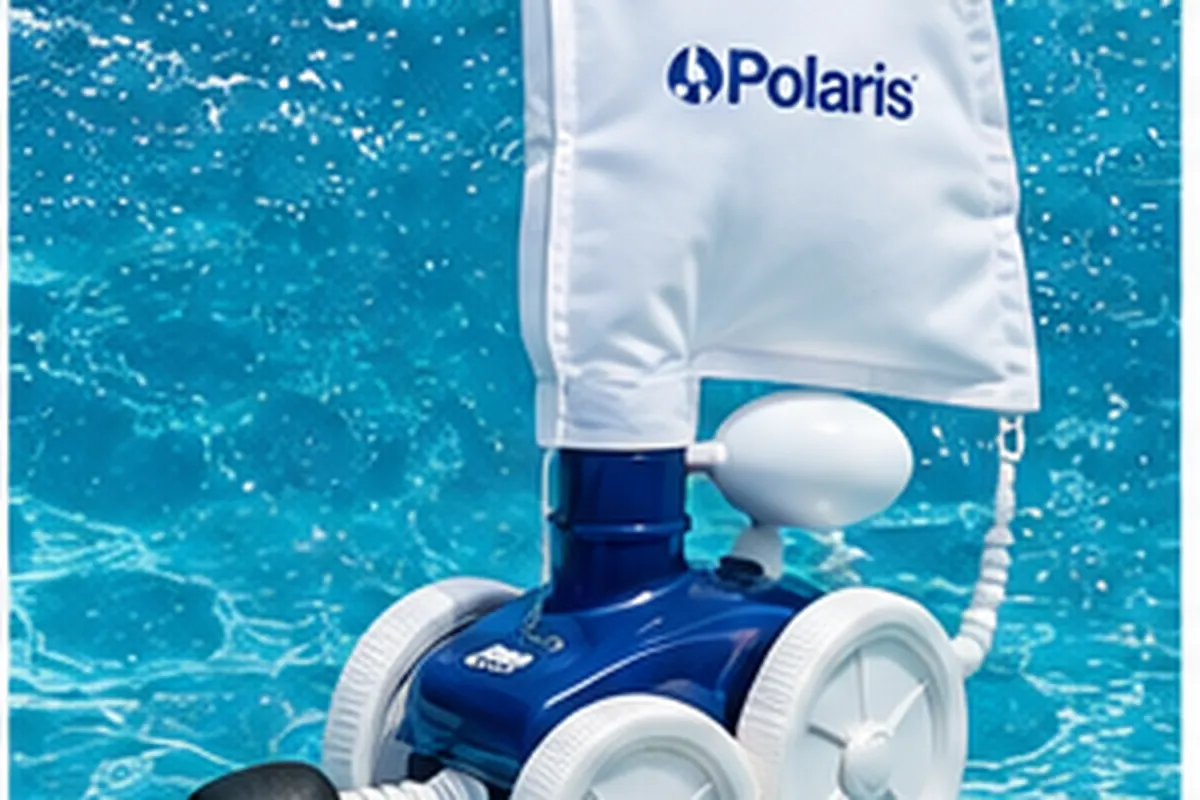
A suction-side pool cleaner uses the pool's existing circulation pump as its power source. It connects to a skimmer or dedicated suction line and uses water flow to move around the pool while collecting debris.
The simple design can make suction cleaners an affordable automatic-cleaning option, particularly for pools that collect smaller debris.
Quick Answer: How Does a Suction-Side Pool Cleaner Work?
A suction-side pool cleaner uses suction generated by the pool's circulation pump to move around the pool and collect debris. It connects through a compatible skimmer or dedicated vacuum line. Water flows through the cleaner and carries collected debris toward the pool's filtration system or an optional inline leaf canister.
Unlike a robotic cleaner, a suction-side cleaner does not have a separate electric drive motor. Its performance depends on adequate water flow, correct hose configuration and a properly functioning circulation system.
Suction-Side Pool Cleaners at a Glance
| Feature | How It Works | What to Check |
|---|---|---|
| Power source | Suction from the pool's circulation pump | Required flow and pump settings |
| Connection | Skimmer or dedicated vacuum line | Compatible plumbing and fittings |
| Movement | Water-powered internal mechanism | Model-specific flow or wheel-speed requirements |
| Debris collection | Pool filtration system or optional inline canister | Debris size and filtration capacity |
| Booster pump | Not normally required | Adequate suction from the existing pump |
| Maintenance | Hose, cleaner mechanism, baskets and filtration equipment | Blockages, leaks and worn components |
What Is a Suction-Side Pool Cleaner?
A suction-side cleaner is an automatic cleaner connected to the suction side of a pool's circulation system.
It normally connects through either:
- A compatible pool skimmer.
- A dedicated vacuum or cleaner line.
The pool pump draws water through the cleaner, providing the water flow needed for movement and debris collection.
For a broader explanation of automatic cleaner types, operation, maintenance and selection, see our Complete Guide to Pool Cleaners.
How Does a Suction-Side Cleaner Work?
A suction-side cleaner uses the water flow generated by the pool's circulation pump to operate its internal cleaning mechanism.
The exact mechanism varies by model. Some cleaners use a diaphragm or oscillating mechanism, while others use a turbine-driven wheel or track system.
Step-by-Step: How a Suction Cleaner Operates
- The pool's circulation pump draws water through the suction plumbing.
- Some of that suction is directed through the connected cleaner.
- Water enters the cleaner through its intake opening.
- Water flow powers the cleaner's internal movement mechanism.
- The cleaner travels across supported pool surfaces while drawing in debris.
- Collected debris travels through the hose toward the pool's filtration system or an installed inline collection canister.
The cleaner must receive enough water flow to operate correctly, but excessive suction can also cause problems.
Where Does the Suction Come From?
The pool pump creates a pressure difference that draws water through the pool's suction plumbing.
When a suction-side cleaner is connected, some of that flow is directed through the cleaner instead of other suction openings.
The available suction depends on several factors:
- Pump operation and speed.
- Plumbing configuration.
- Valve positions.
- Filter condition.
- Basket restrictions.
- Hose condition.
- Other equipment operating at the same time.
For more about pump flow, speed, sizing and circulation, see our Complete Guide to Pool Pumps.
Where Does the Debris Go?
Unlike a robotic cleaner with its own debris basket, a basic suction-side cleaner sends collected material through the pool's suction system.
Depending on the installation, debris may be captured by:
- A separate inline leaf canister.
- The pump's strainer basket.
- The pool's filtration system.
An inline leaf canister can intercept larger debris before it reaches the pump basket, provided the canister is compatible with the cleaner and plumbing arrangement.
Without an inline canister, collected material generally travels through the cleaner hose toward the pump and filtration equipment.
Example: Cleaning a Pool With Heavy Leaf Debris
Consider a pool that regularly accumulates leaves from nearby trees.
A suction-side cleaner may collect some of those leaves, but large amounts of debris can fill the pump basket or obstruct the cleaner's hose and internal mechanism.
A compatible inline leaf canister may help intercept larger material before it reaches the pump.
However, the canister still needs to be emptied regularly, and its installation must not interfere with the cleaner's required flow.
How Does a Suction Cleaner Move?
The cleaner's movement depends on its internal design.
| Cleaner Design | How It Moves | Typical Maintenance Considerations |
|---|---|---|
| Diaphragm or oscillating cleaner | Uses water-powered internal movement to travel across the pool | Diaphragm condition, intake blockages and hose adjustment |
| Wheeled turbine cleaner | Uses water flow to power an internal turbine and drive wheels | Turbine, wheels, tires and drive components |
| Tracked cleaner | Uses a water-powered drive system with tracks | Tracks, drive components and trapped debris |
These are general design categories. Individual cleaners may combine different mechanisms or use additional components.
Follow the exact model's instructions for maintenance and adjustment.
What Debris Is a Suction-Side Cleaner Good For?
Suction-side cleaners can be useful for pools that accumulate fine debris such as sand, silt and small particles.
Performance with leaves and larger material depends on the cleaner's intake design, hose diameter, available suction and whether a compatible leaf canister is installed.
| Debris Type | Considerations |
|---|---|
| Sand and fine dirt | Many suction-side cleaners can collect this material when properly adjusted |
| Small leaves | Performance depends on intake design and available suction |
| Large leaves | May obstruct some cleaner models or fill collection components quickly |
| Acorns and large debris | Check the cleaner's intake size and manufacturer guidance |
| Large quantities of debris | May require frequent basket or canister cleaning |
If this type of cleaner matches the debris in your pool, compare suction-side models by pool coverage, flow requirements, hose configuration and debris capability.
Compare Suction-Side Pool Cleaners on Amazon
Does Pump Speed Matter?
Yes. A suction-side cleaner needs adequate water flow to operate correctly.
When used with a variable-speed pump, the programmed pump speed must provide enough suction for the cleaner while remaining within the manufacturer's recommended operating range.
Too little flow may cause slow movement or prevent the cleaner from operating.
Excessive suction can also cause certain cleaners to become stuck or operate incorrectly.
See What RPM Should I Run My Variable-Speed Pool Pump? for more about adjusting pump speed for different circulation requirements.
Example: A Variable-Speed Pump and Suction Cleaner
Suppose a pool's variable-speed pump operates at 1,400 RPM during routine filtration.
After connecting the suction-side cleaner, the owner discovers that the cleaner barely moves.
Increasing the pump speed may provide additional flow, but the correct setting should be established using the cleaner manufacturer's recommended testing procedure.
For some models, this involves measuring wheel RPM. Other models may use a dedicated flow gauge or another adjustment method.
Do not assume that a particular pump RPM will provide the same cleaner flow in every pool. Plumbing resistance, filter condition and valve settings all affect the result.
Can a Suction Cleaner Work With Pool Automation?
Compatible automation systems can help coordinate variable-speed pump operation with a suction cleaner's scheduled cleaning period.
For example, a controller may be configured to request a pump speed that provides adequate cleaner flow during the cleaning schedule.
When cleaning ends, the system may return to its normal filtration setting.
The available functions depend on the pump and automation-controller compatibility.
Some installations may still require manual valve adjustments or other equipment-specific setup.
Advantages of Suction-Side Pool Cleaners
- Relatively straightforward equipment design.
- Uses the existing pool circulation system.
- No separate electric cleaner motor.
- No dedicated booster pump normally required.
- Can be effective at collecting fine debris.
- Many models have replaceable hoses and serviceable moving parts.
Potential Disadvantages
- Requires adequate pool-pump flow during cleaning.
- Collected debris can increase the load on the pump basket and filtration system.
- Correct flow adjustment is important.
- Large debris may cause restrictions.
- Hoses require inspection and adjustment.
- Some models may struggle with steps, shelves or certain pool shapes.
- Cleaning performance can change when circulation-system conditions change.
Because cleaner debris can increase the load on the pool filter, proper filter maintenance is also important. See our Complete Guide to Pool Filters for more about filtration, pressure, sizing and cleaning.
How Much Electricity Does a Suction Cleaner Use?
A suction-side cleaner does not normally have its own electric drive motor, but it relies on the pool's circulation pump.
If the pump must operate longer or at a higher speed to run the cleaner, that additional pump operation can increase electricity consumption.
Example: Additional Pump Energy for Cleaning
Consider a hypothetical installation where the circulation pump uses an additional 400 watts while operating at the cleaner's required setting.
If the cleaner runs for two hours per day, the additional energy consumption would be:
0.4 kW × 2 hours = 0.8 kWh per day
At an illustrative electricity rate of $0.18 per kWh:
0.8 kWh × $0.18 = $0.144 per day
Over 30 days, the additional electricity cost would be approximately $4.32.
This example assumes that the higher pump setting adds 400 watts compared with the pump's normal operation during the same period. Actual energy use depends on pump wattage, runtime and whether cleaning replaces or adds to the normal filtration schedule.
Why a Suction-Side Cleaner May Move Slowly
Possible causes include:
- Insufficient water flow.
- A dirty pool filter.
- A full pump basket.
- Debris trapped inside the cleaner.
- A restriction in the hose.
- Air entering the suction system.
- Incorrect valve settings.
- Pump priming problems.
- Worn wheels, tracks or internal mechanisms.
Suction-Side Cleaner Troubleshooting Table
| Symptom | Possible Cause | Initial Check |
|---|---|---|
| Cleaner does not move | Insufficient suction, blocked hose or internal obstruction | Pump operation and manufacturer's flow test |
| Cleaner moves slowly | Low flow, dirty filter or worn drive components | Filter condition, baskets and cleaner mechanism |
| Cleaner repeatedly gets stuck | Incorrect flow, hose adjustment or pool geometry | Flow setting and model-specific hose adjustments |
| Cleaner loses suction | Hose leak, air entering the system or pump priming problem | Hose connections and pump operation |
| Cleaner stops after collecting leaves | Blocked intake, hose or collection component | Accessible debris restrictions |
| Cleaner climbs too high | Possible excessive suction or incorrect adjustment | Manufacturer's flow and adjustment procedure |
If the cleaner has stopped or become unusually slow, see Why Is My Pool Cleaner Not Moving? for a step-by-step troubleshooting sequence.
Can a Suction-Side Cleaner Climb Walls?
Some models can climb portions of pool walls, but performance depends on the cleaner, pool shape, surface, water flow and floor-to-wall transitions.
Check the specifications of the individual model rather than assuming all suction cleaners provide the same coverage.
Will a Suction Cleaner Clean a Baja Shelf?
Not necessarily.
Shallow Baja shelves and abrupt depth transitions can create navigation problems for automatic pool cleaners.
Some cleaners may not operate correctly in water shallower than their specified minimum operating depth.
Before choosing a suction-side cleaner for a pool with a Baja shelf, check its minimum depth requirements and manufacturer guidance for steps and shallow areas.
Manual cleaning may still be necessary for shelves and other areas the cleaner cannot reliably reach.
How to Maintain a Suction-Side Pool Cleaner
Regular maintenance helps preserve water flow and can prevent minor restrictions from becoming larger operating problems.
After Cleaning
- Check the cleaner's intake for trapped debris.
- Empty the pump basket or inline leaf canister as needed.
- Inspect accessible hose sections for visible damage.
Periodically
- Inspect hose connections for leaks.
- Check the cleaner's serviceable moving components.
- Inspect wheels, tracks or diaphragms where applicable.
- Verify cleaner flow using the manufacturer's recommended procedure.
- Clean or backwash the pool filter when required.
Turn equipment off and follow the manufacturer's shutdown and pressure-relief instructions before opening pump or filter components.
Suction-Side vs. Pressure-Side Pool Cleaners
| Feature | Suction-Side | Pressure-Side |
|---|---|---|
| Operating force | Pump suction | Pressurized water |
| Connection | Skimmer or dedicated suction line | Compatible pressure-side connection |
| Debris collection | Usually pump basket, filter or inline canister | Usually an onboard collection bag |
| Booster pump | Not normally required | Required by some models |
| Primary maintenance | Hose, cleaner mechanism and associated filtration equipment | Collection bag, feed hose and drive components |
The appropriate cleaner depends on the pool's existing plumbing, debris conditions and operating requirements.
Suction-Side vs. Robotic Pool Cleaners
| Feature | Suction-Side | Robotic |
|---|---|---|
| Power source | Pool circulation pump | Onboard electric motors |
| Debris collection | Pool filtration system or inline canister | Onboard filter basket or cartridges |
| Pool-pump dependence | Requires adequate circulation-pump operation | Generally operates independently of pool circulation |
| Connection | Suction hose | Approved power supply or rechargeable battery |
| Maintenance | Hose, internal mechanism and associated filtration equipment | Filter basket, brushes, tracks and drive components |
For a direct comparison of all three major cleaner designs, see Robotic vs. Suction vs. Pressure Pool Cleaners.
Who Should Consider a Suction-Side Cleaner?
A suction-side cleaner may suit pools with the following characteristics:
- Compatible suction-side plumbing.
- A circulation system capable of providing the cleaner's required flow.
- Primarily fine or moderate debris.
- A preference for a cleaner that uses the existing pool pump.
- No requirement for advanced robotic navigation or onboard electric operation.
However, compatibility with an existing suction connection does not guarantee that every cleaner will operate correctly.
Check the cleaner's flow requirements, hose configuration, supported pool surfaces and available replacement parts.
Suction-Side Cleaner Buying Checklist
- Confirm compatibility with your pool type and size.
- Check the required suction flow.
- Verify skimmer or dedicated vacuum-line compatibility.
- Check hose length and fitting requirements.
- Review the cleaner's supported debris types.
- Determine whether an inline leaf canister would be useful.
- Check compatibility with the pool surface and shape.
- Review limitations for steps and shallow shelves.
- Check the manufacturer's maintenance requirements.
- Confirm replacement-part availability.
- Consider the additional pump runtime or speed required during cleaning.
If these characteristics fit your pool, compare suction-side cleaners before deciding which design and hose configuration match your circulation system.
Compare Suction-Side Pool Cleaners on Amazon
Frequently Asked Questions
How does a suction-side pool cleaner move?
It uses water flow generated by the pool's circulation pump to power an internal movement mechanism. Depending on the model, this may involve a diaphragm, turbine, wheels or tracks.
Does a suction-side cleaner need a booster pump?
No. Suction-side cleaners normally operate using the pool's existing circulation pump and compatible suction plumbing.
Where does a suction cleaner send debris?
Collected debris travels through the suction hose toward the pool's circulation system. Depending on the installation, it may be captured by an inline leaf canister, the pump basket or the pool filter.
Can a suction-side cleaner pick up leaves?
Some models can collect leaves, but performance depends on intake design, hose size, available suction and debris quantity. Large leaves may obstruct certain cleaners.
Can I use a suction cleaner with a variable-speed pump?
Yes, provided the pump and plumbing can deliver the cleaner's required flow. Use the cleaner manufacturer's testing procedure to establish an appropriate pump setting.
Why does my suction cleaner keep getting stuck?
Possible causes include incorrect suction, hose adjustment, pool geometry or worn cleaner components. Check the model-specific flow and adjustment procedures.
Can suction-side cleaners climb walls?
Some models can climb portions of pool walls. Performance depends on the cleaner's design, available flow, pool surface and geometry.
Will a suction cleaner work on a Baja shelf?
Not necessarily. Check the cleaner's minimum operating depth and compatibility with shallow shelves and steps.
Does a suction cleaner increase pool-filter maintenance?
It can. Debris collected by the cleaner may increase the load on the pump basket and filtration system, particularly when no inline leaf canister is installed.
Does a suction cleaner use electricity?
It normally has no separate electric drive motor, but it depends on the pool's circulation pump. Additional pump runtime or higher pump speeds may increase electricity consumption.
Bottom Line
Suction-side cleaners use the pool's circulation pump to provide the water flow needed for both movement and debris collection.
The design is relatively straightforward and can be effective for fine debris, but performance depends heavily on the condition and adjustment of the pool's circulation system.
Before choosing a model, verify its flow requirements, plumbing compatibility, debris-handling capability and suitability for your pool's shape and surface.
How We Research
Pool Equipment Lab evaluates pool equipment using manufacturer specifications, documentation, compatibility requirements, operating costs, warranty information, and owner feedback when relevant. We do not claim hands-on testing unless we actually performed it.