
Saltwater Pool vs. Chlorine Pool: Which Is Better?
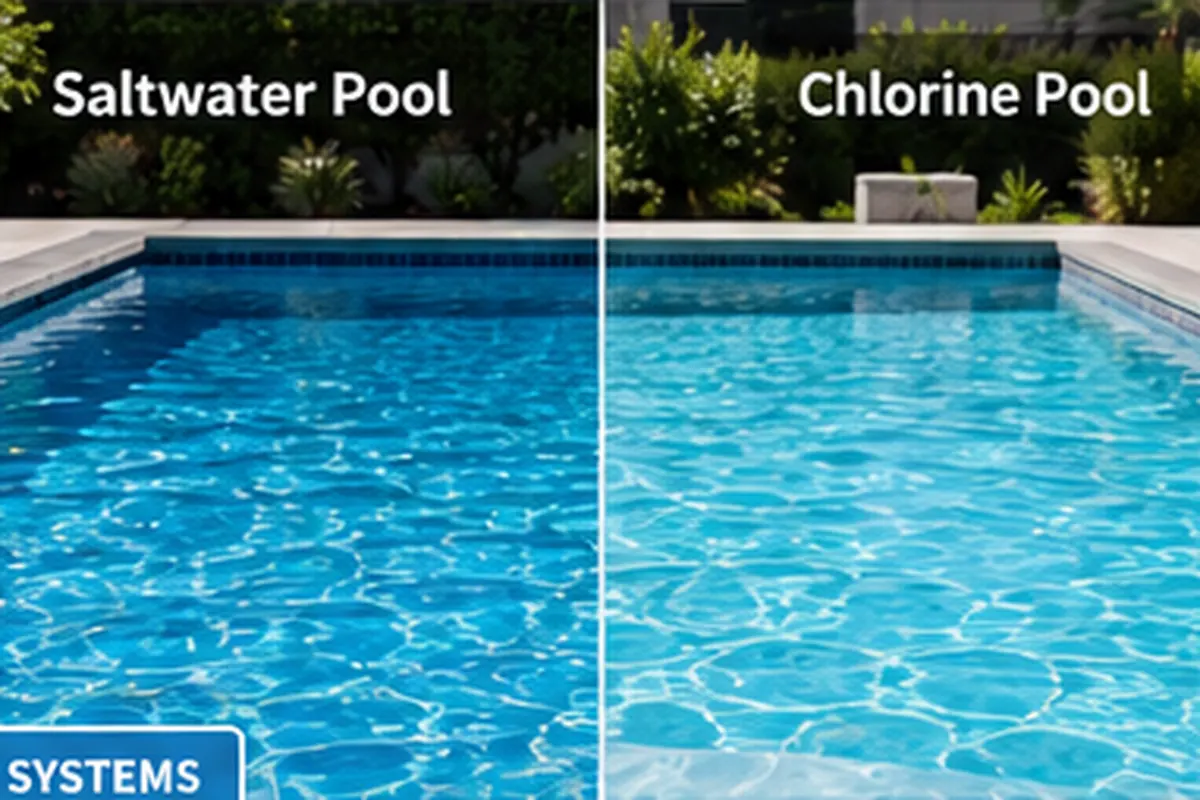
A saltwater pool is still a chlorine pool. The primary difference is how the chlorine gets into the water.
Traditional pools rely on chlorine added directly to the water, while saltwater pools use a salt chlorine generator to produce chlorine from dissolved sodium chloride through electrolysis.
Quick Answer: Saltwater vs. Traditional Chlorine Pools
Both saltwater pools and traditional chlorine pools use chlorine to sanitize the water. The difference is how that chlorine is supplied. A saltwater pool uses an electrically powered salt chlorine generator to produce chlorine from dissolved salt. A traditional chlorine pool receives chlorine through liquid, granular or tablet products, either manually or through a compatible chemical-feed system.
Saltwater systems automate much of the routine chlorine production but require additional equipment, correct salinity and eventual cell replacement. Traditional chlorine systems generally have fewer specialized equipment requirements but depend on regularly adding purchased sanitizer.
Saltwater vs. Chlorine Pool at a Glance
| Factor | Saltwater Pool | Traditional Chlorine Pool |
|---|---|---|
| Primary sanitizer | Chlorine | Chlorine |
| Chlorine source | Generated from dissolved salt | Added directly through chlorine products |
| Special equipment | Salt chlorine generator and cell | Optional chemical-feed equipment |
| Routine chlorine handling | Usually reduced during normal operation | Depends on the chemical-feed method |
| Salt cell replacement | Eventually required | Not required |
| Salinity monitoring | Essential for generator operation | Relevant to overall water chemistry but no generator target |
| Water chemistry testing | Required | Required |
| Primary equipment cost | Includes generator and cell | Depends on the chosen chlorine-delivery method |
| Ongoing expenses | Electricity, salt when needed, maintenance and eventual cell replacement | Purchased chlorine, maintenance and any feed-system expenses |
Saltwater Pools Still Use Chlorine
One of the biggest misconceptions about saltwater pools is that they are chlorine-free.
They are not.
A salt chlorine generator converts dissolved sodium chloride into chlorine through electrolysis. The chlorine then sanitizes the pool just as chlorine introduced through other methods does.
The chlorine produced by a salt generator must still maintain an appropriate free-chlorine residual. The pool also requires routine water testing, balanced chemistry and normal filtration.
For a broader explanation of salt chlorine generators, cell sizing, salinity, maintenance and operation, see our Complete Guide to Saltwater Pool Systems.
How a Saltwater Pool Works
Salt is dissolved into the pool water at a concentration specified by the salt chlorine generator manufacturer.
As water flows through the cell, an electrical process converts chloride ions into chlorine sanitizer.
After the chlorine completes its sanitizing work, chloride remains available in the water and the process continues.
Step-by-Step: Saltwater Chlorine Generation
- Pool salt is dissolved to reach the generator manufacturer's specified salinity range.
- The circulation pump moves water through the salt cell.
- The generator applies electrical current to the cell's electrodes.
- Electrolysis produces chlorine that sanitizes the pool water.
- The generator continues producing chlorine according to its settings, operating schedule and safety controls.
- The owner tests the water and adjusts output or runtime as necessary.
Correct salinity is essential for this process. See How Much Salt Does My Pool Need? for more about determining the proper salt level for a specific generator.
How a Traditional Chlorine Pool Works
A conventional chlorine pool receives sanitizer through products such as liquid chlorine, granular chlorine, tablets or an automated chemical-feed system.
Regardless of the delivery method, the owner needs to maintain an appropriate sanitizer residual and balanced water chemistry.
Common Chlorine-Delivery Methods
| Method | How Chlorine Is Supplied | Important Considerations |
|---|---|---|
| Liquid chlorine | Added manually or through compatible dosing equipment | Regular replenishment, safe storage and dosing |
| Granular chlorine | Added according to the product's label and pool requirements | Product composition, dosing and water-chemistry effects |
| Chlorine tablets | Dissolve through an approved feeder or other label-permitted method | Product-specific effects on CYA or calcium and safe feeder operation |
| Automated chemical feed | Compatible equipment dispenses purchased chlorine | Equipment maintenance, calibration and chemical replenishment |
Different chlorine products can affect other aspects of pool chemistry. For example, stabilized chlorine products add cyanuric acid, while certain other products can add calcium.
Follow the product label and equipment manufacturer's instructions. Never mix chlorine products or combine incompatible pool chemicals.
Saltwater Pool Advantages
A salt chlorine generator can reduce the need to routinely transport, store and manually add chlorine during normal operation.
It also produces chlorine automatically while operating, which can make routine sanitation more automated.
Automated Chlorine Production
Instead of relying entirely on periodic additions of purchased chlorine, the generator produces chlorine during its scheduled operating periods.
The owner can adjust the output setting and, where appropriate, operating time in response to actual free-chlorine testing.
Reduced Routine Chemical Handling
Normal operation may require fewer purchases and manual additions of chlorine products.
However, a saltwater pool may still require supplemental chlorine during startup, equipment outages, unusually high demand or other situations covered by appropriate pool-treatment guidance.
Integration With Compatible Pool Equipment
Some salt generators can communicate with compatible pool automation systems.
Depending on the equipment, automation may coordinate pump schedules, generator output and operating status.
Compatibility depends on the exact controller, generator and installed equipment.
If you're considering converting to saltwater, compare saltwater pool chlorinators by chlorine-production capacity, salinity requirements, flow requirements and equipment compatibility.
Compare Saltwater Pool Chlorinators on Amazon
Saltwater Pool Disadvantages
A saltwater system adds equipment that a basic manually chlorinated pool does not require.
The generator and power equipment add upfront cost, and the cell eventually wears out and must be replaced.
Additional Equipment and Installation
A saltwater conversion may require:
- A compatible salt chlorine generator.
- An appropriately sized salt cell.
- Suitable plumbing for the cell and required flow components.
- Electrical installation that meets the manufacturer's requirements.
- Compatible automation connections, if desired.
- Salt additions to reach the required operating concentration.
Installation requirements vary with the existing pool equipment.
Cell Replacement
The salt cell's electrode coating gradually wears during operation.
Its useful life depends on operating hours, water chemistry, maintenance and the specific cell design.
For more about expected cell life and the factors that affect replacement intervals, see How Long Do Salt Cells Last?.
Material Compatibility
Salt requires attention to the compatibility and maintenance of susceptible metals, masonry, stone and other pool or surrounding materials.
Corrosion and surface deterioration depend on multiple factors, including water chemistry, material selection, construction details and maintenance.
Before converting an existing pool, review the pool builder's and equipment manufacturers' saltwater compatibility requirements.
Does Saltwater Feel Different?
Saltwater pools typically operate at much lower salt concentrations than seawater.
Some swimmers report that properly maintained saltwater pools feel different from traditionally chlorinated pools.
However, perceived comfort varies between swimmers and depends on more than the presence of salt.
Free chlorine, combined chlorine, pH and overall water balance can all affect swimming comfort.
A saltwater system does not guarantee that the water will feel softer or prevent eye and skin irritation.
Which System Requires Different Maintenance?
Salt systems automate chlorine production, but they do not eliminate pool maintenance.
Both pool types require routine testing, filtration and cleaning.
| Maintenance Task | Saltwater Pool | Traditional Chlorine Pool |
|---|---|---|
| Free-chlorine testing | Required | Required |
| pH testing and adjustment | Required | Required |
| Cyanuric acid monitoring | As appropriate for the pool | As appropriate for the pool |
| Calcium hardness and water balance | Required | Required |
| Salt concentration | Must meet generator requirements | No generator-specific target |
| Routine chlorine supply | Generated automatically during normal operation | Purchased chlorine added manually or through a feeder |
| Specialized equipment | Inspect and maintain generator and cell | Maintain chemical-feed equipment, if installed |
| Pool filter maintenance | Required | Required |
Saltwater Maintenance Example
Suppose a saltwater pool maintains the intended free-chlorine level during spring but begins testing low during hotter weather.
The owner should review water chemistry, generator output, pump runtime and chlorine demand.
Increasing salt concentration is not automatically the correct response if salinity is already within the manufacturer's operating range.
If a salt system stops maintaining the expected chlorine level, see Why Is My Salt System Not Producing Chlorine? for a troubleshooting sequence.
Traditional Chlorine Maintenance Example
Suppose a traditionally chlorinated pool uses manually added liquid chlorine.
The owner needs to test free chlorine and replenish sanitizer as required by actual water conditions.
If the pool uses compatible automated dosing equipment instead, the owner still needs to monitor the sanitizer residual, replenish the chemical supply and maintain the feeder.
Does a Saltwater Pool Cost Less?
The answer depends on the time period being considered and the actual equipment and chemical costs.
A salt system requires an initial equipment investment and eventual cell replacement. In return, it produces chlorine from dissolved salt and reduces routine dependence on purchased chlorine products.
Actual economics depend on chlorine prices, cell replacement cost, electricity, maintenance and how long the system remains in service.
Illustrative Five-Year Cost Comparison
The following example uses hypothetical prices to demonstrate how to compare ownership costs. It is not a current price estimate or a prediction of costs for a particular pool.
| Expense | Hypothetical Saltwater Pool | Hypothetical Traditional Chlorine Pool |
|---|---|---|
| Initial specialized equipment and installation | $1,500 | $0 for an existing manually dosed setup |
| Annual sanitizer-related supplies | $75 | $350 |
| Annual additional equipment electricity | $50 | $0 for manual dosing |
| Cell replacement during the five-year example | $700 | Not applicable |
| Five-year total for listed expenses | $2,825 | $1,750 |
For the hypothetical saltwater pool:
$1,500 + (5 × $75) + (5 × $50) + $700 = $2,825
For the hypothetical manually chlorinated pool:
5 × $350 = $1,750
This example deliberately isolates selected sanitizer-related expenses. It excludes costs common to both pools, such as normal circulation, filtration, cleaning and routine water-chemistry adjustments.
It also assumes one cell replacement during the five-year period. Actual replacement timing varies, and some installations may not require a replacement within that period.
Changing equipment prices, local chlorine prices, installation costs or cell life can substantially change the comparison.
How Does Chlorine Production Compare With Manual Dosing?
A salt generator's daily production depends on its rated output, operating time and output setting.
Traditional chlorination depends on the amount of sanitizer added and the active chlorine content of the selected product.
Both approaches must supply enough chlorine to meet the pool's actual demand.
Example: Salt Cell Output and Operating Time
Consider a hypothetical salt cell rated to produce 1.2 pounds of chlorine equivalent over 24 hours at full output under its specified operating conditions.
If the cell operates for eight hours at 100% output, its theoretical production would be:
1.2 × (8 ÷ 24) = 0.4 pounds
At a 50% output setting during the same eight-hour period:
1.2 × (8 ÷ 24) × 0.50 = 0.2 pounds
These are illustrative calculations. Actual production depends on the generator and operating conditions.
A salt system's automation does not eliminate the need to verify that daily production is sufficient for the pool's chlorine demand.
How Does Pool Water Chemistry Differ?
Both pool types require appropriate free chlorine, pH, cyanuric acid, calcium hardness and overall water balance.
The chlorine-delivery method can influence how certain measurements change over time.
Saltwater Pools
Salt chlorine generation can contribute to an upward pH trend in some pools, depending on the overall system and water conditions.
Salt concentration must also remain within the generator's specified range.
Calcium scale can form on salt-cell plates, making water balance and cell inspection important.
Traditional Chlorine Pools
Different chlorine products have different effects on pool chemistry.
For example, stabilized chlorine products add cyanuric acid, while calcium hypochlorite adds calcium.
Liquid chlorine has different chemical characteristics and storage considerations.
The selected chlorine product should be considered when planning ongoing water-chemistry maintenance.
Can You Convert an Existing Chlorine Pool to Saltwater?
Many existing traditionally chlorinated pools can be converted to saltwater if their plumbing, electrical equipment, pool surfaces and surrounding materials are compatible.
A conversion generally involves installing an appropriately sized salt chlorine generator, confirming the required water-flow conditions and adjusting salinity according to the manufacturer's instructions.
Saltwater Conversion Checklist
- Confirm the pool's approximate volume.
- Check the compatibility of pool surfaces, fixtures and surrounding materials.
- Review existing pump and plumbing specifications.
- Determine the required generator and cell capacity.
- Confirm electrical and installation requirements.
- Verify automation compatibility, if applicable.
- Test the pool's existing salt concentration.
- Follow the generator manufacturer's startup instructions.
- Follow any pool-surface curing restrictions before adding salt.
Newly plastered or resurfaced pools may require a waiting period before salt is introduced. Follow the pool-surface manufacturer's instructions.
Choosing the Right Salt Cell
Salt-system performance depends on selecting a cell with enough chlorine-production capacity for the pool.
Pool-volume ratings provide a starting point, but actual chlorine demand also depends on sunlight, climate, swimming activity and operating time.
A cell that is too small for the pool's requirements may need to operate for extended periods and may still struggle to maintain the intended free-chlorine level.
See What Size Salt Cell Do I Need? or use our Salt Cell Sizing Calculator when comparing cell capacities.
Which Chlorination Method Fits Your Pool?
The following considerations can help you compare the two approaches against your equipment, maintenance preferences and budget.
| Your Priority | Saltwater Considerations | Traditional Chlorine Considerations |
|---|---|---|
| Automated chlorine delivery | Generator produces chlorine during operation | Automated dosing is available with compatible feed equipment |
| Lower initial equipment investment | Requires generator and cell purchase | Manual dosing does not require a salt generator |
| Reduced routine chlorine handling | Typically reduces purchased chlorine handling during normal operation | Depends on the selected chemical-feed method |
| Equipment simplicity | Adds a generator, cell and associated controls | Manual dosing has fewer specialized components |
| Material compatibility | Requires review of saltwater suitability | Still requires appropriate water balance and material care |
| Long-term costs | Include equipment, electricity and cell replacement | Include purchased chlorine and any feed-system costs |
If the saltwater approach fits your requirements, compare available systems carefully and verify pool-capacity, plumbing, electrical and automation compatibility before purchasing.
Compare Saltwater Pool Chlorinators on Amazon
Frequently Asked Questions
Are saltwater pools chlorine-free?
No. Saltwater pools use chlorine produced by a salt chlorine generator. They still require an appropriate free-chlorine residual.
Is the chlorine in a saltwater pool different from regular pool chlorine?
The chlorine sanitizer performs the same fundamental sanitizing function. The main difference is whether chlorine is generated from dissolved salt or introduced through purchased products.
Do saltwater pools require less maintenance?
They can reduce routine manual chlorine additions, but they still require water testing, chemical adjustments, filtration maintenance and salt-cell care.
Are saltwater pools cheaper to maintain?
Costs depend on equipment purchase and installation, local chlorine prices, electricity, cell replacement and maintenance. Compare total ownership costs over the period you expect to operate the system.
Do saltwater pools need chlorine added manually?
Sometimes. Supplemental chlorine may be needed during startup, equipment outages, unusually high chlorine demand or other situations requiring appropriate pool treatment.
Do saltwater pools feel softer?
Some swimmers notice a difference in water feel, but comfort is subjective and depends on overall water chemistry as well as salinity.
Can saltwater damage pool equipment?
Salt requires attention to material compatibility, corrosion prevention and water balance. Review the pool and equipment manufacturers' requirements before installing a salt system.
Does a traditional chlorine pool need a chemical feeder?
No. Chlorine can be added manually according to product-label instructions, although compatible automated chemical-feed systems are also available.
Can I convert my existing chlorine pool to saltwater?
Many pools can be converted if the existing equipment, pool surfaces and surrounding materials are compatible. Confirm installation requirements and pool-volume needs before purchasing a generator.
Does a saltwater pool need the same water testing as a chlorine pool?
Both require routine testing and balanced chemistry. Saltwater pools also need salinity monitoring and salt-system maintenance.
Bottom Line
The choice is not really salt versus chlorine because both systems ultimately sanitize with chlorine.
The meaningful difference is how chlorine is supplied. Saltwater systems generate it automatically from dissolved salt, while traditional systems use directly added chlorine products or compatible chemical-feed equipment.
Compare the two approaches using your pool's equipment compatibility, installation costs, routine maintenance requirements, chlorine demand and long-term ownership expenses.
How We Research
Pool Equipment Lab evaluates pool equipment using manufacturer specifications, documentation, compatibility requirements, operating costs, warranty information, and owner feedback when relevant. We do not claim hands-on testing unless we actually performed it.