
Pool Pump and Filter Combos: How to Choose
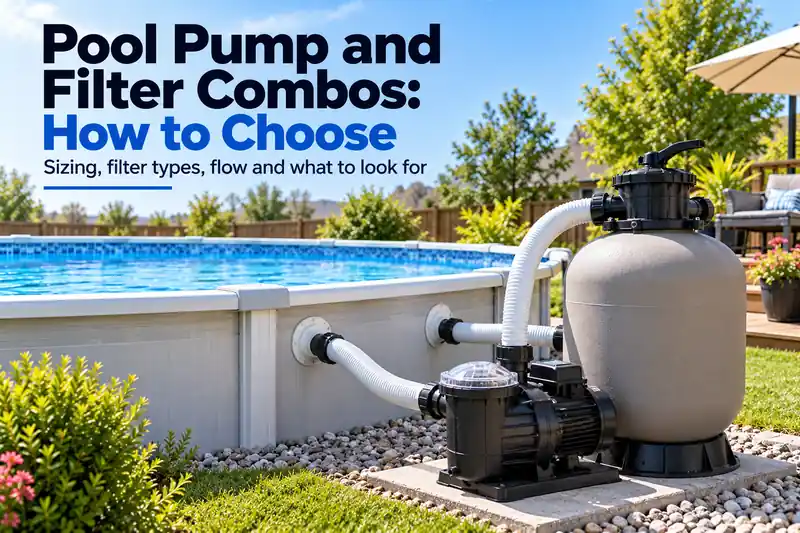
A pool pump and filter combo packages two of the most important parts of the circulation system together. These systems can simplify equipment selection and installation, especially for above-ground pools, but the pump and filter still need to be correctly sized for the pool.
This guide explains what to compare when choosing a pool pump and filter combo, including pool volume, pump flow, cartridge versus sand filtration, filter capacity, plumbing connections, energy use, maintenance, and long-term operating cost.
Quick Answer: Are Pool Pump and Filter Combos Worth Buying?
A pool pump and filter combo packages a pump and compatible filter into one circulation system. These systems are especially common for above-ground pools and can simplify equipment selection, plumbing and installation.
The important factors are pump flow, filter capacity, pool volume, plumbing compatibility and electrical requirements. A properly matched system is more important than choosing the package with the highest advertised horsepower.
Pool Pump and Filter Combos at a Glance
| Feature | What to Check | Why It Matters |
|---|---|---|
| Pool volume | Total gallons | Starting point for circulation requirements |
| Pump performance | Flow at the expected system resistance | Determines actual water circulation |
| Filter capacity | Filtration area and maximum flow rating | Must accommodate pump flow and debris load |
| Filter type | Cartridge, sand or DE | Affects cleaning methods and maintenance |
| Pump speed | Single-speed, two-speed or variable-speed | Affects operating flexibility and electricity use |
| Connections | Hose, PVC and fitting sizes | Must match the pool and equipment |
| Electrical requirements | Voltage, circuit and installation specifications | Determines installation compatibility |
What Is a Pool Pump and Filter Combo?
A pool pump and filter combo is a packaged circulation system containing a pump and compatible filter.
The components may be mounted together on a common base and sold with some of the plumbing or fittings required to connect them.
These systems are especially common for above-ground pools, where a compact equipment package can simplify installation.
Why Buy the Pump and Filter Together?
The main advantage is compatibility.
The pump creates water flow while the filter must safely handle that flow. When a manufacturer packages the components as a system, the pump and filter are selected to operate together within the intended configuration.
For example, Pentair offers above-ground filtration systems that pair its OptiFlo pump with compatible Clean & Clear cartridge filters or Sand Dollar sand filters.
However, a manufacturer-matched combination is not automatically suitable for every pool. The complete system still needs to meet your pool's circulation requirements.
Start With Pool Volume
Pool volume provides a starting point for determining how much water the circulation system needs to process.
If you do not know your pool's volume, use our Pool Volume Calculator.
Once you know the volume, you can estimate a theoretical circulation flow and begin comparing equipment specifications.
How to Estimate Pump Flow
Required circulation can be estimated from pool volume and a selected turnover period.
Estimated Flow (GPM) = Pool Gallons ÷ Turnover Minutes
Example: A 12,000-Gallon Pool
Suppose you have a 12,000-gallon above-ground pool and want to estimate the average flow needed to circulate one pool volume over eight hours.
| Measurement | Value |
|---|---|
| Pool volume | 12,000 gallons |
| Example turnover period | 8 hours |
| Total minutes | 480 |
| Theoretical average flow | 25 GPM |
12,000 ÷ 480 = 25 GPM
This is a theoretical circulation estimate, not a complete pump-sizing calculation or a universal turnover requirement.
Actual system performance depends on plumbing resistance, filter condition, equipment requirements and the pump's performance curve.
Use our Pool Pump Sizing Calculator for a starting estimate.
Do Not Choose a Combo by Horsepower Alone
A common mistake is comparing systems primarily by advertised pump horsepower.
Horsepower does not tell you everything about actual water flow or filtration capacity. Two pumps with similar horsepower ratings may produce different flow rates when connected to the same plumbing system.
Evaluate the complete system using:
- Pump performance at the expected total dynamic head.
- Filter flow capacity.
- Pool volume.
- Plumbing resistance.
- Required flow for connected equipment.
- Intended circulation schedule.
The largest pump is not automatically the most appropriate system.
Pump and Filter Flow Must Be Compatible
The filter must be capable of safely handling the pump's water flow.
This is an advantage of purchasing a properly engineered manufacturer combination rather than randomly pairing a pump and filter.
Even with a packaged system, verify that the filter's rated maximum flow is compatible with the pump's expected operating range and that the complete system is appropriate for your pool.
Filter Capacity Matters Too
Do not concentrate entirely on the pump.
A larger filter can provide greater debris capacity and potentially longer intervals between cleanings, depending on filter design and pool conditions.
Use our Pool Filter Sizing Calculator when evaluating filter requirements.
Cartridge vs. Sand vs. DE Pump and Filter Combos
| Filter Type | How It Works | Routine Cleaning | Important Consideration |
|---|---|---|---|
| Cartridge | Water passes through pleated filter media | Remove and rinse cartridges | No routine backwashing |
| Sand | Water passes through granular filter media | Backwash when required | Requires wastewater discharge |
| DE | Water passes through filtration media coated with diatomaceous earth | Model-specific cleaning and media replacement | Additional media-handling requirements |
Cartridge Pump and Filter Combos
Cartridge systems pass pool water through pleated filter media. When the cartridge becomes dirty, it is removed and rinsed according to the manufacturer's instructions.
There is no routine backwashing cycle.
Pentair's Clean & Clear above-ground systems are examples of packaged systems that pair an OptiFlo pump with removable cartridge filters. Available configurations and specifications should be checked against current manufacturer documentation.
Advantages of Cartridge Combos
- No routine backwashing.
- Lower water loss during filter cleaning.
- Relatively simple operation.
- Compact configurations available.
- Effective filtration when properly sized and maintained.
Potential Disadvantages
- Cartridges require manual cleaning.
- Cartridges eventually require replacement.
- Small filters may need frequent cleaning.
- Access and clearance are needed to remove the filter elements.
Sand Pump and Filter Combos
Sand-filter systems move water through a tank containing filtration media.
When accumulated debris increases filter resistance, the system is typically backwashed to flush dirt from the media.
Pentair's Sand Dollar above-ground systems are examples of packaged sand-filter systems paired with an OptiFlo pump.
Advantages of Sand Combos
- Simple routine operation.
- Cleaning through backwashing.
- No cartridge elements to replace.
- Established filtration technology.
- Suitable debris capacity when correctly sized.
Potential Disadvantages
- Backwashing uses pool water.
- Wastewater needs an appropriate discharge location.
- Filter media eventually requires service or replacement.
- Multiport valves and internal components may need maintenance.
Cartridge vs. Sand: Which Should You Consider?
Cartridge filtration may suit installations where conserving water and avoiding a backwash line are priorities.
Sand filtration may suit owners who prefer cleaning the filter through a multiport valve rather than removing and rinsing cartridges.
Our Cartridge vs. Sand vs. DE Pool Filters guide explains these differences in more detail.
What About DE Pump and Filter Systems?
DE filtration is also available for above-ground pools.
Pentair's EasyClean above-ground DE system is an example of a DE filter paired with an OptiFlo pump.
DE systems can provide fine filtration, although maintenance and media handling may be more involved than with many cartridge or sand systems.
Check the manufacturer's instructions for cleaning, handling and disposing of the required filter media.
Should You Choose a Larger Filter?
Choosing a filter with additional capacity can reduce how rapidly debris accumulation affects performance.
For cartridge filters, additional square footage provides more filter media. For sand filters, a larger tank generally provides additional filtration area and media capacity.
However, the filter must still be compatible with the pump, plumbing and intended installation.
See How Big Should My Pool Filter Be?.
Single-Speed, Two-Speed and Variable-Speed Pumps
The pump included with the system can significantly affect energy consumption.
- Single-speed: Operates at one motor speed.
- Two-speed: Provides high and low operating speeds.
- Variable-speed: Provides a wider range of adjustable operating speeds.
Efficiency regulations may affect which pump configurations are available for particular applications and locations. Check the applicable requirements and current manufacturer specifications before purchasing.
Why Lower Pump Speeds Can Save Energy
Pool filtration does not always require maximum pump speed.
When compatible equipment allows it, reducing pump speed can substantially reduce power demand. However, the pump must still provide enough flow for the filter and any connected heater, cleaner or sanitation equipment.
See Variable-Speed vs. Single-Speed Pool Pumps for more information.
Check the System's Turnover Rating
Some manufacturers publish turnover capacities for packaged filtration systems.
These ratings can help compare system sizes, but they must be considered alongside actual pool volume, plumbing resistance and operating conditions.
A published turnover rating should not be treated as a guarantee of the flow you will achieve after installation.
Plumbing Connections Matter
Packaged systems do not eliminate the need to check plumbing compatibility.
Verify:
- Pump inlet size.
- Pump discharge size.
- Filter connections.
- Pool-wall fittings.
- Hose diameter.
- PVC diameter if hard-plumbed.
- Required adapters and unions.
Flexible Hose vs. PVC Plumbing
Many above-ground systems are installed with flexible pool hose, while more permanent installations may use rigid PVC.
Either can work when properly sized and installed.
Avoid unnecessary restrictions, sharp bends and undersized fittings that can increase resistance and reduce flow.
Electrical Requirements
Check electrical requirements before buying the system.
Depending on the pump, installation requirements can include:
- 115-volt or 230-volt power.
- GFCI protection.
- Specific circuit requirements.
- Proper bonding and grounding.
- Permanent wiring or an approved cord connection.
Follow the manufacturer's installation instructions and applicable electrical requirements. Electrical installation should be performed by a qualified professional where required.
Equipment Base and Footprint
Many combo systems place the pump and filter on a common equipment base.
This can simplify layout, but measure the installation location before buying.
Check the overall width and height, filter service clearance, pump-basket access, valve access and drain access.
Leave Room to Service the Filter
Cartridge filters require enough clearance to open the tank and remove the cartridge.
Sand filters require access to the valve and enough room for eventual media service.
A system that fits into a small equipment area may still be difficult to maintain if there is insufficient service clearance.
What Does a Pump and Filter Combo Cost to Own?
Long-term ownership costs can include:
- Electricity.
- Replacement cartridges.
- Sand or other filter media.
- O-rings.
- Pump seals.
- Pressure gauges.
- Valves.
- Hoses and fittings.
- Water used for backwashing.
Compare expected ownership costs rather than only the initial purchase price.
How Often Will the Filter Need Cleaning?
Cleaning frequency depends on filter size, pool conditions, debris load, pump runtime and water chemistry.
An undersized filter may require more frequent maintenance.
See How Often Should You Clean a Pool Filter?.
Watch Filter Pressure
If the filter includes a pressure gauge, establish the normal clean-filter operating pressure after installation.
Increasing pressure can indicate accumulating debris or another restriction in the circulation system. A sudden pressure change can also indicate a flow or equipment problem.
If pressure becomes unusually high, see Why Is My Pool Filter Pressure High?.
Common Pump and Filter Combo Problems
| Symptom | Possible Cause | What to Check |
|---|---|---|
| Weak return flow | Dirty filter, blocked basket or plumbing restriction | Filter pressure, accessible baskets and circulation settings |
| High filter pressure | Debris accumulation or downstream restriction | Filter condition and return-side plumbing |
| Pump loses prime | Low water level, suction-side air leak or obstruction | Water level, pump lid seal and suction connections |
| Frequent filter cleaning | Heavy debris load or insufficient filter capacity | Pool conditions, filter size and cleaning history |
| Unusually high electricity use | Long runtime or inefficient operating settings | Pump specifications, speed and schedule |
Turn off equipment and follow the manufacturer's pressure-release and service instructions before opening a filter or performing maintenance. Never loosen a pressurized filter clamp or lid.
Winterization
In freezing climates, the pump and filter need to be winterized according to manufacturer instructions.
This can include draining the pump and filter, removing drain plugs, protecting plumbing and storing specified components.
Ease of draining can be worth considering when comparing systems for seasonal pools.
Replacement Parts Matter
A packaged system contains multiple components that may eventually require service.
Look for product families with available replacement pump baskets, lids, O-rings, shaft seals, cartridges, pressure gauges, multiport valves and filter internals.
Parts availability can make a system easier to maintain over multiple swimming seasons.
Are Pump and Filter Combos Only for Above-Ground Pools?
No, but packaged pump-and-filter systems are particularly common in the above-ground market.
Above-ground installations often place equipment close to the pool, use relatively straightforward plumbing and benefit from having the pump and filter supplied as a matched package.
For more complex inground installations, selecting the pump and filter separately may provide greater flexibility.
Should You Buy a Combo or Separate Equipment?
| Consideration | Packaged Combo | Separate Equipment |
|---|---|---|
| Component matching | Manufacturer-selected pump and filter | Must verify compatibility independently |
| Equipment selection | Limited to available package configurations | Greater choice of pumps and filters |
| Installation | May include a shared base and compatible fittings | Layout and connections selected separately |
| Customization | Depends on available package options | Can accommodate specialized equipment requirements |
| Future upgrades | Depends on component and plumbing compatibility | Depends on the selected equipment and installation |
A combo can make sense when you want a straightforward matched system and do not need highly customized equipment.
Buying components separately provides more flexibility when you want a particular variable-speed pump, an oversized filter, specialized plumbing or automation integration.
The decision should be based on the complete system rather than whether the components arrive in one package.
Compare Pool Pump and Filter Combos
Before purchasing, verify that both sides of the package fit the pool. The pump needs appropriate hydraulic performance, and the filter needs enough capacity to handle the flow and debris load.
Compare Pool Pump and Filter Combos on Amazon
Pool Pump and Filter Combo Buying Checklist
- Pool volume.
- Cartridge, sand or DE filtration.
- Filter size and maximum flow.
- Pump performance and speed options.
- Expected system resistance.
- Plumbing connection sizes.
- Electrical requirements.
- Equipment footprint and service clearance.
- Backwashing and water consumption.
- Energy consumption.
- Winterization requirements.
- Replacement-parts availability.
- Warranty.
Frequently Asked Questions
Is it better to buy a pool pump and filter together?
A packaged system simplifies component matching because the manufacturer selects the pump and filter for the intended configuration. However, the complete package still needs to match your pool's circulation requirements.
How do I size a pump and filter combo?
Start with pool volume and estimated circulation requirements. Then check pump performance at the expected system resistance, filter capacity, plumbing and the flow requirements of connected equipment.
Is a bigger pool pump better?
Not automatically. A pump must be compatible with the filter, plumbing and pool's actual requirements. Excessive flow can create compatibility problems and unnecessary operating costs.
Are cartridge or sand combos easier to maintain?
They require different maintenance. Cartridge systems require removing and rinsing filter elements, while sand systems typically use backwashing. Consider water consumption, access and your preferred maintenance process.
Can I replace the pump in a combo system?
Replacement may be possible, but the new pump must be compatible with the filter, plumbing, electrical installation and other equipment. Check manufacturer specifications before making changes.
Do pump and filter combos work with variable-speed pumps?
Some packaged systems include variable-speed pumps. For other combinations, verify that the pump and filter are compatible and that the installation meets the requirements of all connected equipment.
How often should I clean the filter?
Follow the manufacturer's instructions and monitor the filter's clean operating pressure where a gauge is provided. Cleaning frequency depends on filter size, debris load and operating conditions.
Can a pump and filter combo be used for an inground pool?
Only if the manufacturer rates the complete system for that application and it meets the pool's hydraulic and equipment requirements. Many packaged combinations are specifically intended for above-ground pools.
Bottom Line
A pool pump and filter combo can simplify equipment selection by packaging two compatible circulation components together, but the complete system still needs to match the pool.
Start with pool volume and circulation requirements. Then compare filter type and capacity, pump performance, plumbing, electrical requirements, maintenance, water consumption, energy use and replacement parts.
A well-matched pump and filter system matters more than choosing the package with the largest horsepower number or the lowest purchase price.
How We Research
Pool Equipment Lab evaluates pool equipment using manufacturer specifications, documentation, compatibility requirements, operating costs, warranty information, and owner feedback when relevant. We do not claim hands-on testing unless we actually performed it.