
What Size Salt Cell Do I Need for My Pool?
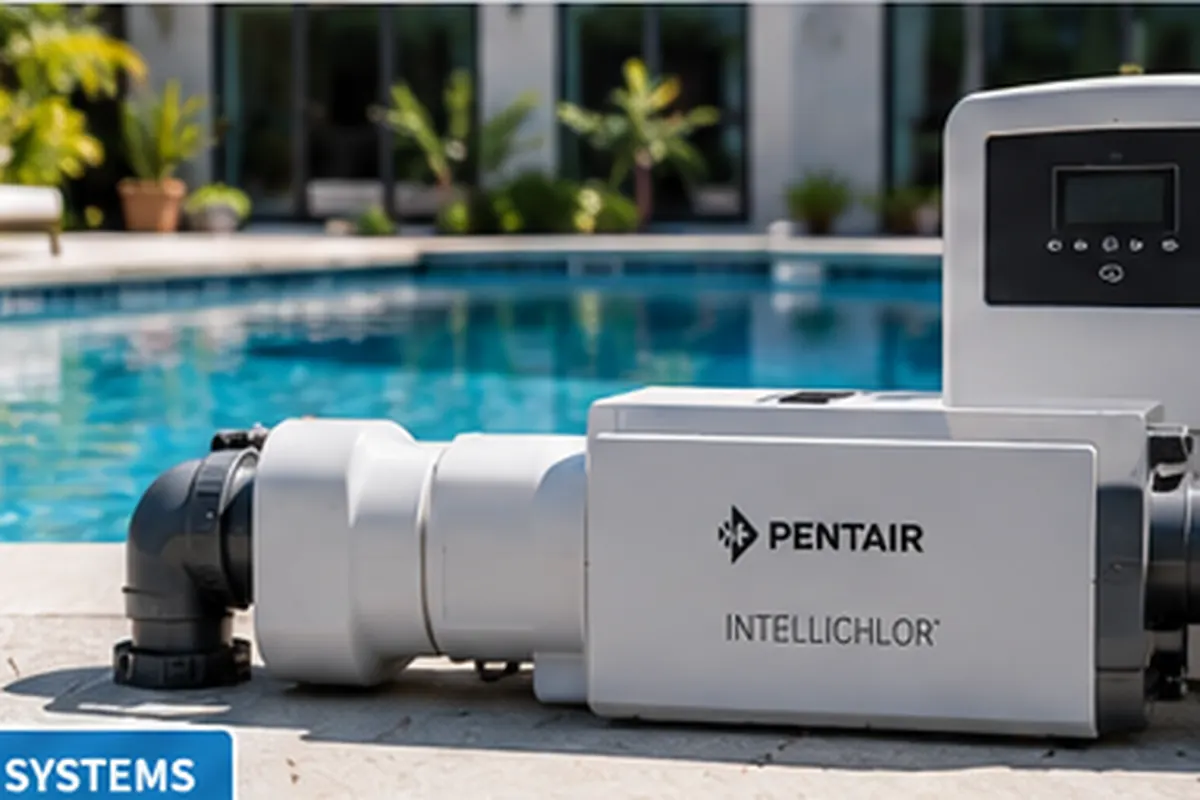
A salt chlorine generator must produce enough chlorine to keep up with the demands of your swimming pool. Although manufacturers commonly rate salt cells by pool capacity, gallon rating alone does not tell the entire story.
Climate, sunlight, swimming load, water chemistry, pump runtime, and the cell's actual chlorine production all affect how hard the salt system must work.
Quick Answer: What Size Salt Cell Do You Need?
Choose a salt cell based on your pool's volume, expected chlorine demand, daily operating time and the manufacturer's rated chlorine output. The advertised pool-capacity rating is a useful starting point, but it does not tell you how much chlorine the cell will produce during your actual pump schedule.
For example, a 20,000-gallon pool with heavy summer use may need more production capacity than an identical pool with lower chlorine demand. Selecting a compatible cell with additional capacity can provide flexibility during periods of increased demand without requiring maximum output under normal conditions.
Salt Cell Sizing at a Glance
| Factor | Why It Matters | What to Check |
|---|---|---|
| Pool volume | Establishes the amount of water being sanitized | Actual or estimated pool gallons |
| Rated pool capacity | Provides the manufacturer's intended sizing range | Rating for the exact cell model |
| Rated chlorine output | Shows maximum chlorine production under specified conditions | Pounds of chlorine equivalent per 24 hours |
| Daily operating time | Limits how much of the rated daily output is available | Hours with adequate flow and the generator enabled |
| Output setting | Controls production during available operating time | Selected percentage and model-specific operation |
| Chlorine demand | Determines how much sanitizer the pool consumes | Sunlight, swimming activity, season and water conditions |
| Equipment compatibility | Determines which cells can be installed | Controller, plumbing, electrical supply and flow requirements |
How Salt Cell Sizing Works
Salt chlorine generators use electrolysis to convert dissolved salt into chlorine. Manufacturers offer different cell sizes based on the amount of chlorine each model can produce and the pool capacity it is designed to serve.
Two cells advertised for similarly sized pools may have different chlorine-production ratings, operating requirements and controller compatibility.
Compare the specifications for the exact models you are considering rather than assuming that all cells with the same advertised pool-capacity rating perform identically.
For a broader explanation of salt chlorine generators, salinity, cell operation, maintenance and troubleshooting, see our Complete Guide to Saltwater Pool Systems.
1. Start With Your Pool Volume
Determine the approximate number of gallons in your pool before selecting a salt cell.
For a rectangular pool, a useful estimate is:
Length × Width × Average Depth × 7.48 = Approximate Gallons
Measure length, width and depth in feet. Irregular pools require a calculation appropriate for their shape.
If you do not know your pool's approximate capacity, use our Pool Volume Calculator.
Example: Calculating Pool Volume
Consider a hypothetical rectangular pool that measures 15 feet wide and 30 feet long, with an average water depth of 4.5 feet.
15 × 30 × 4.5 × 7.48 = 15,147 gallons
Its approximate volume is 15,100 gallons.
This calculation assumes a simple rectangular shape. Large steps, benches, Baja shelves and irregular depth profiles can change the actual water volume.
2. Compare Manufacturer Pool-Capacity Ratings
Manufacturers commonly advertise salt cells using maximum pool-volume ratings.
These ratings help narrow the selection, but they should not be treated as guarantees that a cell will maintain adequate chlorine under every operating condition.
A cell rated exactly at your pool's volume may have less flexibility when chlorine demand increases or available production time is limited.
Illustrative Capacity Comparison
Consider a hypothetical 20,000-gallon pool and three compatible salt cells.
| Hypothetical Cell | Advertised Pool Capacity | Relationship to Pool Volume |
|---|---|---|
| Cell A | 20,000 gallons | Equal to pool volume |
| Cell B | 30,000 gallons | 1.5 times pool volume |
| Cell C | 40,000 gallons | 2 times pool volume |
These are illustrative capacity ratings, not specific product recommendations.
The next step is to compare each cell's actual chlorine-production rating and determine how much it could produce during the pool's operating schedule.
3. Compare Actual Chlorine Output
Two salt systems with similar advertised pool-capacity ratings may not produce the same amount of chlorine.
Look for the manufacturer's rated chlorine output, commonly expressed as pounds of chlorine equivalent per 24 hours at full output.
This provides another way to evaluate capacity.
How to Calculate Theoretical Daily Production
For a system whose output percentage controls energized production time, a simplified calculation is:
Daily Production = Rated 24-Hour Output × (Operating Hours ÷ 24) × Output Percentage
Enter the output percentage as a decimal. For example, use 0.75 for a 75% setting.
This formula assumes the generator remains enabled, receives adequate flow and operates under conditions that permit its rated production.
Example: Comparing Two Hypothetical Salt Cells
Suppose two compatible cells have the following hypothetical full-output ratings:
- Cell A: 1.0 pound per 24 hours.
- Cell B: 1.5 pounds per 24 hours.
Both are scheduled to operate for eight hours daily at 100% output.
Cell A: 1.0 × (8 ÷ 24) = 0.33 lb/day
Cell B: 1.5 × (8 ÷ 24) = 0.50 lb/day
Under these assumptions, Cell B has approximately 50% more daily production capacity during the same operating period.
Actual production depends on the generator's design, water conditions and operating status.
4. Estimate How Much Chlorine Your Pool Needs
Pool volume determines how much water must be sanitized, but chlorine demand determines how much sanitizer needs to be replaced.
Chlorine demand varies with sunlight, temperature, swimmer activity, organic debris and water conditions.
One way to understand the relationship between pool volume and chlorine demand is to calculate the chlorine equivalent required for a specified concentration change.
Example: A 20,000-Gallon Pool
For an illustrative 20,000-gallon pool, raising free chlorine by 1 ppm requires approximately:
20,000 × 8.34 × 0.000001 = 0.167 pounds of chlorine equivalent
If that pool consumes an illustrative 2 ppm of free chlorine per day, replacing that amount would theoretically require:
0.167 × 2 = 0.334 pounds per day
If its daily consumption increases to 3 ppm:
0.167 × 3 = 0.501 pounds per day
These examples demonstrate the relationship between pool volume and chlorine consumption. They do not establish a recommended daily chlorine loss or an appropriate free-chlorine target.
Actual chlorine requirements must be determined through appropriate water testing and pool-care guidance.
5. Should You Oversize a Salt Cell?
Selecting a cell with capacity above the pool's actual volume can provide useful operating flexibility.
A cell rated exactly at the pool's capacity may need to operate at a high output percentage or for longer periods when chlorine demand increases.
A larger compatible cell may meet the same demand while operating at a lower percentage or for less time.
However, the largest available cell is not automatically necessary. Compare production capacity, equipment compatibility, replacement cost and expected operating conditions.
Example: Why Additional Capacity Can Matter
Suppose a hypothetical pool needs approximately 0.4 pounds of chlorine equivalent per day and its generator can operate for eight hours daily.
| Specification | Cell A | Cell B |
|---|---|---|
| Rated 24-hour production | 1.2 lb | 1.8 lb |
| Available daily operating time | 8 hours | 8 hours |
| Maximum theoretical daily production | 0.4 lb | 0.6 lb |
| Output setting needed for the example demand | 100% | Approximately 67% |
Cell A would theoretically need its full available production time to meet the assumed demand.
Cell B could theoretically meet the same demand at a lower output setting, leaving additional capacity for periods when chlorine consumption increases.
These figures are hypothetical and assume the cells are compatible with the installation.
You can use our Salt Cell Sizing Calculator for a starting estimate based on pool volume and additional sizing capacity.
Once you know the capacity range your pool requires, compare saltwater pool chlorinators and their documented specifications.
Compare Saltwater Pool Chlorinators on Amazon
6. Consider Climate and Seasonal Chlorine Demand
Outdoor pools exposed to strong sunlight may consume chlorine faster. Warm weather, extended swimming seasons and frequent use can also increase sanitizer demand.
A pool in a hot climate may therefore place different demands on its salt system than an identical pool used seasonally in a cooler location.
Example: A Pool in a Hot, Sunny Climate
Consider a hypothetical outdoor pool in Southern Utah that receives substantial summer sunlight.
During the hottest months, its chlorine demand may increase because of sunlight exposure, water conditions and swimming activity.
When evaluating salt-cell capacity, the owner should consider whether the generator can maintain the required sanitizer residual during those higher-demand periods using a practical daily operating schedule.
Appropriate cyanuric acid levels and balanced water chemistry also matter. A larger salt cell does not correct every cause of excessive chlorine loss.
7. Account for Heavy Pool Use
Swimmers introduce contaminants that chlorine must oxidize.
Parties, frequent swimming, rain, debris and other environmental factors can temporarily increase chlorine demand.
A cell that maintains free chlorine during light use may need a higher output setting or longer production schedule after periods of heavier activity.
Example: Routine Use vs. a Pool Party
Suppose a pool normally maintains its intended chlorine level with an eight-hour generator schedule.
After a large gathering, the owner measures a lower-than-expected free-chlorine residual.
That does not automatically indicate an undersized or defective cell. Increased swimmer activity may have raised chlorine demand temporarily.
Test the water, follow appropriate treatment guidance and review the generator's operating settings before deciding whether the installed cell lacks sufficient capacity.
8. Pump Runtime Affects Chlorine Production
A salt cell generally produces chlorine only while the circulation system is operating, adequate flow is present and the generator is enabled.
A cell rated to produce a certain amount over 24 hours will produce only a fraction of that amount if it operates for a fraction of the day.
Example: The Same Cell With Different Operating Schedules
Consider a hypothetical cell rated to produce 1.4 pounds per 24 hours at full output.
| Daily Production Time | Output Setting | Theoretical Daily Production |
|---|---|---|
| 4 hours | 100% | 0.23 lb |
| 8 hours | 100% | 0.47 lb |
| 12 hours | 100% | 0.70 lb |
| 8 hours | 50% | 0.23 lb |
| 12 hours | 50% | 0.35 lb |
The table assumes uninterrupted operation under conditions that permit rated production.
Actual production may be lower if the generator shuts down because of inadequate flow, incorrect salinity, temperature limits or other operating conditions.
9. Variable-Speed Pumps and Salt Systems
Variable-speed pumps can operate at low speeds for extended periods, but water flow must remain high enough to satisfy the salt generator's requirements.
Do not assume that a pump's RPM setting corresponds to a particular flow rate in every pool.
Actual flow depends on plumbing resistance, filter condition, valve positions and other equipment.
Example: A Low-Speed Filtration Schedule
Suppose a variable-speed pump runs at a low setting for most of the day, but the salt generator displays a low-flow warning during that period.
Although the pump is operating, the cell may not be producing chlorine.
The owner should check the generator's required flow, verify circulation conditions and establish a compatible pump setting using the manufacturers' instructions.
The generator's available production hours should be based on the periods when it can actually operate, not simply the number of hours the pump is switched on.
For more about pump flow, speed, sizing and runtime, see our Complete Guide to Pool Pumps.
10. Confirm Equipment Compatibility
Before purchasing a salt cell, verify compatibility with:
- The existing controller or power center.
- Pool automation.
- Plumbing configuration.
- Required water flow.
- Electrical supply.
- Manufacturer installation requirements.
Not every cell from the same manufacturer is interchangeable. A higher-capacity cell may require a compatible controller, power supply or other equipment changes.
Replacing a Cell vs. Installing a New System
| Consideration | Replacing an Existing Cell | Installing a New Salt System |
|---|---|---|
| Controller compatibility | Must match the installed controller | Controller and cell can be selected together |
| Plumbing | Existing connections may limit choices | Installation can be planned around the selected system |
| Electrical requirements | Must match existing or approved upgraded equipment | Electrical installation must meet the new system's requirements |
| Cell capacity | Limited to supported replacement models | Can be selected from compatible complete systems |
| Automation | Verify existing integration | Check compatibility before purchasing |
A Practical Salt Cell Sizing Checklist
- Calculate or verify your pool volume.
- Identify compatible salt systems or replacement cells.
- Compare manufacturer pool-capacity ratings.
- Compare rated chlorine output per 24 hours.
- Consider climate, sunlight and swimming activity.
- Review your expected pump and generator operating schedule.
- Verify that adequate water flow will be available during production.
- Allow reasonable additional capacity for periods of increased chlorine demand.
- Compare equipment, installation and eventual replacement costs.
- Confirm controller, plumbing, electrical and automation compatibility.
Cell Size and Service Life
A larger-capacity cell may be able to meet chlorine demand without operating near maximum output continuously.
On systems where output percentage controls energized production time, lower output settings can reduce the number of production hours accumulated over a given period.
However, cell design, water chemistry and maintenance also affect lifespan. A larger cell does not automatically guarantee longer service life.
See How Long Do Salt Cells Last? for more about operating hours, output settings, maintenance and cell wear.
If you're replacing an existing cell rather than installing an entirely new salt system, verify that the replacement cell is compatible with your exact controller or power center before ordering.
Compare Replacement Salt Cells on Amazon
What if a Properly Sized Cell Isn't Producing Enough Chlorine?
Cell size is only one possible cause of low chlorine production.
If capacity appears adequate, see Why Is My Salt System Not Producing Chlorine? to check salinity, flow, runtime, water temperature, scale, chemistry and cell condition.
Symptoms and Possible Explanations
| Symptom | Possible Explanation | What to Check |
|---|---|---|
| Low chlorine despite long operating hours | High chlorine demand, incorrect settings or reduced cell performance | Water chemistry, output and diagnostics |
| Low-flow warning | Insufficient circulation through the cell | Pump settings, filter, valves and flow sensor |
| Low-salt warning | Low salinity or inaccurate system reading | Independent salt test |
| Low chlorine during hot weather | Increased seasonal demand | Water chemistry, output and available production time |
| Persistent cell warning | Scale, cell wear or another model-specific problem | Manufacturer's diagnostic procedure |
Frequently Asked Questions
Should my salt cell be rated for more gallons than my pool holds?
Additional capacity can provide operating flexibility, particularly when chlorine demand rises or daily production time is limited. Compare the cell's actual chlorine output and compatibility rather than relying only on its advertised pool-volume rating.
What size salt cell do I need for a 10,000-gallon pool?
Start with compatible cells whose manufacturer-rated capacity covers at least your pool's actual volume. Then compare chlorine output, available runtime and expected demand to determine whether additional capacity is appropriate.
What size salt cell do I need for a 20,000-gallon pool?
A 20,000-gallon pool needs a compatible cell with sufficient production capacity for its chlorine demand and operating schedule. Compare manufacturer ratings and actual chlorine output rather than choosing solely by the 20,000-gallon figure.
What size salt cell do I need for a 30,000-gallon pool?
Begin with cells rated for at least the pool's volume, then evaluate their chlorine-production specifications, expected daily runtime and seasonal demand. Confirm the selected system's plumbing and electrical requirements.
Can a salt cell be too large?
A larger compatible cell may provide additional production capacity, but extra capacity comes with equipment and replacement costs. It may also require a different controller or installation. Compare those requirements with your actual needs.
Does a larger salt cell produce more chlorine?
Not necessarily at every output setting, but larger-capacity models often have higher maximum chlorine-production ratings. Compare the exact manufacturers' specifications.
Does a larger salt cell use more electricity?
Electrical consumption varies by generator and cell design. A larger cell may require different electrical input, but it may also meet the same chlorine demand with fewer production hours. Compare the specific equipment's power requirements.
Can I install a larger replacement cell on my existing generator?
Only if the replacement is approved for your exact controller or power center. Similar connections or appearance do not establish compatibility.
Does a variable-speed pump affect salt cell sizing?
It can affect available production time. The pump must provide adequate flow whenever the generator is expected to produce chlorine. A low-speed schedule that repeatedly triggers flow protection reduces available production time.
Will a larger cell fix low chlorine?
Only if insufficient production capacity is the underlying problem. Low chlorine can also result from incorrect salinity, inadequate flow, insufficient runtime, poor water balance, high chlorine demand or cell wear.
Bottom Line
Pool volume is the starting point for salt cell sizing, not the only factor. A properly selected salt chlorine generator needs enough chlorine-production capacity to meet the pool's expected demand during its available operating time.
Compare actual chlorine output, manufacturer pool-capacity ratings, daily runtime, seasonal demand and equipment compatibility. Additional capacity can provide useful flexibility, but it should be evaluated alongside installation and long-term replacement costs.
How We Research
Pool Equipment Lab evaluates pool equipment using manufacturer specifications, documentation, compatibility requirements, operating costs, warranty information, and owner feedback when relevant. We do not claim hands-on testing unless we actually performed it.