
Can Pool Automation Control a Pool Heater?
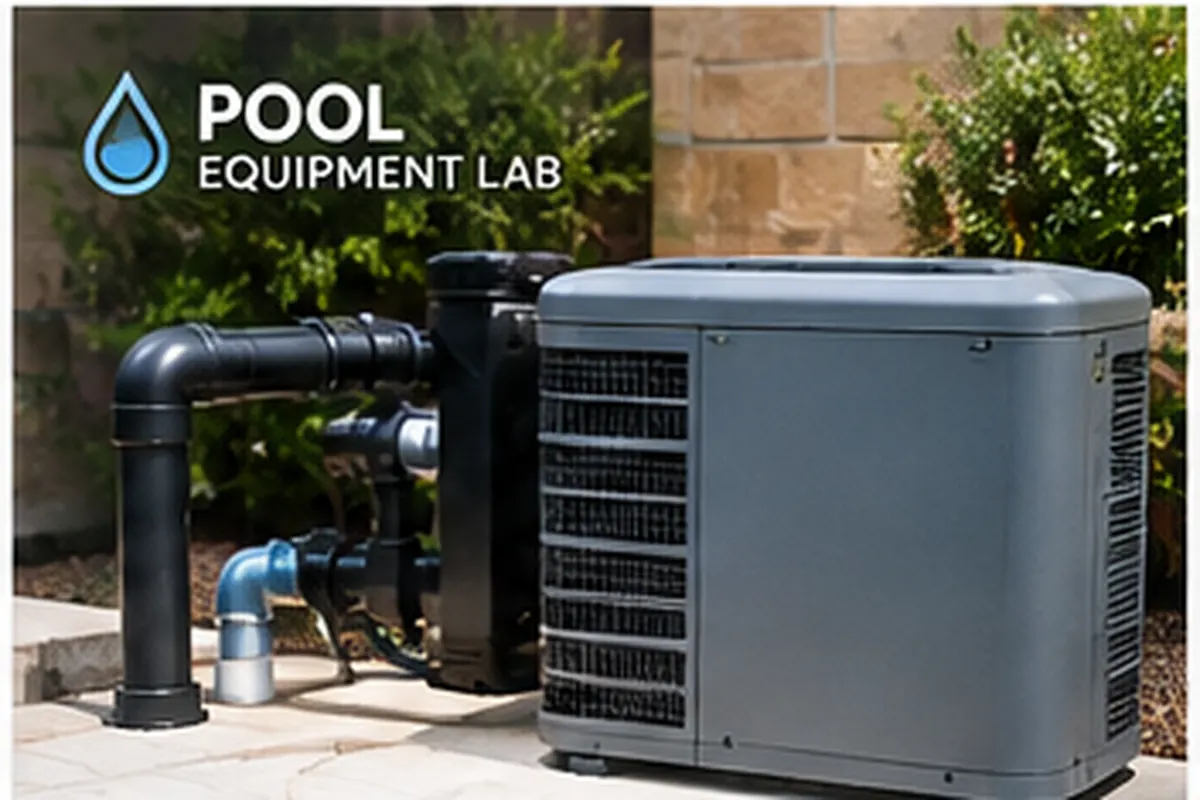
Pool automation can make heating much easier to manage by bringing temperature settings, circulation, and heater operation into the same control system.
Compatible automation systems can manage both pool and spa heating, but the available functions depend on the heater, controller, plumbing, and system configuration.
Quick Answer: Can Pool Automation Control a Pool Heater?
Yes. Compatible pool automation systems can control gas heaters, heat pumps and certain solar-heating systems. Depending on the equipment, automation can manage temperature settings, coordinate heater operation with the circulation pump, schedule heating and provide remote control through a smartphone app.
The most important considerations are heater compatibility, adequate water flow, accurate temperature sensing and proper control wiring. A controller that can turn a heater on and off does not necessarily support every advanced heating or cooling feature.
Pool Heater Automation at a Glance
| Feature | What It Does | What to Verify |
|---|---|---|
| Heater on/off control | Enables compatible heating equipment when heat is requested | Supported heater control method |
| Temperature control | Maintains a programmed pool or spa temperature | Temperature-sensor configuration |
| Smartphone control | Allows supported temperature adjustments through an app | Network and controller compatibility |
| Pump coordination | Provides circulation when heating is requested | Heater flow requirements and pump settings |
| Pool and spa modes | Manages supported heating and valve configurations | Plumbing and automation compatibility |
| Heat-pump cooling | Controls supported cooling functions | Heat-and-cool equipment compatibility |
| Solar heating | Coordinates supported solar valves and sensors | Solar-control capabilities |
Can Automation Turn a Pool Heater On and Off?
Yes. Compatible pool automation systems can control heating equipment as part of the overall pool operating system.
Basic control may involve enabling or disabling a heater through an approved control connection. More advanced systems may exchange additional information with compatible heating equipment.
For a broader explanation of controllers, schedules, equipment compatibility and connected pool equipment, see our Complete Guide to Pool Automation.
How Does Automated Pool Heating Work?
A properly configured automation system uses the requested water temperature and available temperature-sensor information to determine when heating is needed.
When the water temperature is below the selected setpoint, the controller may request heat from the compatible heater while coordinating the necessary circulation equipment.
When the target temperature is reached, the system stops requesting heat according to its programmed operating logic.
The heater retains its own required operating protections. Automation should never bypass the heater's flow, temperature or other safety controls.
Example: Maintaining a Pool at a Set Temperature
Consider a hypothetical pool with a target temperature of 82°F.
The automation system detects that the water temperature is below the target and requests heating when its programmed conditions are satisfied.
Once the water reaches the target temperature, the system stops requesting heat. It may request heating again as the water cools.
The exact temperature differential, control sequence and pump behavior depend on the automation system and heater.
How Does Automation Communicate With a Heater?
Different heaters and controllers use different control methods.
| Control Method | Typical Function | Important Limitation |
|---|---|---|
| Approved external heater-control connection | Enables or disables heating requests | Available functions depend on the heater |
| Compatible digital communication | May exchange additional settings or operating information | Requires supported equipment |
| Integrated solar control | Operates supported valves using temperature-sensor information | Requires compatible sensors and plumbing |
Do not assume that every heater can communicate directly with every automation controller.
Verify the exact heater model, approved control method and required wiring before purchasing or connecting equipment.
Can You Set Pool Temperature From an App?
Many connected automation systems allow homeowners to adjust supported temperature settings through a smartphone application.
Depending on the platform, the app may provide:
- Pool temperature adjustment.
- Spa temperature adjustment.
- Heating-mode selection.
- Heating schedules.
- Current temperature information.
- Supported equipment status information.
Available functions depend on the controller, heater and network configuration.
If you are comparing controllers capable of coordinating pumps, heaters, valves and other pool equipment, verify compatibility with your complete equipment setup.
Compare Pool Automation Systems on Amazon
For installations where remote access is particularly important, compare supported Wi-Fi-enabled controllers and networking upgrades.
Compare Pool Automation Wi-Fi Controllers on Amazon
Can Pool and Spa Temperatures Be Different?
Yes. Compatible pool-and-spa automation systems can be configured around separate operating modes and temperature requirements when the equipment and plumbing support them.
A spa is commonly operated at a higher target temperature than the swimming pool.
However, having separate temperature settings does not necessarily mean that a shared heater can heat the pool and spa independently at the same time.
Shared-equipment installations may need to switch valves and operating modes to direct circulation through the appropriate body of water.
Example: A Shared Pool and Spa Heater
Consider a hypothetical pool-and-spa installation with one circulation pump and one gas heater.
| Operating Mode | Illustrative Target | System Function |
|---|---|---|
| Pool | 82°F | Circulates and heats the pool |
| Spa | 100°F | Uses the supported spa plumbing configuration and heating setpoint |
These temperatures are illustrative rather than recommended settings.
The controller must coordinate the appropriate valve positions, pump operation and heater request for each mode.
The actual configuration depends on whether the pool and spa share equipment or have separate circulation systems.
Why Pump Operation Matters
A pool heater requires adequate water flow.
Automation therefore needs to coordinate heater demand with circulation-pump operation.
Simply commanding the heater to operate without appropriate circulation does not create a properly functioning system.
See Pool Automation and Variable-Speed Pumps for more about coordinating pump speeds with heating and other pool functions.
Example: Heating With a Variable-Speed Pump
Suppose a variable-speed pump normally operates at a low speed for routine filtration, but the heater requires more flow than that setting provides.
A compatible automation system may be configured to request a higher pump speed when heating is activated.
When heating ends, the system may return to its normal programmed operating mode.
The correct pump speed must be established from the heater's actual flow requirements and the hydraulic performance of the installation.
Can Automation Control a Gas Pool Heater?
Compatible gas pool heaters can be incorporated into automation systems.
The exact control method depends on the heater and controller.
Some installations use an approved external heater-control connection, while compatible equipment may support additional communication features.
Before installation, confirm:
- The exact heater model.
- The manufacturer's supported automation connection.
- Required temperature-sensor configuration.
- Required water flow.
- Approved wiring and installation procedures.
Automation must not bypass the heater's internal operating protections or required safety devices.
Can Automation Control a Pool Heat Pump?
Compatible pool heat pumps can also be integrated with automation.
Depending on the equipment, the controller may support heating requests, temperature settings and additional operating functions.
Some compatible heat-and-cool models also support automated cooling control.
However, basic heating compatibility does not guarantee that the controller can operate every cooling or advanced heat-pump feature.
For more about gas heaters, heat pumps, sizing, operating costs and heater selection, see our Complete Guide to Pool Heaters.
Can Automation Schedule Pool Heating?
Yes. Compatible automation systems can coordinate heating with circulation schedules and other equipment functions.
However, heating is different from switching on a light at a particular time.
Pool volume, heater output, starting water temperature, weather, desired temperature and pool-cover use all affect how long heating takes.
A heating schedule should account for these variables rather than assuming the pool will reach its target temperature immediately.
Example: Planning a Heating Schedule
Suppose you want your pool to reach a particular temperature before an afternoon swim.
The automation controller may allow you to schedule circulation and heating earlier in the day.
But the required lead time depends on the actual heating load and heater output.
For example, a pool starting only a few degrees below its target may require much less heating time than the same pool after several cold, windy nights.
See How Long Does It Take to Heat a Pool? for a closer look at the factors that determine heating time.
Can Automation Make Pool Heating Cheaper?
Automation does not change the heater's underlying efficiency rating.
However, it can help manage operating costs by making schedules and temperature settings easier to control consistently.
Potential benefits include:
- Avoiding unnecessary heating outside planned swimming periods.
- Coordinating compatible pump and heater operation.
- Managing separate pool and spa temperature settings.
- Providing convenient access to programmed schedules.
- Reducing unnecessary operation caused by forgotten manual settings.
Actual savings depend on heater efficiency, fuel or electricity prices, weather, pool-cover use and the selected operating schedule.
Example: Estimating Heating Energy
Consider a hypothetical 15,000-gallon pool that needs a 5°F temperature increase.
Using approximately 8.34 pounds per gallon for the weight of water:
Required Heat = 15,000 × 8.34 × 5 = 625,500 BTU
If a heater delivers 250,000 BTU/h of useful heat under the operating conditions, the ideal heating time would be approximately 2.5 hours.
Actual heating time will be longer when ongoing heat loss and other operating factors are considered.
Automation can coordinate when heating begins, but it cannot eliminate the energy required to raise the water temperature.
You can estimate heater energy use and operating expense with our Pool Heater Operating Cost Calculator.
What About Solar Pool Heating?
Some pool automation platforms support solar-heating configurations and automatic valve operation.
Compatible systems may use temperature-sensor information to determine when circulating water through the solar collectors is appropriate.
Solar integration should be planned around the exact automation platform, sensor requirements, valve configuration and plumbing arrangement.
Do not assume that a controller with standard heater support also includes the necessary solar-control functions.
Can Automation Coordinate More Than One Heating System?
Some advanced automation systems support installations with multiple compatible heating technologies.
For example, a pool may have a heat pump for regular temperature maintenance and a gas heater for additional heating capacity.
Whether the controller can coordinate both heaters, select operating priorities or manage hybrid functions depends on the exact equipment and automation platform.
Verify the manufacturer's supported configurations before planning a multi-heater installation.
What Happens If the Internet Goes Down?
A lost internet connection does not necessarily stop locally programmed heating functions.
Some automation controllers continue operating their saved schedules and temperature settings even when remote smartphone access is unavailable.
The exact behavior depends on the automation platform and its configuration.
If local control works but the app is unavailable, investigate network connectivity before changing heater settings or replacing equipment.
Common Pool Heater Automation Problems
| Problem | Possible Cause | Initial Check |
|---|---|---|
| Heater does not start | Heating not requested, inadequate flow or equipment fault | Temperature setting, pump operation and displayed errors |
| Heater reports low flow | Insufficient circulation or system restriction | Pump setting, filter condition and heater flow requirements |
| App temperature setting does not respond | Network, configuration or compatibility issue | Local control and supported heater functions |
| Pool heats in the wrong operating mode | Incorrect configuration or valve assignment | Controller programming and plumbing setup |
| Heat pump will not enter cooling mode | Unsupported feature or incorrect configuration | Exact heat pump and controller compatibility |
| Heating schedule does not run | Schedule conflict, disabled mode or controller setting | Programmed schedule and local equipment status |
Do not bypass heater safety switches, alter gas connections or open energized electrical enclosures to diagnose automation problems. Use qualified service personnel when electrical, gas or equipment repairs are required.
What Should You Verify Before Connecting a Heater?
- Exact heater model compatibility.
- Automation-controller compatibility.
- Approved heater-control method.
- Required communication or control wiring.
- Temperature-sensor configuration.
- Required circulation flow.
- Variable-speed pump coordination.
- Pool and spa plumbing configuration.
- Supported heating and cooling functions.
- Available scheduling features.
- Automation software configuration.
- Manufacturer installation requirements.
If you are still determining the heating capacity your pool requires, use our Pool Heater Sizing Calculator.
Frequently Asked Questions
Can pool automation turn my heater on and off?
Yes, when the heater and controller support a compatible control method and are correctly installed and configured.
Can I change my pool temperature from my phone?
Many connected automation systems support remote temperature adjustment through an app. Available functions depend on the controller, heater and network configuration.
Can automation control pool and spa temperatures separately?
Compatible systems can support separate pool and spa temperature settings when the equipment and plumbing configuration allow it.
Can automation increase pump speed when heating starts?
Some compatible systems can coordinate variable-speed pump operation with heating requests. The programmed speed must provide the heater's required water flow.
Can automation control both a gas heater and a heat pump?
Some advanced controllers support multiple heating technologies. Check the manufacturer's supported equipment combinations and operating modes before purchasing.
Can automation cool my pool?
Some controllers support cooling through compatible heat-and-cool equipment. Basic heater-control compatibility does not automatically include cooling control.
Can I schedule my pool to be warm before I get home?
Compatible automation systems can schedule heating, but the pool must have enough heating capacity and time to reach the requested temperature under the actual conditions.
Will automation reduce my pool-heating bill?
It may help reduce unnecessary operation through consistent schedules and temperature settings. Actual savings depend on the heater, energy prices, weather and how the pool is used.
Can automation control solar pool heating?
Some controllers support solar heating with compatible sensors and valve arrangements. Confirm the exact system's solar-control capabilities before installation.
Will my heater continue working if the internet goes down?
Some automation systems continue running locally programmed heating functions without internet access. Check the documentation for your specific controller.
Bottom Line
Pool automation can centralize heater control, temperature settings, circulation and pool-spa operation.
Its main advantage is coordination: a compatible controller can manage heating as part of the complete pool system instead of treating the heater as an isolated piece of equipment.
Before installation, verify heater compatibility, required water flow, temperature-sensor configuration, approved wiring and the specific heating or cooling functions you want the controller to provide.
How We Research
Pool Equipment Lab evaluates pool equipment using manufacturer specifications, documentation, compatibility requirements, operating costs, warranty information, and owner feedback when relevant. We do not claim hands-on testing unless we actually performed it.