
Gas vs. Heat Pump Pool Heaters: Which Is Better?
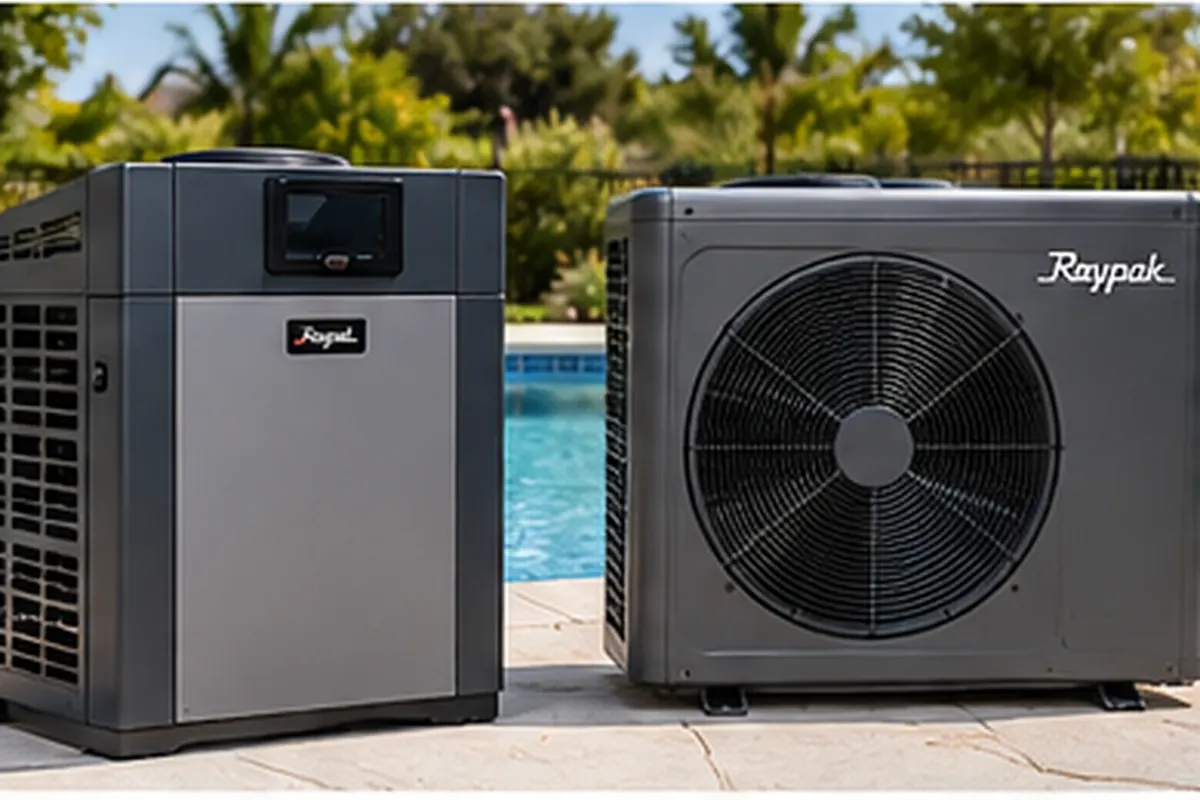
Gas pool heaters and electric heat pumps can both extend the swimming season, but they produce heat in very different ways. Gas heaters are known for high heating output and fast temperature increases, while heat pumps transfer heat from the surrounding air and can provide efficient temperature maintenance under suitable conditions.
The better choice depends on your climate, energy prices, pool size, desired heating speed, and whether you heat occasionally or maintain a warm pool for long periods.
Quick Answer: Gas vs. Heat Pump Pool Heaters
Gas pool heaters and electric heat pumps can both warm swimming pools, but they deliver heat differently. Gas heaters burn natural gas or propane and are available with high heating-output ratings. Heat pumps use electricity to transfer heat from outdoor air into the pool water.
The main differences are heating speed, energy consumption, performance in cooler weather and installation requirements. The choice also depends on whether you heat your pool occasionally or maintain a relatively consistent temperature throughout the swimming season.
To compare them fairly, look at useful heating output, local utility prices, expected operating conditions and your preferred heating schedule—not just the advertised BTU rating or hourly operating cost.
Gas vs. Heat Pump Pool Heaters at a Glance
| Factor | Gas Heater | Heat Pump |
|---|---|---|
| How it works | Burns natural gas or propane to heat pool water. | Transfers heat from outdoor air into pool water. |
| Heating speed | High-output models can provide rapid heating. | Depends on heating capacity and outdoor conditions. |
| Common application | Rapid heating, occasional pool use and spas. | Extended swimming seasons and temperature maintenance. |
| Energy source | Natural gas or propane. | Electricity and heat collected from outdoor air. |
| Efficiency measurement | Thermal efficiency. | Coefficient of performance (COP). |
| Outdoor temperature | Does not rely on warm outdoor air to produce heat. | Heating capacity and efficiency change with outdoor conditions. |
| Heating capacity | High-output residential models are available. | Varies by model, air temperature and humidity. |
| Fuel or electrical requirements | Appropriate natural-gas or propane supply. | Appropriately sized electrical supply. |
| Installation considerations | Fuel supply, combustion ventilation and required clearances. | Electrical capacity, outdoor airflow and required clearances. |
For a broader explanation of heater types, sizing, heating performance, operating costs and maintenance, see our Complete Guide to Pool Heaters.
How a Gas Pool Heater Works
A gas pool heater burns natural gas or propane to produce heat. Pool water passes through a heat exchanger, where heat from combustion is transferred into the water before it returns to the pool.
Gas heaters are available in relatively high BTU capacities. This allows appropriately sized models to deliver substantial amounts of heat in a short period.
Gas Heater Input vs. Useful Output
A gas heater's advertised BTU rating commonly describes its fuel input rather than the exact amount of heat transferred into the water.
Thermal efficiency describes the proportion of fuel energy delivered as useful heat.
For example, consider a hypothetical gas heater rated at 400,000 BTU/hr with 84% thermal efficiency.
400,000 × 0.84 = 336,000 BTU/hr
Under those assumptions, the heater delivers approximately 336,000 BTU of useful heat per hour.
When comparing gas heaters, examine fuel input, thermal efficiency and useful heating output together.
If gas heating fits the way you use your pool or spa, compare available BTU capacities, fuel requirements, efficiency ratings and installation requirements before purchasing.
Compare Gas Pool Heaters on Amazon
How a Pool Heat Pump Works
A pool heat pump does not generate most of its heat directly through electrical resistance. Instead, it uses a refrigeration cycle to collect heat from outdoor air and transfer it into pool water.
A fan moves outdoor air across an evaporator coil. Refrigerant absorbs heat from the air, a compressor raises the refrigerant's temperature, and a heat exchanger transfers that heat into the circulating pool water.
This process allows the equipment to deliver more heat energy to the water than the electrical energy it consumes.
Understanding Heat Pump COP
Heat-pump efficiency is commonly expressed as coefficient of performance, or COP.
COP compares the amount of useful heat delivered with the electrical energy consumed.
| Assumed COP | Heat Delivered per Unit of Electrical Energy |
|---|---|
| 3 | 3 units |
| 4 | 4 units |
| 5 | 5 units |
| 6 | 6 units |
These are illustrative COP values, not guaranteed performance ratings for particular products.
A heat pump's actual COP changes with outdoor air temperature, humidity and pool-water temperature.
When comparing pool heat pumps, pay attention to heating capacity, efficiency, recommended operating temperatures, electrical requirements and the manufacturer's sizing guidance.
Compare Pool Heat Pumps on Amazon
Which Heats a Pool Faster?
Heating speed depends on useful heating output, pool volume, the desired temperature increase and ongoing heat loss.
High-output gas heaters can deliver substantially more heat per hour than lower-output residential heat pumps. However, actual performance should be compared using the specifications of the equipment under consideration.
Example: Heating a 15,000-Gallon Pool by 10°F
A useful estimate for the heat required to raise pool-water temperature is:
Required Heat = Pool Gallons × 8.34 × Temperature Increase (°F)
For a 15,000-gallon pool and a 10°F increase:
15,000 × 8.34 × 10 = 1,251,000 BTU
Now compare two hypothetical heaters.
| Specification | Gas Heater | Heat Pump |
|---|---|---|
| Useful heating output | 336,000 BTU/hr | 100,000 BTU/hr |
| Required heat | 1,251,000 BTU | 1,251,000 BTU |
| Theoretical heating time | Approximately 3.7 hours | Approximately 12.5 hours |
These calculations assume constant useful heating output and no environmental heat loss.
Actual heating time may be longer, particularly in windy or cool conditions. Heat-pump output can also decline as outdoor conditions change.
See How Long Does It Take to Heat a Pool? for more about how heater output, pool volume, temperature increase and environmental conditions affect heating time.
Which Is More Energy-Efficient?
Gas heaters and heat pumps use different efficiency measurements, so their published ratings should not be compared as though they represent the same thing.
Gas-heater thermal efficiency measures the proportion of fuel energy transferred into the pool water.
Heat-pump COP measures the ratio of useful heat delivered to electrical energy consumed. Because heat pumps collect additional heat from outdoor air, their COP can be greater than 1.
Example: Delivering 100,000 BTU of Useful Heat
Consider a hypothetical heat pump operating at COP 5 and a gas heater operating at 84% thermal efficiency.
To deliver 100,000 BTU of useful heat:
- The heat pump requires approximately 5.86 kWh of electricity.
- The gas heater requires approximately 119,048 BTU of fuel input, equivalent to about 1.19 therms of natural gas.
This illustrates the difference in energy consumption. To determine actual operating cost, apply the appropriate local electricity or fuel rate.
Climate Makes a Big Difference
Heat pumps collect heat from outdoor air. Their heating capacity and efficiency therefore depend on outdoor temperature, humidity and pool-water temperature.
During warmer weather, a heat pump may be able to deliver substantial useful heat while consuming relatively little electricity.
As outdoor temperatures fall, heating capacity and COP can decline. The equipment may need to run longer to deliver the required heat, and some models have minimum operating-temperature limits.
Gas heaters do not depend on extracting heat from warm outdoor air, although cold, windy weather still increases heat loss from the pool itself.
Example: The Same Heat Pump in Different Weather
Suppose a hypothetical heat pump delivers 100,000 BTU/hr under one set of outdoor conditions but only 75,000 BTU/hr under cooler conditions.
For a heating job requiring 600,000 BTU:
| Useful Heating Output | Theoretical Heating Time |
|---|---|
| 100,000 BTU/hr | 6 hours |
| 75,000 BTU/hr | 8 hours |
The lower-output condition extends theoretical heating time by two hours. The calculation does not include any additional heat loss caused by cooler weather.
When evaluating a heat pump, review performance specifications for conditions that resemble your intended swimming season.
Operating Cost: Gas vs. Heat Pump
Hourly operating cost depends on equipment energy consumption and local utility prices.
However, a lower hourly cost does not necessarily mean a lower cost for the entire heating job because the two heaters may deliver different amounts of heat per hour.
Gas Heater Operating-Cost Formula
Natural gas is commonly billed by the therm. One therm represents 100,000 BTU of fuel energy.
Hourly Fuel Cost = (Heater Input BTU/hr ÷ 100,000) × Gas Price per Therm
For example, a 400,000-BTU/hr gas heater consumes approximately four therms per hour while firing continuously.
At a hypothetical $1.50 per therm:
4 × $1.50 = $6.00/hour
Heat Pump Operating-Cost Formula
Heat-pump electricity cost can be estimated using:
Hourly Electricity Cost = Electrical Input (kW) × Electricity Rate ($/kWh)
For example, a heat pump drawing 5 kW at a hypothetical $0.18/kWh costs:
5 × $0.18 = $0.90/hour
These examples calculate hourly energy expenses only. They do not establish which system costs less to deliver the same amount of useful heat.
Comparing the Cost of the Same Heating Job
A more useful comparison is the cost of delivering an identical quantity of heat to the water.
Suppose you need 1,000,000 BTU of useful heat and assume the following hypothetical conditions:
- Electricity costs $0.18/kWh.
- Natural gas costs $1.50/therm.
- Propane costs $3.00/gallon.
- Heat-pump COP is 5.
- Gas-heater thermal efficiency is 84%.
| Heater Type | Approximate Energy Required | Estimated Energy Cost |
|---|---|---|
| Heat pump | 58.6 kWh | $10.55 |
| Natural gas heater | 11.90 therms | $17.86 |
| Propane heater | 13.01 gallons | $39.03 |
These figures are illustrative, not current energy-price averages or guaranteed operating costs. They exclude environmental heat loss, additional circulation-pump electricity, installation and maintenance.
For a detailed comparison, see Pool Heat Pump vs. Gas Heater Operating Cost. You can also enter your own energy rates into our Pool Heater Operating Cost Calculator.
Which Fits Occasional Pool Heating?
Occasional heating usually means allowing the pool to cool between swimming sessions and raising its temperature before use.
In this situation, the time available for heating becomes an important equipment-selection factor.
For example, an owner who wants to raise the water temperature substantially on a Saturday morning has a different heating requirement from an owner who maintains a consistent temperature throughout the week.
High-output gas heaters are commonly considered for rapid heating applications, including spas.
When evaluating equipment for occasional use, calculate the required temperature increase and compare it with the heater's useful output and your available heating time.
Which Fits Extended Temperature Maintenance?
Maintaining a stable pool temperature requires replacing heat lost to the surrounding environment.
Heat pumps are commonly used for extended heating schedules, particularly when outdoor conditions allow efficient operation.
Instead of repeatedly performing a large temperature increase, the system can replace heat as the pool loses it.
However, the operating schedule should still account for electricity pricing, weather, heat loss and the equipment's actual heating capacity.
Pool Covers Affect Both Heater Types
Evaporation is a major source of pool heat loss.
A suitable pool cover can reduce evaporation, allowing either type of heater to spend less energy replacing lost heat.
Example: Reducing Daily Heating Demand
Suppose an uncovered pool loses a hypothetical 300,000 BTU of heat per day.
If a cover and other operating conditions reduce that loss to 150,000 BTU per day, the heater needs to replace approximately half as much heat to maintain the same temperature.
The actual reduction depends on the cover, weather, pool temperature and how consistently it is used.
Pool-cover use can materially change the operating-cost comparison, particularly when maintaining temperature over an extended period.
Installation Considerations
Both heater types require appropriate water circulation and installation that follows the manufacturer's specifications.
However, their energy-supply and equipment-clearance requirements differ.
| Installation Factor | Gas Heater | Heat Pump |
|---|---|---|
| Energy supply | Natural gas or propane. | Electricity. |
| Electrical requirements | Power for controls and other applicable components. | Electrical supply sized for the compressor, fan and other components. |
| Airflow | Required combustion air and exhaust arrangements. | Unobstructed airflow for heat collection and exhaust air. |
| Water circulation | Must meet manufacturer requirements. | Must meet manufacturer requirements. |
| Equipment clearances | Required combustion, ventilation and service clearances. | Required airflow and service clearances. |
| Additional considerations | Fuel piping, applicable venting and combustion requirements. | Electrical capacity, circuit protection and condensate management where applicable. |
A gas heater may require fuel-line upgrades. A heat pump may require electrical work if the existing supply cannot support the selected equipment.
Have the applicable installation requirements verified by qualified professionals before purchasing a replacement heater or changing technologies.
Heater Size Matters Too
Whichever technology you consider, heating capacity needs to match your pool, climate, temperature goals and desired heating speed.
Pool volume determines the theoretical amount of energy required to raise the water temperature. Surface area, wind and evaporation influence ongoing heat loss.
For gas heaters, distinguish between fuel-input ratings and useful heating output.
For heat pumps, review heating-capacity specifications under conditions relevant to your location rather than relying on a single advertised BTU figure.
See What Size Pool Heater Do I Need? for the sizing process, or use our Pool Heater Sizing Calculator for a starting estimate.
Maintenance and Equipment Life Considerations
Both heater types require maintenance, but their components and service needs differ.
Gas Heater Maintenance
Gas heaters have combustion systems and heat exchangers that require appropriate inspection and maintenance.
Service requirements depend on the model, water chemistry, operating environment and manufacturer instructions.
Combustion-system and gas-supply work should be performed by qualified professionals.
Heat Pump Maintenance
Heat pumps require unobstructed airflow and appropriate maintenance of the air-side and water-side components.
Keep the equipment clear of debris and follow manufacturer instructions for cleaning, inspection and service.
Refrigerant and electrical-system repairs should be performed by appropriately qualified professionals.
For either technology, improper water chemistry and inadequate water flow can contribute to equipment problems.
A Practical Gas vs. Heat Pump Comparison Checklist
Before selecting equipment, collect the information needed to compare both technologies for your particular pool.
- Calculate pool volume. Determine how much water needs to be heated.
- Measure pool surface area. Consider the amount of water exposed to evaporation and other heat losses.
- Identify your temperature goals. Record typical starting temperature and desired swimming temperature.
- Decide on your heating schedule. Determine whether you need rapid occasional heating or extended temperature maintenance.
- Review local weather. Consider the outdoor conditions during your intended swimming season.
- Check energy prices. Use your actual electricity, natural gas or delivered propane rates.
- Compare useful heating output. Account for gas-heater efficiency and heat-pump performance under relevant conditions.
- Consider pool-cover use. Evaluate how much avoidable heat loss you can reduce.
- Verify installation requirements. Confirm fuel supply, electrical capacity, water flow and equipment clearances.
- Estimate operating costs. Compare the cost of delivering the same amount of useful heat.
Compare Equipment for Your Heating Schedule
Once you understand your pool's heating requirements, compare equipment based on useful heating capacity, operating conditions, installation requirements and local energy prices.
Gas heater considerations:
- Available heating output and desired heat-up time.
- Natural-gas or propane availability.
- Thermal efficiency and local fuel prices.
- Fuel-supply and installation requirements.
- Expected frequency of pool or spa heating.
Compare Gas Pool Heaters on Amazon
Heat pump considerations:
- Heating capacity under relevant outdoor conditions.
- COP and local electricity rates.
- Intended swimming season and temperature-maintenance schedule.
- Electrical supply and equipment airflow requirements.
- Acceptable heating time for your pool.
Compare Pool Heat Pumps on Amazon
Frequently Asked Questions
Does a gas heater heat a pool faster than a heat pump?
Heating speed depends on useful heating output. High-output gas heaters can provide faster temperature increases than lower-output heat pumps, but compare the specifications of the particular models under consideration.
Is a heat pump cheaper to run than a gas pool heater?
It depends on local energy prices, heat-pump COP, gas-heater thermal efficiency and operating conditions. Compare the cost of delivering the same amount of useful heat rather than hourly operating expenses alone.
Can a heat pump heat a pool in cold weather?
That depends on the model and its operating-temperature limits. Heating capacity and COP can decline as outdoor conditions become less favorable. Review the manufacturer's specifications for your intended swimming season.
Can a gas pool heater maintain a constant temperature?
Yes. A properly sized gas heater can maintain pool temperature when its available heating output is sufficient to replace ongoing heat loss.
Are heat pumps suitable for occasional pool heating?
They can be, provided the equipment delivers enough useful heat to reach the desired temperature within the available time. Calculate the required heat and compare it with the heat pump's output under expected conditions.
Which heater requires a gas line?
Natural-gas heaters require an appropriately sized gas supply. Propane heaters require a suitable propane supply and associated equipment. Electric heat pumps do not require either fuel source.
Does a heat pump require a dedicated electrical circuit?
Electrical requirements depend on the model and applicable codes. Review the manufacturer's installation instructions and have the electrical supply evaluated by a qualified professional.
Can I replace my gas pool heater with a heat pump?
Possibly. Check heating capacity, electrical supply, plumbing, water-flow requirements, equipment clearances and expected performance in your climate before changing technologies.
Does a pool cover help both gas heaters and heat pumps?
Yes. Reducing evaporation and other heat losses lowers the amount of heat either system must replace. Actual savings depend on the pool, cover and weather conditions.
Should I compare pool heaters using advertised BTU ratings?
Compare useful heating output under relevant operating conditions. Gas-heater advertising commonly emphasizes fuel-input ratings, while heat-pump heating capacity varies with outdoor conditions.
Bottom Line
Gas heaters and heat pumps provide different approaches to pool heating. Gas heaters are available with high heating-output ratings, while heat pumps transfer heat from outdoor air and can deliver multiple units of useful heat for each unit of electricity consumed.
The appropriate technology depends on your pool's heating requirements, desired heat-up time, climate, local energy prices and installation constraints.
Compare actual equipment performance and the cost of delivering the same amount of useful heat before making a purchase.
How We Research
Pool Equipment Lab evaluates pool equipment using manufacturer specifications, documentation, compatibility requirements, operating costs, warranty information, and owner feedback when relevant. We do not claim hands-on testing unless we actually performed it.