
Pool Heat Pump vs. Gas Heater Operating Cost
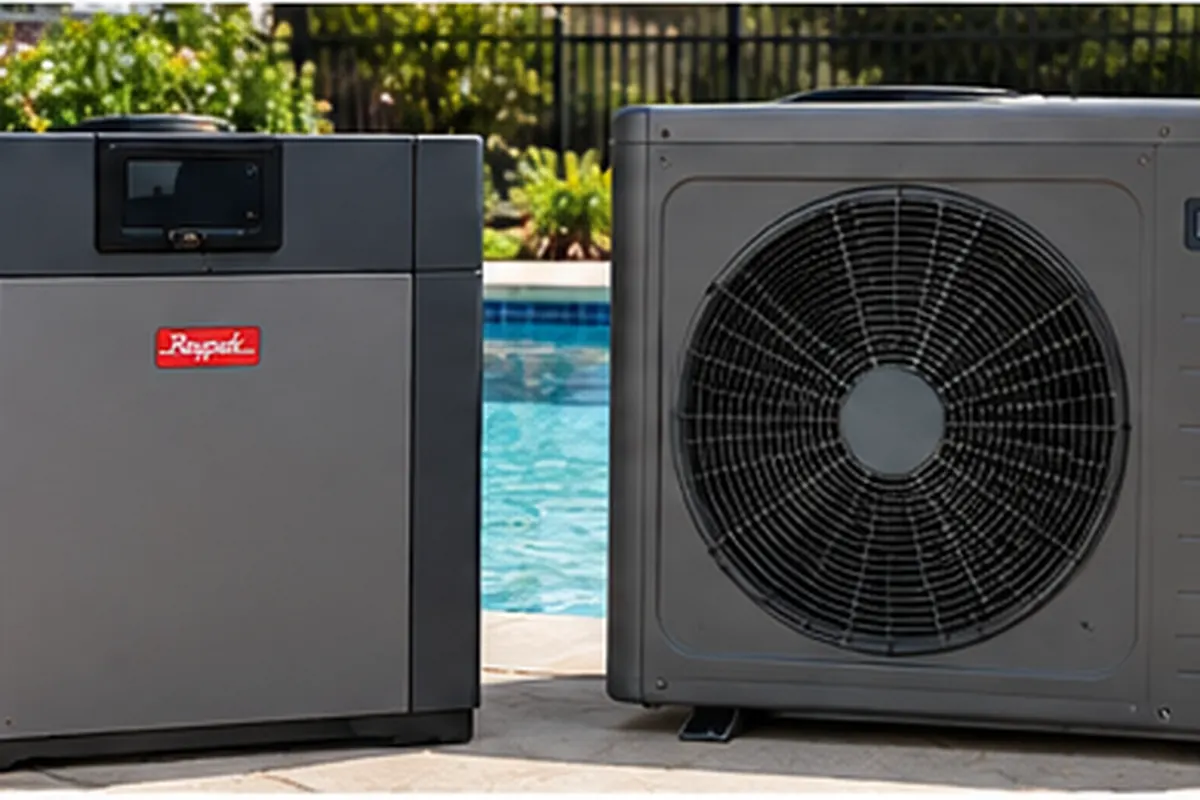
Pool heat pumps are often promoted for lower operating costs, while gas heaters are valued for fast heating. But neither statement tells you what your particular pool will cost to heat.
A useful comparison requires looking at energy consumption, heater efficiency, local electricity and fuel prices, outdoor conditions, and how you actually use the heater.
Quick Answer: Heat Pump vs. Gas Pool Heater Operating Cost
A pool heat pump uses electricity to move heat from outdoor air into pool water. A gas heater burns natural gas or propane to produce heat. Because they operate differently, comparing their energy bills requires accounting for heat-pump efficiency, gas-heater thermal efficiency and local utility prices.
For example, under hypothetical conditions, a heat pump with a coefficient of performance (COP) of 5 can deliver 100,000 BTU of heat using approximately 5.86 kWh of electricity. A gas heater operating at 84% thermal efficiency requires approximately 119,000 BTU of fuel input to deliver the same useful heat.
The actual cost difference depends on electricity and fuel prices, outdoor conditions, equipment performance and how frequently you heat your pool.
Heat Pump vs. Gas Heater at a Glance
| Factor | Pool Heat Pump | Gas Pool Heater |
|---|---|---|
| Energy source | Electricity and heat collected from outdoor air | Natural gas or propane |
| Efficiency measurement | Coefficient of performance (COP) | Thermal efficiency |
| Energy billing | Kilowatt-hours (kWh) | Therms or gallons of propane |
| Heating behavior | Capacity varies with outdoor conditions | Often provides high heating output for faster temperature recovery |
| Operating-cost considerations | Electricity price, COP and runtime | Fuel price, input rating and runtime |
| Climate sensitivity | Outdoor temperature and humidity materially affect performance | Less dependent on outdoor air temperature for heat production |
| Typical usage consideration | Extended heating and temperature maintenance | Rapid heating and intermittent use |
Why Heat Pump and Gas Heater Costs Are Different
A gas heater creates heat by burning fuel. A heat pump uses electricity to move existing heat from the surrounding air into the pool.
That fundamental difference changes both efficiency and operating behavior.
A heat pump can deliver several units of heat energy for each unit of electrical energy it consumes because much of the delivered heat comes from the surrounding air.
A gas heater converts the chemical energy in its fuel into heat, with some energy lost through combustion and exhaust.
For a broader comparison of the two technologies, see Gas Pool Heater vs. Heat Pump: Which Is Better?.
Understanding Heat Pump COP
Pool heat-pump efficiency is commonly described by coefficient of performance, or COP.
COP compares useful heat delivered to the pool with the electrical energy consumed.
For example:
- A COP of 3 means three units of heat are delivered for each unit of electrical energy consumed.
- A COP of 4 means four units of heat are delivered for each unit of electrical energy consumed.
- A COP of 5 means five units of heat are delivered for each unit of electrical energy consumed.
A COP above 1 is possible because the heat pump transfers heat from the outdoor air rather than producing all the heat directly from electricity.
However, COP is not constant. Outdoor temperature, humidity, pool-water temperature and operating conditions affect actual performance.
Example: How COP Changes Electricity Use
Suppose two hypothetical heat pumps each need to deliver 100,000 BTU of heat to the pool in one hour.
| Specification | Heat Pump A | Heat Pump B |
|---|---|---|
| Useful heating output | 100,000 BTU/hr | 100,000 BTU/hr |
| Assumed COP | 4 | 5 |
| Approximate electrical input | 7.33 kW | 5.86 kW |
| Cost per hour at $0.18/kWh | $1.32 | $1.05 |
| Cost for 8 hours | $10.55 | $8.44 |
Both hypothetical units deliver the same useful heat, but the higher-COP unit requires less electricity under the assumed conditions.
Actual COP and heating output can change substantially as weather and pool-water temperatures change.
Understanding Gas Heater Thermal Efficiency
Gas heater thermal efficiency represents the proportion of fuel energy transferred into the pool water.
For example, a hypothetical gas heater operating at 84% thermal efficiency transfers approximately 84% of its fuel energy to the water under the relevant test conditions.
The remaining energy is not delivered as useful pool heat.
Example: Two Gas Heaters With Different Efficiency
Suppose two hypothetical gas heaters each have a fuel-input rating of 300,000 BTU per hour.
| Specification | Gas Heater A | Gas Heater B |
|---|---|---|
| Fuel input | 300,000 BTU/hr | 300,000 BTU/hr |
| Thermal efficiency | 82% | 90% |
| Useful heating output | 246,000 BTU/hr | 270,000 BTU/hr |
Heater B transfers more of the same fuel input into useful pool heat in this example.
Compare thermal efficiency and useful heating output alongside the advertised BTU input rating when evaluating gas heaters.
Calculating Heat Pump Operating Cost
If you know a heat pump's electrical input, its operating cost can be estimated using:
Electrical Input (kW) × Runtime (Hours) × Electricity Rate ($/kWh) = Operating Cost
Example: A 5 kW Heat Pump
Suppose a heat pump consumes 5 kW and operates for four hours.
5 kW × 4 hours = 20 kWh
If electricity costs $0.15/kWh:
20 × $0.15 = $3.00
The estimated electricity cost is $3.00 for that operating period.
This example assumes the unit draws 5 kW throughout the four hours. Actual consumption may change with operating conditions and equipment design.
You can enter your own energy rates and equipment information into our Pool Heater Operating Cost Calculator.
Heat Pump Cost at Different Electricity Rates
The following example assumes a constant electrical input of 5 kW for eight hours.
| Electricity Rate | Energy Used | Cost for 8 Hours |
|---|---|---|
| $0.10/kWh | 40 kWh | $4.00 |
| $0.15/kWh | 40 kWh | $6.00 |
| $0.20/kWh | 40 kWh | $8.00 |
| $0.25/kWh | 40 kWh | $10.00 |
| $0.30/kWh | 40 kWh | $12.00 |
These are illustrative electricity rates, not current utility quotes.
If a heat pump fits your climate and expected heating schedule, compare models by heating capacity, efficiency, electrical requirements and operating-temperature range.
Compare Pool Heat Pumps on Amazon
Calculating Natural Gas Heater Operating Cost
Natural gas is commonly billed in therms.
One therm equals 100,000 BTU of fuel energy.
A gas heater with a 400,000-BTU/hr input rating consumes approximately four therms per hour while firing continuously at its rated input.
The basic calculation is:
(Heater Input BTU/hr ÷ 100,000) × Runtime × Gas Rate ($/Therm) = Fuel Cost
Example: A 400,000-BTU/hr Gas Heater
Suppose a hypothetical gas heater has a rated input of 400,000 BTU/hr and natural gas costs $1.50 per therm.
400,000 ÷ 100,000 = 4 therms/hour
4 × $1.50 = $6.00/hour
For four hours of continuous firing:
4 × 4 × $1.50 = $24.00
This estimates fuel cost only. It excludes any applicable fixed utility charges and the electricity used by the pool pump or heater controls.
Natural Gas Cost at Different Fuel Prices
The following example assumes a 400,000-BTU/hr gas heater fires continuously for four hours.
| Natural Gas Rate | Fuel Used | Four-Hour Fuel Cost |
|---|---|---|
| $1.00/therm | 16 therms | $16.00 |
| $1.50/therm | 16 therms | $24.00 |
| $2.00/therm | 16 therms | $32.00 |
| $2.50/therm | 16 therms | $40.00 |
Actual utility bills may include delivery charges, taxes or other fees. Use the applicable variable cost of additional gas consumption when estimating the cost of operating your heater.
For more about the variables that determine total heating expense, see How Much Does It Cost to Heat a Pool?.
If gas heating matches your usage requirements, compare BTU capacity, fuel requirements, thermal efficiency and installation requirements before selecting equipment.
Compare Gas Pool Heaters on Amazon
What About Propane Pool Heaters?
Propane economics can differ significantly from natural gas because propane is generally purchased by the gallon and delivered prices vary.
A gallon of propane contains approximately 91,500 BTU.
To estimate propane consumption:
Propane Gallons per Hour = Heater Input BTU/hr ÷ 91,500
Example: A 400,000-BTU/hr Propane Heater
Suppose a propane heater has a fuel-input rating of 400,000 BTU/hr.
400,000 ÷ 91,500 = approximately 4.37 gallons/hour
At a hypothetical propane price of $3.00 per gallon:
4.37 × $3.00 = approximately $13.11/hour
For three hours of continuous firing, the estimated fuel cost would be approximately $39.34.
These figures are illustrative. Use the actual delivered propane price and your heater's rated input.
Compare the Cost of Delivering the Same Amount of Heat
Comparing one hour of heat-pump operation with one hour of gas-heater operation can be misleading because the equipment may deliver very different amounts of heat.
A more useful comparison is the cost of delivering the same quantity of useful heat to the pool.
Illustrative Cost per 100,000 BTU of Useful Heat
Assume the following hypothetical conditions:
- Electricity: $0.18/kWh.
- Natural gas: $1.50/therm.
- Propane: $3.00/gallon.
- Heat-pump COP: 5.
- Gas-heater thermal efficiency: 84%.
| Heater Type | Energy Needed to Deliver 100,000 BTU | Estimated Energy Cost |
|---|---|---|
| Heat pump at COP 5 | Approximately 5.86 kWh | $1.05 |
| Natural gas heater at 84% efficiency | Approximately 1.19 therms | $1.79 |
| Propane heater at 84% efficiency | Approximately 1.30 gallons | $3.90 |
These calculations compare energy costs for the same theoretical useful heat output. They exclude installation, maintenance, circulation-pump electricity and other equipment expenses.
The heat-pump result assumes a COP of 5 throughout the comparison. Actual COP changes with operating conditions.
Why Heat Pumps Can Have an Operating-Cost Advantage
Under favorable conditions, a heat pump can transfer several units of heat into the pool for each unit of electricity consumed.
That can reduce the energy cost of delivering a given quantity of heat, depending on local electricity and fuel prices.
However, a heat pump's COP and heating capacity vary with outdoor temperature, humidity and pool-water temperature.
A cost estimate based on warm-weather performance may not represent operation during cooler months.
Why Gas Heating Can Still Fit Some Pool-Heating Schedules
Operating cost is not the only consideration.
Gas heaters are available with high heating-output ratings, which can provide faster temperature increases than lower-output heat pumps.
For a pool or spa heated only occasionally, the time required to reach the desired temperature may be an important consideration.
See How Long Does It Take to Heat a Pool? for more about how heater output, pool volume, temperature increase and heat loss affect heating time.
Example: Heating a 15,000-Gallon Pool by 5°F
To compare heater performance, first estimate the amount of heat needed to raise the pool's water temperature.
A useful approximation is:
Required Heat (BTU) = Pool Gallons × 8.34 × Desired Temperature Increase (°F)
For a hypothetical 15,000-gallon pool and a 5°F increase:
15,000 × 8.34 × 5 = 625,500 BTU
That is the theoretical amount of heat required to raise the water temperature, before accounting for heat loss.
Heat Pump Example
Suppose a heat pump delivers 100,000 BTU/hr under the relevant conditions.
625,500 ÷ 100,000 = approximately 6.3 hours
Gas Heater Example
Suppose a gas heater has a fuel input of 300,000 BTU/hr and operates at 84% thermal efficiency.
Its useful heating output is:
300,000 × 0.84 = 252,000 BTU/hr
The theoretical heating time is:
625,500 ÷ 252,000 = approximately 2.5 hours
These are simplified examples. Actual heating time depends on heat loss, weather, pool covers, equipment performance and circulation conditions.
Climate Changes Heat Pump Economics
Heat pumps collect heat from outdoor air.
As ambient temperature falls, available heating capacity and COP can decline. The unit may need to operate longer to deliver the required heat.
Some heat pumps have minimum operating-temperature limits or protective controls that restrict operation in cold conditions.
Example: The Same Heat Pump in Different Weather
Consider a hypothetical heat pump delivering 100,000 BTU/hr at COP 5 under one set of conditions.
Under cooler conditions, suppose its COP falls to 3 and its heating output also declines.
The electrical energy required per 100,000 BTU of useful heat would change as follows:
| Assumed COP | Electricity per 100,000 BTU | Cost at $0.18/kWh |
|---|---|---|
| 5 | 5.86 kWh | $1.05 |
| 4 | 7.33 kWh | $1.32 |
| 3 | 9.77 kWh | $1.76 |
This table isolates the effect of COP on energy cost. It does not imply that the heat pump delivers the same hourly heating capacity in every weather condition.
How You Use the Pool Changes the Comparison
Two owners with identical pools and utility rates can have different heating expenses because their usage patterns differ.
Maintaining a Stable Temperature
An owner who maintains a relatively stable pool temperature throughout an extended swimming season may operate the heater frequently.
In this situation, the energy cost of replacing ongoing heat loss becomes an important part of the comparison.
Heating Only on Weekends
An owner who heats the pool only before occasional weekend use may place greater importance on heating capacity and recovery time.
Equipment selection should account for the desired temperature increase and the amount of time available before swimming.
Heating a Spa
Spa heating can involve a relatively small water volume but a substantial temperature increase.
Check whether the equipment can reach the desired temperature within the available time and whether it is approved for the intended pool or spa configuration.
Pool Covers Can Reduce Both Heating Costs
Regardless of heater type, reducing heat loss reduces the amount of energy the heater must replace.
Evaporation is a major source of pool heat loss, so an appropriate pool cover can substantially change heating requirements.
Example: Reducing Daily Heat Replacement
Suppose an uncovered pool loses a hypothetical 300,000 BTU of heat per day.
If a cover and other conditions reduce that daily loss to 150,000 BTU, the heater needs to replace approximately half as much heat to maintain the same temperature.
The actual reduction depends on the cover, weather, pool temperature and usage.
Reducing heat loss can affect both heater operating expenses and the amount of heating capacity required for a particular schedule.
Don't Forget Circulation-Pump Electricity
Both heater types require appropriate water circulation during operation.
If heating requires the pool pump to run longer or at a higher speed than it otherwise would, the additional pump electricity belongs in a complete operating-cost comparison.
Example: Additional Pump Electricity
Suppose heating requires an additional 500 watts of pump power for four hours.
0.5 kW × 4 hours = 2 kWh
At $0.18/kWh:
2 × $0.18 = $0.36
The additional circulation cost is approximately $0.36 for that hypothetical heating period.
Do not add the pump's entire electricity consumption as an extra heating cost if the pump would have operated at the same speed and for the same duration without heating.
Compare Using Your Own Utility Rates
Before purchasing equipment, collect the information that determines operating cost for your particular pool.
| Information | What to Use |
|---|---|
| Electricity price | Applicable cost per additional kWh |
| Natural gas price | Applicable cost per additional therm |
| Propane price | Actual delivered cost per gallon |
| Heat-pump efficiency | COP under conditions relevant to your climate and target water temperature |
| Gas-heater efficiency | Manufacturer's thermal-efficiency specification |
| Heating output | Useful BTU/hr under the relevant operating conditions |
| Pool volume | Actual or reliably estimated gallons |
| Heating schedule | Desired temperature, operating season and frequency of use |
| Heat loss | Weather, wind, evaporation and pool-cover usage |
These inputs produce a more relevant comparison than generic national averages.
Heater capacity also affects how quickly the pool can reach the desired temperature. Our Pool Heater Sizing Calculator can help estimate an appropriate starting capacity.
Once you've compared operating costs using your own utility rates, compare equipment within the heater types that meet your pool's heating requirements.
Considering a heat pump?
Compare Pool Heat Pumps on Amazon
Considering a gas heater?
Compare Gas Pool Heaters on Amazon
Frequently Asked Questions
Is a pool heat pump cheaper to run than a gas heater?
It depends on local energy prices, heat-pump COP, gas-heater efficiency and operating conditions. Compare the cost of delivering the same amount of useful heat rather than comparing hourly energy consumption alone.
How much does it cost to run a pool heat pump for eight hours?
Multiply its electrical input in kilowatts by eight hours and your electricity rate. For example, a unit drawing 5 kW uses 40 kWh in eight hours, costing $7.20 at $0.18/kWh.
How much does it cost to run a 400,000-BTU gas pool heater?
A 400,000-BTU/hr natural gas heater consumes approximately four therms per hour while firing at its rated input. At a hypothetical $1.50 per therm, its fuel cost is approximately $6 per hour.
Does a heat pump become more expensive to operate in cold weather?
Its cost per unit of useful heat can increase as COP declines. Heating capacity may also fall, extending the time required to heat the pool.
Does a gas heater heat a pool faster?
Heating speed depends on useful heating output, pool volume, temperature increase and heat loss. High-output gas heaters can provide faster temperature recovery than lower-output heat pumps.
Is propane more expensive than natural gas for pool heating?
That depends on local prices and equipment efficiency. Convert propane prices to cost per unit of useful heat rather than comparing a gallon price directly with a therm price.
Does a heat pump use electricity when it is not heating?
Some equipment consumes standby electricity for controls or connected features. Check the manufacturer's specifications if you want to include standby consumption in a detailed ownership-cost estimate.
Does a pool cover make a difference with either heater?
Yes. Reducing evaporation and other heat losses lowers the amount of heat either system must replace.
Should I compare BTU input or heating output?
Compare useful heating output when estimating heating time. Use electrical input, fuel input and efficiency when estimating operating costs.
Can I calculate heating cost using my utility bill?
Yes. Use the applicable cost of additional electricity or fuel consumption, accounting for relevant variable delivery charges and time-of-use pricing where applicable.
Bottom Line
Heat pumps can deliver multiple units of heat for each unit of electricity consumed, while gas heaters provide heat by burning fuel and are available with high heating-output ratings.
Compare the cost of delivering the same amount of useful heat using your actual energy prices and realistic equipment performance. Then account for climate, heating time, pool-cover use and how often you intend to heat the pool.
For more information about heater types, sizing, heating time, operating costs and maintenance, see our Complete Guide to Pool Heaters.
How We Research
Pool Equipment Lab evaluates pool equipment using manufacturer specifications, documentation, compatibility requirements, operating costs, warranty information, and owner feedback when relevant. We do not claim hands-on testing unless we actually performed it.