
What Size Pool Heater Do I Need?
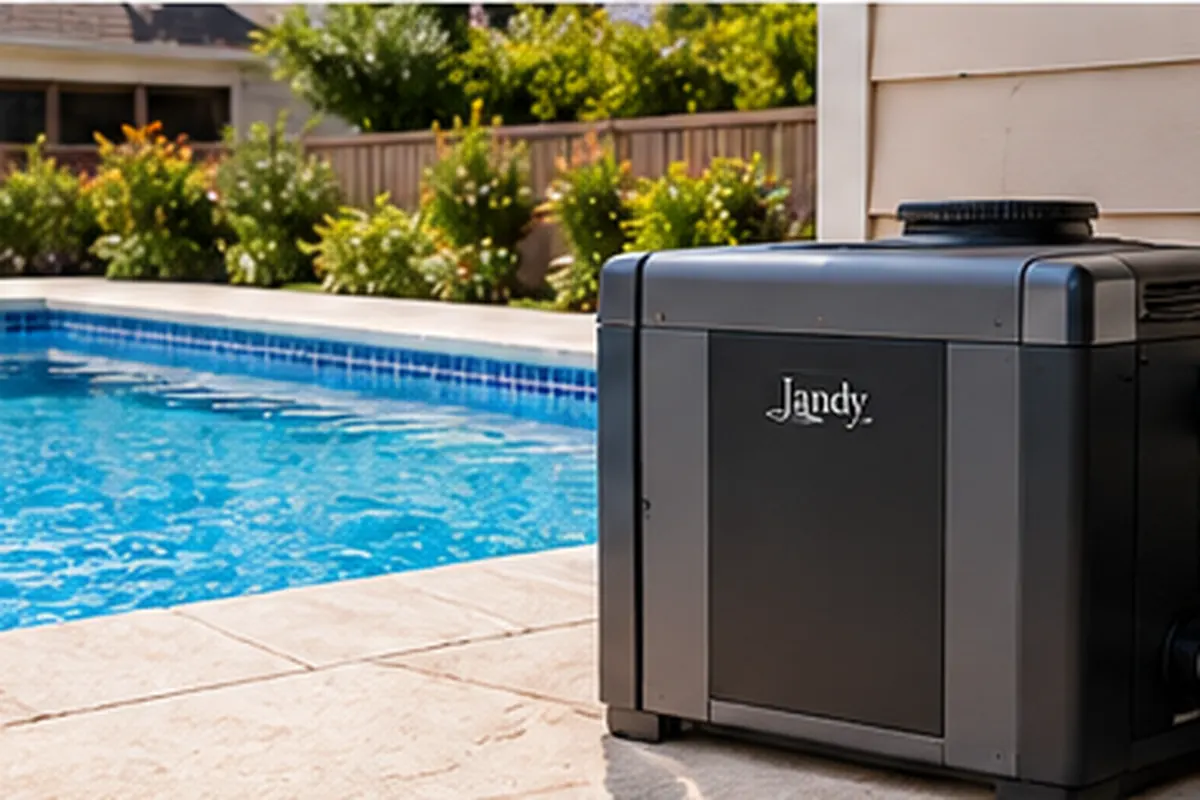
Pool heaters are rated by heating capacity, usually expressed in British Thermal Units per hour (BTU/hr). Choosing the right capacity involves more than simply knowing how many gallons your pool holds.
Pool surface area, desired temperature increase, outdoor conditions, heat loss, and how quickly you want the water to warm all affect heater sizing.
Quick Answer: What Size Pool Heater Do You Need?
The right pool-heater size depends on two separate heating requirements: how quickly you want to raise the water temperature and how much heat the pool loses while you are heating it or maintaining its temperature.
Pool volume and desired temperature increase determine the energy required for initial heat-up. Pool surface area, wind, evaporation, outdoor temperature and cover use affect ongoing heat loss.
For example, a 15,000-gallon pool requires approximately 1,251,000 BTU of useful heat for a theoretical 10°F temperature increase. A heater delivering 250,000 BTU per hour would take approximately five hours under ideal conditions, before accounting for heat loss.
Pool Heater Sizing at a Glance
| Factor | Why It Matters |
|---|---|
| Pool volume | Determines how much energy is required to raise the water temperature. |
| Pool surface area | Influences heat loss, particularly through evaporation. |
| Desired temperature increase | Determines how much additional heat the water needs. |
| Desired heating time | Helps establish the required useful heating output. |
| Outdoor conditions | Wind, temperature and humidity influence heat loss and heat-pump performance. |
| Pool cover | Can reduce evaporation and ongoing heating demand. |
| Heater efficiency | Determines the relationship between energy input and useful heating output. |
| Installation requirements | May limit which heater capacities can be installed. |
What Does Pool Heater BTU Mean?
BTU stands for British Thermal Unit, a unit of heat energy. Pool heaters use BTU-per-hour ratings to describe heating capacity.
A higher useful BTU/hr output means a heater can transfer heat into the pool more quickly, assuming the rest of the installation can support the equipment.
However, it is important to distinguish between fuel input and useful heating output.
Gas Heater Input vs. Output
Gas heaters are commonly advertised using their fuel-input rating. Not all of that energy reaches the pool water.
To estimate useful heating output:
Useful Output = Fuel Input × Thermal Efficiency
For example, a hypothetical 300,000-BTU/hr gas heater operating at 84% thermal efficiency delivers:
300,000 × 0.84 = 252,000 BTU/hr
Its useful heating output is approximately 252,000 BTU per hour under the assumed conditions.
Heat Pump Heating Capacity
Pool heat pumps are typically specified using heating output and coefficient of performance (COP).
Heating output represents the amount of heat transferred to the water under stated test conditions.
Because heat pumps extract heat from outdoor air, their capacity can change with air temperature, humidity and pool-water temperature.
For a broader explanation of pool-heater types, sizing, operating costs and performance, see our Complete Guide to Pool Heaters.
1. Calculate Your Pool's Water Volume
Pool volume is the starting point when sizing a heater for a desired temperature increase.
For a rectangular pool, estimate volume using:
Length × Width × Average Depth × 7.48 = Approximate Gallons
Use measurements in feet. Pools with irregular shapes, varying depths, large steps or Baja shelves may require a more detailed calculation.
Example: A 15 × 30-Foot Pool
Suppose a rectangular pool measures 15 feet wide and 30 feet long, with an average water depth of 4.5 feet.
15 × 30 × 4.5 × 7.48 = 15,147 gallons
Its estimated volume is approximately 15,100 gallons.
If you do not know your pool's approximate water capacity, use our Pool Volume Calculator.
2. Determine Your Desired Temperature Increase
Subtract your starting water temperature from your desired swimming temperature.
Temperature Increase = Target Temperature − Starting Temperature
For example, if your pool is currently 72°F and you want it to reach 82°F:
82 − 72 = 10°F
A larger temperature increase requires proportionally more energy before accounting for heat loss.
3. Calculate the Energy Required to Heat the Pool
Approximately one BTU raises one pound of water by one degree Fahrenheit.
A gallon of water weighs approximately 8.34 pounds.
Use the following simplified calculation:
Required Heat (BTU) = Pool Gallons × 8.34 × Temperature Increase (°F)
Example: Heating a 15,000-Gallon Pool by 10°F
15,000 × 8.34 × 10 = 1,251,000 BTU
The pool requires approximately 1.25 million BTU of useful heat to raise its temperature by 10°F under ideal conditions.
This calculation does not account for heat lost while the heater operates.
4. Determine How Quickly You Want the Pool to Heat
Once you know the required heat, divide it by your desired heating time to estimate the useful heater output needed.
Required Useful Output (BTU/hr) = Required Heat (BTU) ÷ Desired Heating Time (Hours)
Example: Heating the Same Pool on Different Schedules
Suppose a 15,000-gallon pool requires 1,251,000 BTU for a 10°F increase.
| Desired Heating Time | Required Useful Heating Output |
|---|---|
| 3 hours | 417,000 BTU/hr |
| 4 hours | 312,750 BTU/hr |
| 5 hours | 250,200 BTU/hr |
| 6 hours | 208,500 BTU/hr |
| 8 hours | 156,375 BTU/hr |
| 12 hours | 104,250 BTU/hr |
These are theoretical output requirements with no heat loss. Actual equipment selection should allow for environmental conditions and manufacturer sizing requirements.
5. Why Pool Surface Area Matters
Pool heat is lost primarily at the water's surface, particularly through evaporation. This makes surface area an important part of heater sizing.
A shallow pool with a large surface can experience substantial heat loss even if its total water volume is moderate.
For a rectangular pool:
Pool Surface Area = Length × Width
Example: Two Pools With Different Surface Areas
Consider two hypothetical pools that both hold approximately 15,000 gallons.
| Pool | Dimensions | Surface Area |
|---|---|---|
| Pool A | 15 × 30 feet | 450 sq ft |
| Pool B | 20 × 30 feet | 600 sq ft |
Both pools contain approximately the same volume of water in this example, but Pool B has about 33% more exposed surface area.
Under otherwise similar conditions, that additional surface area can contribute to greater heat loss.
This illustrates why pool gallons alone do not fully describe the heating requirements of an outdoor pool.
6. A Useful Gas Heater Sizing Estimate
One simplified planning approach uses pool surface area and the temperature difference you want to maintain:
Pool Surface Area × Temperature Difference × 15 = Approximate BTU/hr
This is a rough rule of thumb, not a universal engineering formula or a guaranteed fuel-input requirement. It does not explicitly account for local wind, humidity, evaporation, pool-cover use or the exact heater's efficiency.
Example: A 15 × 30-Foot Pool
First, calculate the surface area:
15 × 30 = 450 square feet
Suppose the desired water temperature is 82°F and the relevant outdoor temperature is 62°F.
The temperature difference is:
82 − 62 = 20°F
Apply the simplified estimate:
450 × 20 × 15 = 135,000 BTU/hr
The result is an approximate planning figure for evaluating heating requirements. It should not be treated as a precise prediction of heat loss or used in place of the manufacturer's sizing procedure.
How the Temperature Difference Changes the Estimate
For the same 450-square-foot pool:
| Temperature Difference | Simplified BTU/hr Estimate |
|---|---|
| 10°F | 67,500 |
| 15°F | 101,250 |
| 20°F | 135,000 |
| 25°F | 168,750 |
| 30°F | 202,500 |
The figures demonstrate how the rule of thumb responds to changes in temperature difference. They are not equipment recommendations for every climate or pool.
You can also use our Pool Heater Sizing Calculator to estimate an appropriate starting heater capacity.
If a gas heater fits your heating goals, compare available BTU capacities along with fuel, plumbing and installation requirements before choosing a model.
Compare Gas Pool Heaters on Amazon
7. Why Larger Heaters Heat Faster
Two properly installed heaters with different useful BTU outputs can ultimately reach the same pool temperature under suitable conditions, but the higher-output heater can generally reach that temperature faster.
This can be valuable when a pool is heated only occasionally or when rapid spa heating is required.
Example: Two Gas Heater Sizes
Suppose two hypothetical gas heaters operate at 84% thermal efficiency.
| Specification | Heater A | Heater B |
|---|---|---|
| Fuel input | 200,000 BTU/hr | 400,000 BTU/hr |
| Thermal efficiency | 84% | 84% |
| Useful heating output | 168,000 BTU/hr | 336,000 BTU/hr |
| Time to deliver 1,000,000 useful BTU | Approximately 6.0 hours | Approximately 3.0 hours |
Under these simplified conditions, Heater B delivers twice as much useful heat per hour and completes the same theoretical heating job in approximately half the time.
Actual heating times depend on ongoing heat loss and operating conditions.
See How Long Does It Take to Heat a Pool? for more about the relationship between pool volume, temperature increase, heater output and heat loss.
8. Gas Heater vs. Heat Pump Sizing
Gas heaters and heat pumps should be compared using useful heating output under relevant operating conditions, not physical size or advertised input ratings alone.
Gas heaters are available with high heating-output ratings and are often considered for applications requiring rapid temperature increases.
Heat pumps transfer heat from outdoor air, and their available heating capacity changes with ambient conditions.
Illustrative Heating-Capacity Comparison
Consider a hypothetical pool that requires 1,000,000 BTU of useful heat.
| Equipment Example | Useful Heating Output | Theoretical Heating Time |
|---|---|---|
| Heat pump | 75,000 BTU/hr | 13.3 hours |
| Heat pump | 125,000 BTU/hr | 8.0 hours |
| Gas heater | 200,000 BTU/hr | 5.0 hours |
| Gas heater | 300,000 BTU/hr | 3.3 hours |
These examples use hypothetical useful heating outputs. They are not specifications for particular products, and they exclude heat loss.
For a detailed comparison of these technologies, see Gas Pool Heater vs. Heat Pump: Which Is Better?.
If a heat pump matches your climate and heating strategy, compare heating capacity, efficiency, operating-temperature requirements and electrical requirements before purchasing.
Compare Pool Heat Pumps on Amazon
9. Climate Matters
A heater serving a pool in a warm, sheltered environment has a different job than the same heater serving a windy pool during cool weather.
Environmental conditions affect both heat loss and heat-pump performance.
Example: A Pool in a Hot, Dry Climate
Consider an outdoor pool in Southern Utah.
During warm summer weather, strong sunlight may add heat to the water. However, dry air and wind can also increase evaporation.
During cooler months, the same pool may require substantially more heating to maintain its target temperature.
For a heat pump, cooler outdoor conditions may also reduce available heating capacity.
When selecting equipment, consider the conditions during the months you actually intend to swim rather than relying only on peak summer temperatures.
10. Wind Can Increase Heat Loss
Wind increases evaporation from the pool surface, which can increase heating demand.
A pool in an exposed location may therefore require more heating capacity than a similarly sized sheltered pool.
Wind exposure matters particularly when comparing pools with large uncovered surface areas.
Any windbreak or landscaping should preserve the heater manufacturer's required airflow, ventilation and equipment clearances.
11. Pool Covers Change the Equation
Because evaporation represents a major source of pool heat loss, using a cover can reduce the amount of energy required to maintain temperature.
The actual reduction depends on the cover, weather, water temperature and how consistently it is used.
Example: Reduced Heat Loss During Heating
Suppose a hypothetical heater delivers 200,000 BTU/hr.
Without a cover, assume the pool loses an average of 60,000 BTU/hr during heating.
With a suitable cover, assume average heat loss falls to 20,000 BTU/hr.
| Condition | Useful Heater Output | Assumed Heat Loss | Net Heating Rate |
|---|---|---|---|
| Uncovered | 200,000 BTU/hr | 60,000 BTU/hr | 140,000 BTU/hr |
| Covered | 200,000 BTU/hr | 20,000 BTU/hr | 180,000 BTU/hr |
These are illustrative heat-loss assumptions, not measured savings for a particular pool cover.
The example shows why reducing heat loss can improve heating performance without changing the heater itself.
12. Don't Size the Heater by Gallons Alone
Pool gallons are useful when estimating how quickly a particular heater can increase the temperature of the entire water mass.
But maintaining temperature is also heavily affected by surface-area heat loss, weather, wind and evaporation.
For example, two pools may hold the same number of gallons but have different surface areas, exposure and operating schedules.
They may therefore require different heating strategies even though their theoretical initial heat-up energy is similar.
13. Other Installation Limits
Before selecting a larger heater, verify:
- Gas supply capacity for gas heaters.
- Electrical requirements for heat pumps.
- Required water flow.
- Plumbing size.
- Equipment clearances.
- Ventilation and combustion requirements.
- Manufacturer installation requirements.
Some equipment upgrades may require changes to existing gas piping, electrical service, circulation equipment or plumbing.
Have applicable installation requirements verified by qualified professionals before purchasing equipment that exceeds the capabilities of the existing installation.
14. Consider Operating Cost Along With Heater Size
A larger heater can deliver heat more quickly, but heater type, energy input, runtime, utility rates and heat loss all affect what you ultimately spend.
A higher-output gas heater generally consumes more fuel per hour, but it may complete the same heating job in less time.
Similarly, heat pumps should be compared using their heating output and efficiency under relevant conditions rather than electrical consumption alone.
See How Much Does It Cost to Heat a Pool? for more about estimating those costs.
A Practical Pool Heater Sizing Checklist
- Calculate your pool's approximate water volume.
- Determine the pool's surface area.
- Identify your starting and desired water temperatures.
- Decide how quickly you want the pool to reach the target temperature.
- Calculate the theoretical heat required for the temperature increase.
- Estimate the useful heating output needed for your preferred heating time.
- Consider local weather, wind, evaporation and pool-cover use.
- Compare gas-heater and heat-pump output under relevant operating conditions.
- Check utility rates and expected operating costs.
- Verify installation requirements and manufacturer sizing guidance.
Compare Your Heater Options
Once you have estimated the heating capacity your pool requires, compare heaters within the appropriate technology rather than choosing solely by the largest advertised BTU rating.
Considering gas?
Compare Gas Pool Heaters on Amazon
Considering a heat pump?
Compare Pool Heat Pumps on Amazon
Frequently Asked Questions
What size pool heater do I need for a 10,000-gallon pool?
The answer depends on your desired temperature increase, heating time and local conditions. A 10,000-gallon pool requires approximately 834,000 BTU of useful heat for a theoretical 10°F increase. Divide that amount by your desired heating time to estimate the necessary useful heating output, then account for heat loss.
What size pool heater do I need for a 15,000-gallon pool?
A 15,000-gallon pool requires approximately 1,251,000 BTU for a theoretical 10°F increase. Delivering that amount in five hours requires approximately 250,200 BTU/hr of useful heating output before accounting for heat loss.
What size pool heater do I need for a 20,000-gallon pool?
A 20,000-gallon pool requires approximately 1,668,000 BTU for a theoretical 10°F increase. A useful output of 300,000 BTU/hr would produce a theoretical heating time of approximately 5.6 hours, excluding heat loss.
Is a 400,000-BTU pool heater too large?
That depends on the pool's heating requirements and the installation. Consider desired heating time, fuel supply, plumbing, equipment clearances, manufacturer requirements and operating costs rather than judging capacity from pool gallons alone.
Does a bigger pool heater use more energy?
A higher-input heater generally consumes more energy per hour, but it may finish the same heating job sooner. Total energy use depends on efficiency, runtime and heat loss.
Should I size a pool heater by gallons or surface area?
Both matter. Gallons determine the theoretical energy required for a temperature increase. Surface area helps explain heat loss, especially through evaporation.
Do I need a larger heater in a cold climate?
Cooler conditions can increase heating demand. The required capacity depends on your swimming season, target temperature, heat loss, cover use and heater technology.
Does wind affect pool heater sizing?
Yes. Wind can increase evaporation and heat loss, particularly for large uncovered pools. Consider exposure when evaluating heating requirements.
Can a pool cover reduce the heater size I need?
Reducing heat loss may lower the heating capacity needed for temperature maintenance. However, initial heat-up requirements and desired heating time still matter.
Can I replace a gas heater with a heat pump of the same BTU rating?
Compare useful heating output under relevant operating conditions, not just the advertised rating. Also verify electrical supply, water flow, plumbing, equipment clearances and expected heating performance in your climate.
Bottom Line
Start pool-heater sizing with pool volume, surface area, temperature goals and local conditions rather than choosing equipment based only on gallons.
Calculate the useful heating output needed for your desired heat-up time, consider ongoing heat loss and compare manufacturer specifications under realistic operating conditions.
A larger heater can provide faster heat-up, but appropriate sizing also requires balancing heating performance with installation requirements, energy costs and how you intend to use the pool.
How We Research
Pool Equipment Lab evaluates pool equipment using manufacturer specifications, documentation, compatibility requirements, operating costs, warranty information, and owner feedback when relevant. We do not claim hands-on testing unless we actually performed it.